• Historic cold breaks multiple February records across Florida

    Record-breaking cold affected nearly all of Florida at dawn on February 1, 2026, when minimum temperatures fell to between −5 and −3°C (26–23°F) across central and eastern regions. The National Weather Service Melbourne Office reported that daily records were broken or tied at all of their official climate observation sites, including Orlando, Daytona Beach, Sanford, Melbourne, Vero Beach, and Fort Pierce.

  • Over 100 fatalities confirmed after major January 2026 U.S. winter storm

    Up to 115 fatalities have been reported across more than 20 states in the U.S. after a historic winter storm swept through the eastern two-thirds of the country between January 24 and 26, 2026. The storm is now the deadliest since the 2021 Texas power crisis, when multiple storms claimed nearly 250 lives across the country, and has surpassed the death toll of the 2022 Buffalo Blizzard of the Century.

  • M6.0 earthquake hits South Sandwich Islands region

    A strong earthquake registered by the USGS as M6.0 struck the South Sandwich Islands region at 07:30 UTC on January 29, 2026. The agency is reporting a depth of 74.7 km (46 miles). EMSC is reporting M6.0 at a depth of 26 km (16 miles). There is no tsunami threat from this event.

  • Tornadoes destroy 202 ha (500 acres) of greenhouses in Antalya, Turkey

    Multiple tornadoes hit Antalya Province, Turkey, late on January 26, 2026, causing major damage to coastal and inland districts. Hundreds of acres of fruit and vegetable crops across greenhouses in the province were damaged by the tornadoes, while much of the region reeled from the recent flooding.

  • Major incident declared in Somerset as Storm Chandra brings severe weather across UK and Ireland

    Storm Chandra the United Kingdom and Ireland with major flooding, power outages, and travel disruptions on January 27 and 28, 2026. Hundreds of flood alerts were issued across the affected regions while local councils and emergency services carried out rescues in the southwest, where rainfall totals reached 45 mm (1.8 inches) in 24 hours with coastal gusts peaking near 110 km/h (70 mph).

  • Sheveluch eruption produces ash to 9 km (30 000 feet) a.s.l., possible light ashfall in nearby districts, Russia

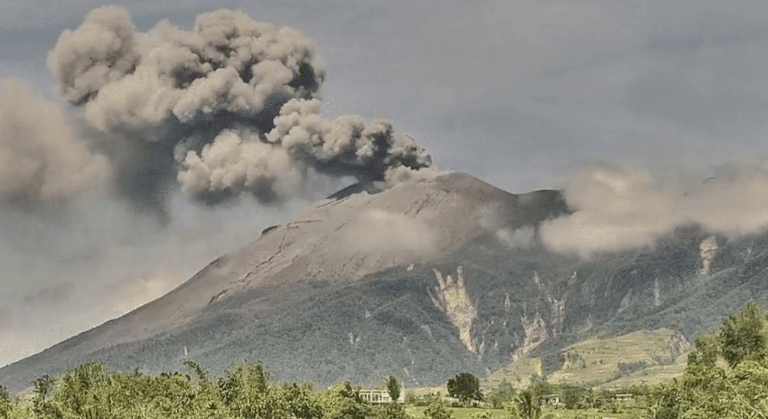
    An explosive pulse at Sheveluch volcano, Kamchatka, Russia, around 04:54 UTC on January 28, 2026, sent ash to about 9 km (30 000 feet) above sea level, with a plume drifting west over the Kamchatka Peninsula. Tokyo VAAC advisories through 12:00 UTC indicate continuing ash, with tops between 6 km (19 700 feet) and 7 km (23 000 feet) after the initial 9 km (30 000 feet) eruption.