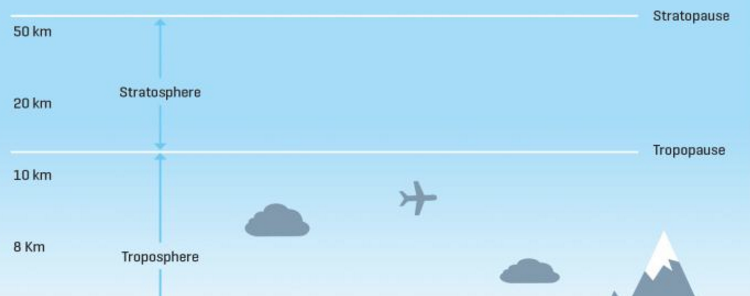
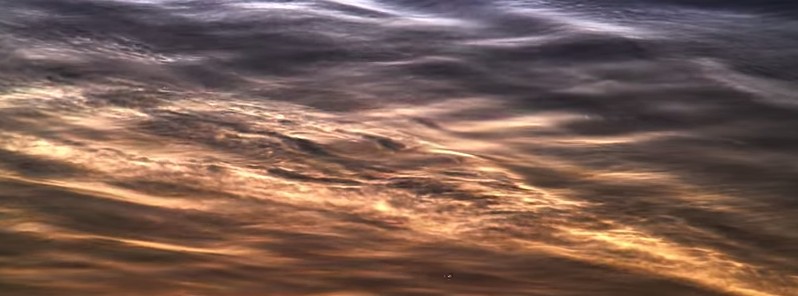
• 40 tons of cosmic dust enters Earth’s atmosphere every day

    New experiments, carried by the EU scientists, managed to estimate how much cosmic dust enters Earth's atmosphere for the first time. The dust particles impact our atmosphere causing a wide range of phenomena, and further research hopes to address them. Dust…
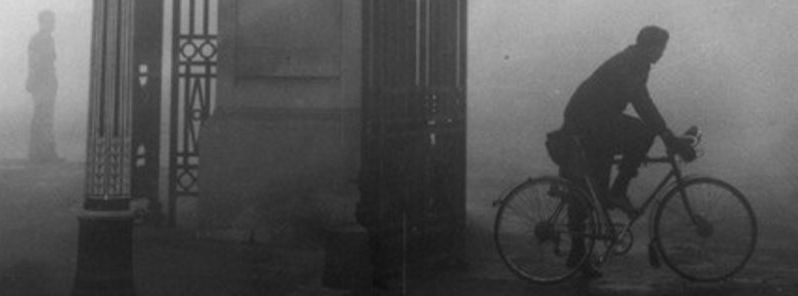
  • London’s 1952 killer fog mystery solved

    A new study finally revealed the exact cause of the 1952 killer fog which hovered over London for several days. The fog contained large amounts of pollutants which caused widespread breathing problems and killed thousands of city residents. The fog covered London…

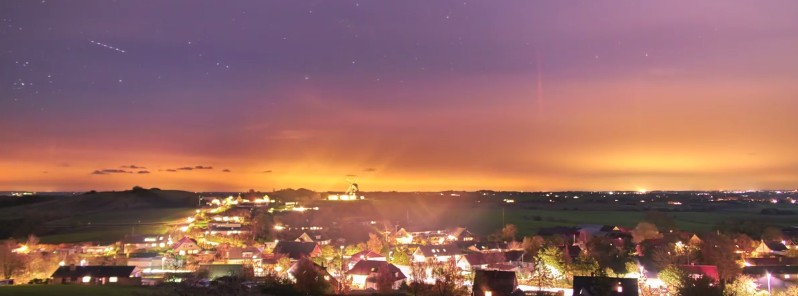
  • Light pillars and Moon halo over Denmark

    Light pillars and halos are formed when the freezing cold atmospheric air is filled with tiny ice particles in suspension. When the wind is low and the sky is clear, you might observe strange beams coming from different sources of light. Ice particles reflect and…

  • Troposphere ozone pollution highest near the equator

    A new research, conducted by the University of North Carolina (UNC), shows the pollution emissions are increasing in the area close to the equator where they produce a much greater impact on the ozone formation. The air pollution across the globe has increased since…

  • Unseasonal dust storm sweeps through Phoenix

    An intense dust storm accompanied by heavy rainfall, strong winds and lightning swept through Phoenix, Arizona on Thursday, November 3, 2016. The storm spread over Phoenix during the late afternoon hours (local time), surprising the residents and causing traffic…

  • Hazardous smog wraps Delhi, the worst in last 17 years

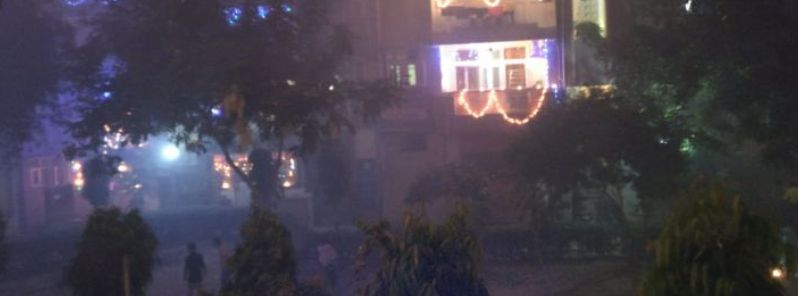
    A thick layer of hazardous smog blanketed New Delhi, India four days ago and shows no sign of loosening the grip. On November 3, 2016, between 07:00 and 09:00 (local time), Palam Observatory reported the dense smog layer has dropped the visibility to only 50 m (164…

  • Scientists discover why satellites black out over equator

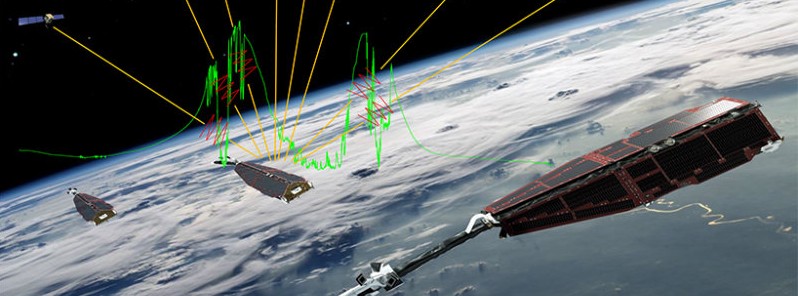
    ESA's Swarm satellite trio has discovered why GPS navigation systems on low-orbiting satellites sometimes black out when they fly over the equator between Africa and South America. Swarm itself has experienced this anomaly numerous times before its scientists…

  • Rare phenomenon caught on camera: ‘Ball lightning’ in Novosibirsk

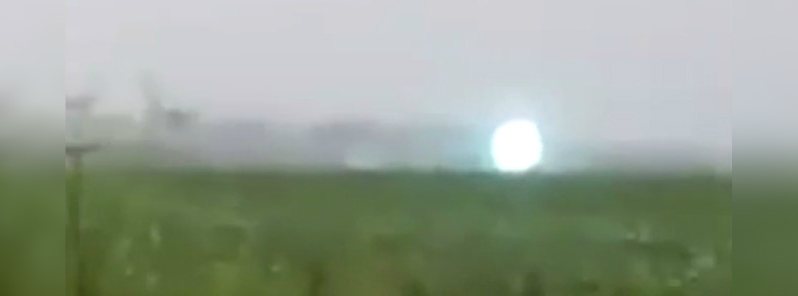
    Roman Tregubov, a graduate of the Novosibirsk State Technical University, grabbed his cell phone and managed to record a video of what appears to be ball lightning – a rare and mostly unexplained atmospheric electrical phenomenon. The event took place last month,…

  • Tropopause cooling a part of natural decadal cycle

    The cooling trend observed in the late 20th century at the transition between the troposphere and stratosphere at an altitude of about 15 kilometers is usually believed to be caused by human influences. Now, climate scientists from Kiel And Bergen (Norway) have…

  • Noctilucent clouds storm from July 12 – 14 over Denmark

    You are not dreaming, you can see waves, shock fronts or waterfalls in the night sky! On the nights of the 12-13th and 13-14th of July 2016, Denmark has witnessed two very powerful and bright noctilucent cloud shows in a row. The brightest and broadest I can…