• Scientists discover why satellites black out over equator

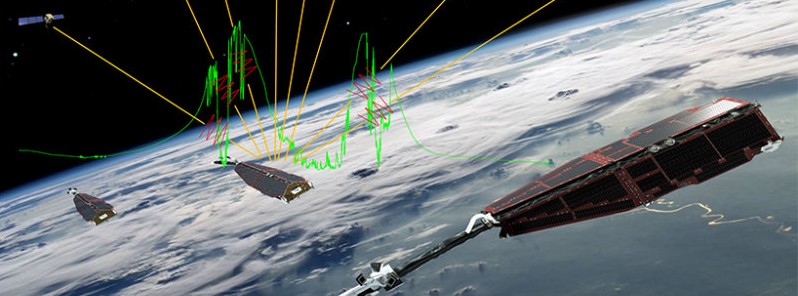
    ESA's Swarm satellite trio has discovered why GPS navigation systems on low-orbiting satellites sometimes black out when they fly over the equator between Africa and South America. Swarm itself has experienced this anomaly numerous times before its scientists…

  • Rare phenomenon caught on camera: ‘Ball lightning’ in Novosibirsk

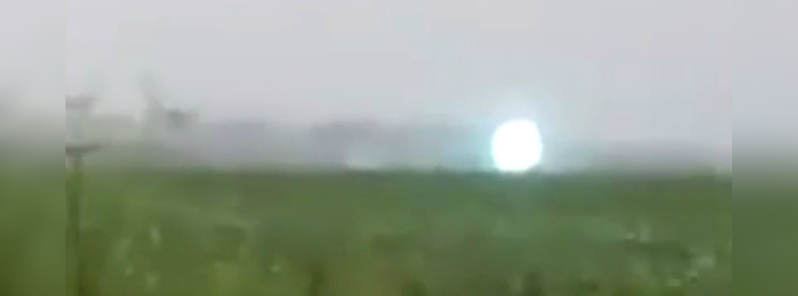
    Roman Tregubov, a graduate of the Novosibirsk State Technical University, grabbed his cell phone and managed to record a video of what appears to be ball lightning – a rare and mostly unexplained atmospheric electrical phenomenon. The event took place last month,…

  • Tropopause cooling a part of natural decadal cycle

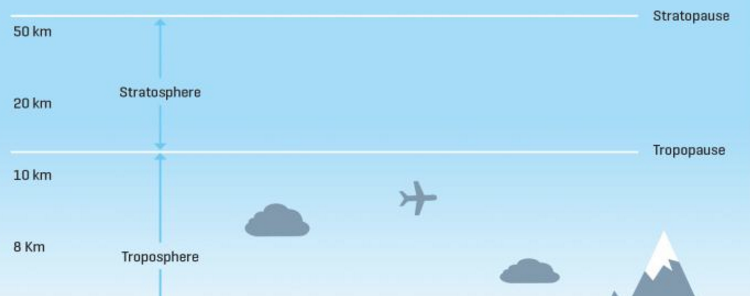
    The cooling trend observed in the late 20th century at the transition between the troposphere and stratosphere at an altitude of about 15 kilometers is usually believed to be caused by human influences. Now, climate scientists from Kiel And Bergen (Norway) have…

  • Noctilucent clouds storm from July 12 – 14 over Denmark

    You are not dreaming, you can see waves, shock fronts or waterfalls in the night sky! On the nights of the 12-13th and 13-14th of July 2016, Denmark has witnessed two very powerful and bright noctilucent cloud shows in a row. The brightest and broadest I can…

  • Antarctic ozone hole shows signs of healing

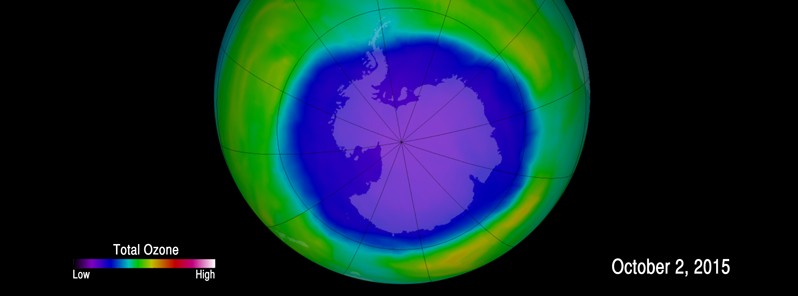
    An international team of scientists has observed first clear signs that the hole in the Antarctic ozone layer is beginning to close. Led by Professor Susan Solomon of the Massachusetts Institute of Technology, the team found that the September ozone hole had shrunk…

  • Noctilucent clouds in motion

    On the night of June 21, 2016, photographer Derek Mellott from the town of Gibbons, Alberta, Canada recorded this fantastic display of noctilucent clouds (NLCs). "They were the brightest I have ever seen," he said. "It seemed like a good time to…

  • ELVES captured above a thunderstorm in Colorado, US

    On June 8, 2016, amateur astronomer Thomas Ashcraft captured an enormous ring of light high above a thunderstorm in southeast Colorado. "It only lasted about a millisecond, but it was definitely there. The ring was about 300 km (186 miles) wide," Ashcraft…

  • Rare form of transient luminous event over Oklahoma, US

    An enormous swarm of sprites was observed across the top of a thunderstorm during a severe weather outbreak in Oklahoma, US on May 23, 2016. The phenomenon was recorded by amateur astronomer Thomas Ashcraft, almost 640 km (400 miles) away, SpaceWeather.com reports,…