I am an Assistant Editor and Severe Weather & Science Journalist at The Watchers, specializing in real-time severe weather coverage, geophysical event reporting, and research-driven scientific analysis. You can reach me at rishav(at)watchers(.)news.

  • Continent-scale basin system found beneath East Antarctica’s ice sheet

    Scientists have identified a vast fan-shaped basin province beneath East Antarctica that extends under roughly half of the East Antarctic Ice Sheet. The newly recognized structure may preserve evidence of tectonic processes linked to mountain building and the breakup of Gondwana.

  • Saskatchewan records first EF3 tornado since 2010 near Oxbow, Canada

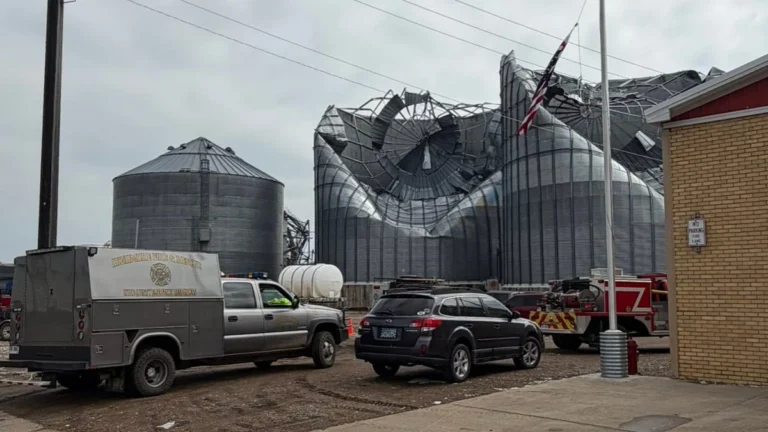
    Saskatchewan’s first EF3 tornado since 2010 struck near Oxbow on June 9, 2026. The tornado tracked 32 km (20 miles) on the Canadian side of the border, producing estimated peak winds of 245 km/h (152 mph). It claimed the life of a pet animal, destroyed buildings at a farm property, and caused damage that extended into North Dakota, United States.

  • NOAA’s SOLAR-1 enters operational service as first dedicated U.S. space weather satellite

    NOAA’s Space Weather Observations at L1 to Advance Readiness-1 (SOLAR-1) observatory has entered operational service, becoming the first U.S. satellite dedicated exclusively to continuous operational space weather observations. The spacecraft is stationed at the Sun-Earth Lagrange Point 1 (L1), where it monitors solar wind conditions and coronal mass ejections moving away from the Sun and toward Earth.

  • South Fork Fire grows to 9 350 ha (23 110 acres) in Nebraska, evacuations near Crawford

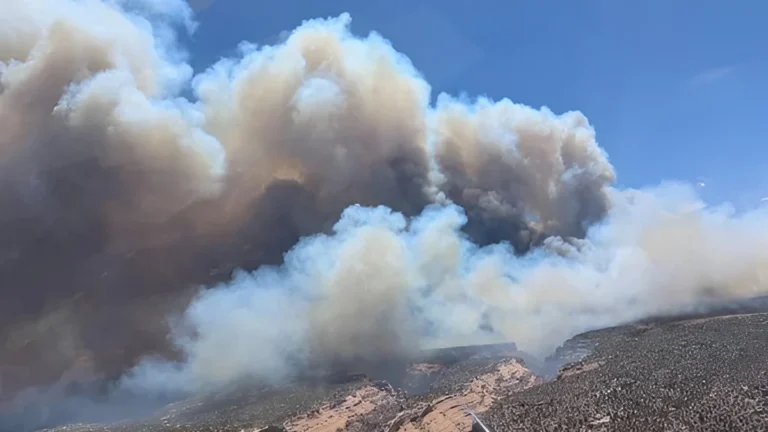
    The South Fork Fire has grown to 9 352 ha (23 112 acres) since igniting about 19 km (12 miles) west of Crawford, Nebraska, on June 9, 2026. The fire has prompted evacuation orders for areas north of Crawford’s city center, Fort Robinson State Park, and the Ponderosa Villa Assisted Living Facility. Highway 20 and Fort Robinson State Park were closed, and Governor Jim Pillen declared a state of emergency as firefighters worked to contain the wildfire.

  • El Niño develops, NOAA estimates 63% chance of a very strong event in 2026–27 winter

    El Niño conditions have developed in the tropical Pacific Ocean and are expected to strengthen through the Northern Hemisphere winter of 2026-27, according to the National Oceanic and Atmospheric Administration (NOAA). The Climate Prediction Center (CPC) issued an El Niño Advisory on June 11, 2026, after oceanic and atmospheric conditions shifted into an El Niño pattern.