I’m a science journalist and researcher at The Watchers, contributing to the Epicenter edition, where I cover peer-reviewed scientific research and emerging discoveries across Earth and space sciences. With a background in astronomy and a passion for environmental science, I’ve worked in shark and coral conservation in Fiji, conducting reef and shark-behavior research, contributing to mangrove restoration, and earning PADI Open Water and Coral Reef Certifications. I bring a blend of scientific rigor and storytelling to illuminate the discoveries shaping our planet and beyond.

  • Unrest at dormant Uturuncu volcano driven by gas and fluid movement, not magma

    A new study published in PNAS provides the most detailed view to date of the dormant Uturuncu volcano in southwestern Bolivia, revealing that its long-standing ground deformation and seismic unrest are driven by the movement of hot fluids and gases, not by magma ascent. Researchers conclude there is no immediate eruption risk, but confirm that a deep magmatic system remains active beneath the surface.
  • Eta Aquariid meteor shower peaks May 5–6, 2025

    The Eta Aquariid meteor shower, caused by debris from Halley’s Comet, peaks on May 5–6, 2025. Observers in the Southern Hemisphere may see up to 50 meteors per hour under dark skies before dawn, while those in mid-northern latitudes may observe 10–20 meteors per hour.

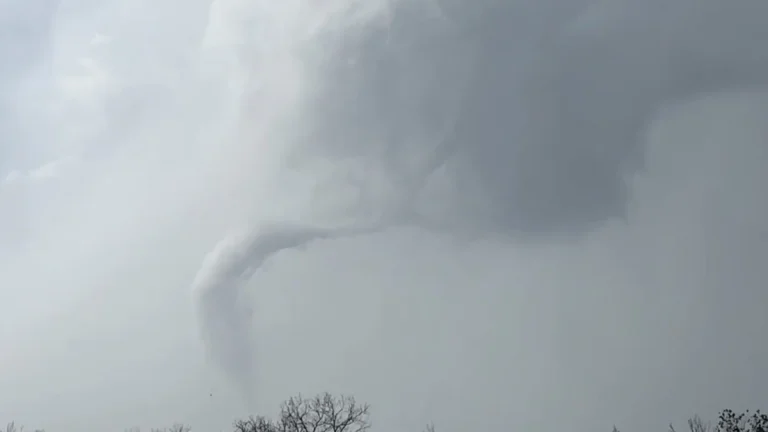
  • Tornado hits Burnet County, Texas, damaging homes and injuring one

    An EF-1 tornado with maximum winds of 177 km/h (110 mph) struck Burnet County, Texas, at approximately 17:00 LT (22:00 UTC) on May 1, 2025. It injured one person, destroyed one home, and damaged at least 14 others. A second brief tornado touched down over open country later the same day.

  • Cutting-edge techniques enhance search for lunar water ice

    Scientists are deploying ShadowCam’s high-sensitivity imaging and cosmic ray radar simulations to locate and quantify lunar water ice, a critical resource for future lunar bases that could provide drinking water or be processed into rocket fuel components.

  • New algorithm aims to improve space weather forecasting

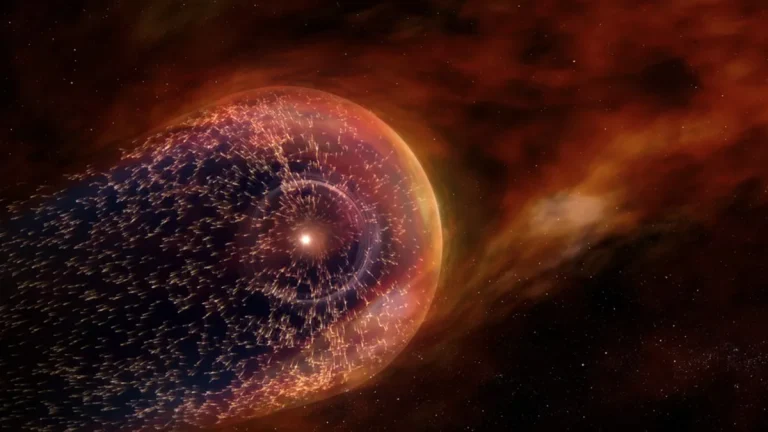
    A new study shows that the latitude of solar coronal holes and the Sun’s B0 angle significantly influence high-speed solar wind streams, potentially improving the accuracy of space weather forecasts. The research introduces a predictive algorithm based on L5-L1 observations to enhance forecasting capabilities.

  • Evidence of rain and snow on ancient Mars

    Geologists from the University of Colorado Boulder report that extensive valley networks on Mars were likely formed by widespread precipitation, challenging previous theories that attributed their formation to runoff from melting ice caps. Using landscape evolution models and topographic data from NASA missions, the researchers found that valley head elevations across Mars’ southern highlands are more consistent with rain or snowmelt than with localized ice melting.