
Nearly 26 000 displaced people in Baidoa, Somalia, projected to face catastrophic hunger
Nearly 26 000 internally displaced people in Baidoa are likely to face Catastrophe-level acute food insecurity (IPC Phase 5) during October–December 2026, according to an IPC assessment released on September 23. The projection is separate from a conditional Risk of Famine under a plausible worst-case scenario involving more severe flooding and displacement, higher food prices, low wages and insufficient humanitarian assistance.
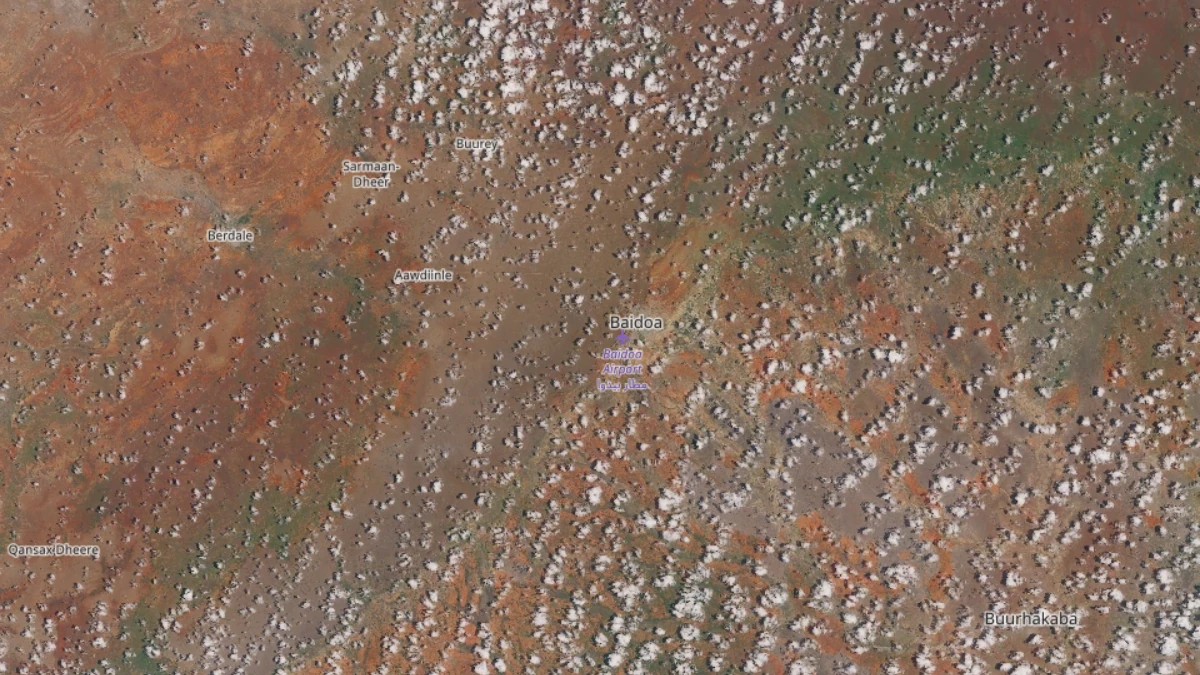
Satellite image of Baidoa, Somalia on September 25, 2026. Credit: Sentinel-2 L1C, Copernicus Browser, The Watchers
An Integrated Food Security Phase Classification (IPC) assessment released on September 23, identified a conditional Risk of Famine among internally displaced people in Baidoa, southern Somalia, under a plausible worst-case scenario during October–December.
Under the most-likely projection, nearly 26 000 displaced people in Baidoa are expected to face Catastrophe-level acute food insecurity (IPC Phase 5), while more severe flooding and displacement, rising food prices, low wages and insufficient humanitarian assistance could push conditions across Famine thresholds.
The IPC projects that 5.4 million people across Somalia will face Crisis-level acute food insecurity or worse (IPC Phase 3+) during October–December 2026, including approximately 1.5 million in Emergency conditions (IPC Phase 4). Nearly 5.1 million people face Phase 3 conditions or worse during July–September, including close to 1.4 million in Phase 4.
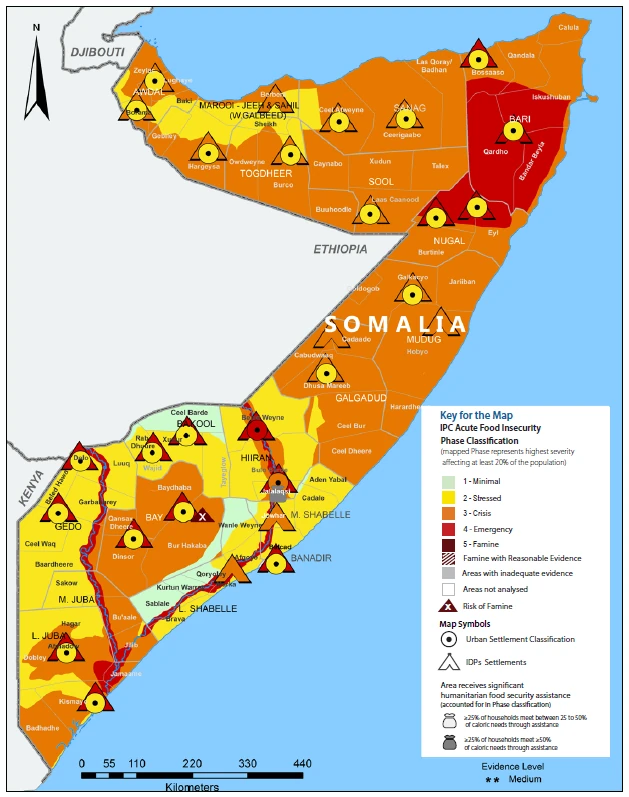
The projected deterioration is driven largely by flooding associated with El Niño and a positive Indian Ocean Dipole. Previous droughts, erratic rainfall, insecurity, high food prices, and reduced humanitarian funding continue to intensify existing needs.
The Risk of Famine finding concerns internally displaced people in Baidoa, Bay region, rather than Somalia as a whole. IPC Phase 5 (Catastrophe) describes household-level acute food insecurity, while an area-level Famine classification requires separate food-consumption, acute-malnutrition, and mortality thresholds.
The IPC identified a conditional Risk of Famine in Baidoa, not a confirmed current Famine classification. The assessment relies on outcome data collected in April 2026, and the Federal Government of Somalia and IPC partners plan a follow-up assessment in October to gather new evidence and reassess the level of risk.
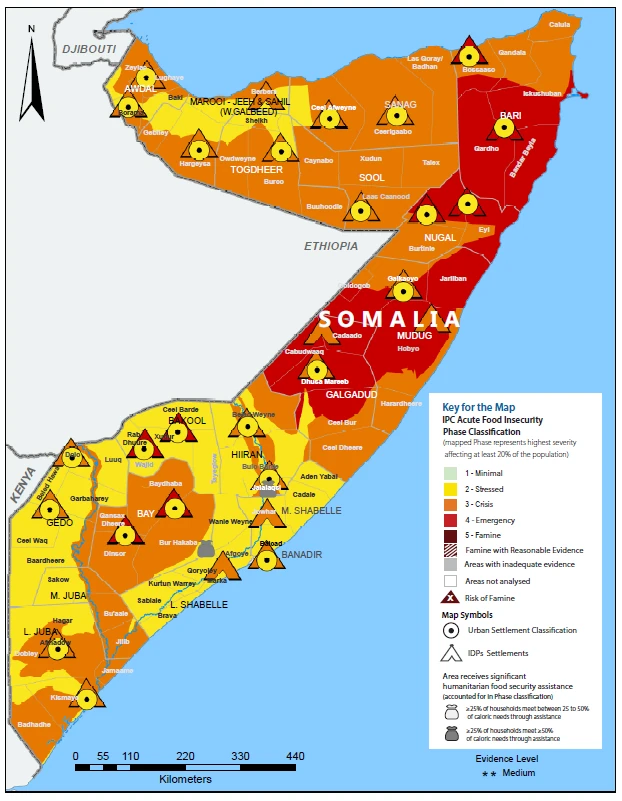
Above-normal rainfall is forecast across central and southern Somalia during the October–December Deyr season, with the IGAD Climate Prediction and Applications Center (ICPAC) assigning a 90% probability of wetter-than-normal conditions across southern Ethiopia, central to southern Somalia and northeastern Kenya.
Its September 10 outlook also indicates a greater than 90% probability that seasonal rainfall will exceed 400 mm (15.7 inches) in parts of central and southern Somalia.
These percentages describe rainfall probabilities, not quantified probabilities of flooding or Famine.
The Somali Disaster Management Agency (SODMA) estimates that 2.5–3.5 million people could be exposed to flooding during the Deyr season, with approximately 1 million likely to be displaced.
Flooding could damage crops, reduce pasture availability, increase livestock disease, and restrict road access, disrupting markets and humanitarian operations. The severity and geographical extent of those impacts will depend on where and when the heaviest rainfall occurs.
The IPC estimates that 1.92 million children aged 6–59 months and 157 000 pregnant or breastfeeding women will likely suffer from acute malnutrition between July 2026 and June 2027. Approximately 433 000 children are expected to experience severe acute malnutrition and require treatment.
Nineteen areas were classified in Critical acute malnutrition conditions (IPC AMN Phase 4) during July–September. During October–December, displaced people in Beletweyne are projected to face Extremely Critical conditions, with pockets within Baidoa displacement sites also expected to reach IPC AMN Phase 5.
The IPC associates the deterioration with disease outbreaks, low immunization coverage, poor water and sanitation, limited health services, and reduced humanitarian assistance.
Some areas have improved where assistance has expanded. Burhakaba District moved from Emergency acute food insecurity (IPC Phase 4) in January–March to Stressed conditions (IPC Phase 2) during the current period, which the IPC and World Food Program (WFP) attributed to increased food assistance, cash transfers and health and nutrition services.
The IPC, WFP and the Federal Government of Somalia called for early action in flood-prone areas, including pre-positioning food, nutrition and medical supplies; repairing roads and bridges; strengthening disease surveillance; and supporting water, sanitation and hygiene services. They also called for the restoration and scaling up of humanitarian food and cash assistance in areas facing severe food insecurity.
Somalia entered the Deyr season after below-average Gu rainfall between April and June 2026 in many areas, which reduced crop production and weakened livestock conditions. The projected floods could therefore affect communities already facing substantial food-security and nutrition pressures.
References:
1 Somalia: Acute Food Insecurity and Acute Malnutrition Situation, July–December 2026 – IPC – September 23, 2026.
2 Hunger and malnutrition crises persist in Somalia as projected floods and funding shortfalls threaten vulnerable populations – WFP – September 23, 2026
3 Summary for Decision Makers: October to December 2026 season – ICPAC – September 10, 2026.

Rishav Kothari is Editor-in-Chief of The Watchers, where he runs the newsroom and covers earthquakes, volcanoes, severe weather and space weather.
