
Shallow M6.0 earthquake hits near the coast of Kamchatka, Russia
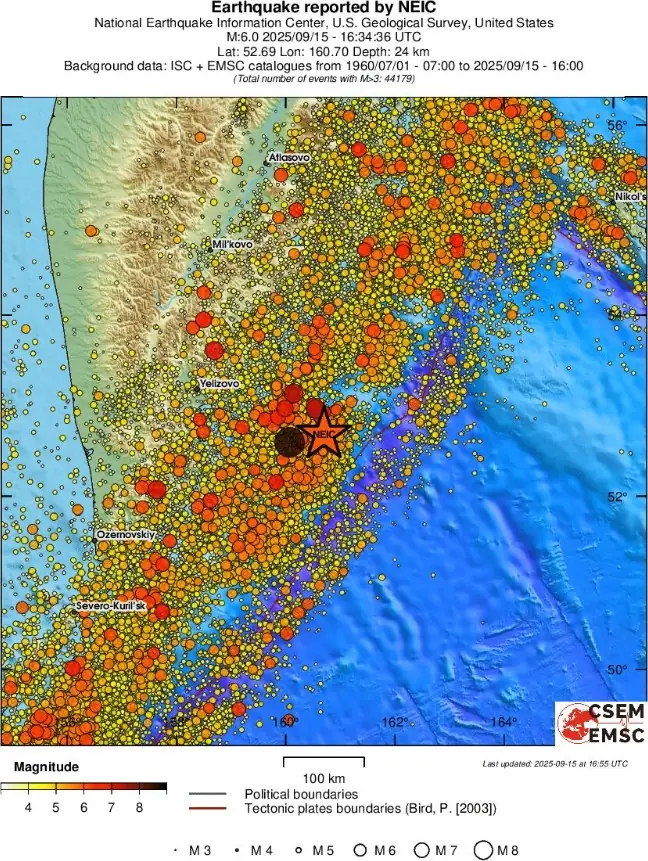
A strong and shallow M6.0 earthquake struck near the coast of Kamchatka, Russia, at 16:34 UTC (04:34 LT) on September 15, 2025. The USGS reported a depth of 24.5 km (15 miles). This event is considered an aftershock of the major M8.8 tsunami-generating earthquake on July 29, 2025.
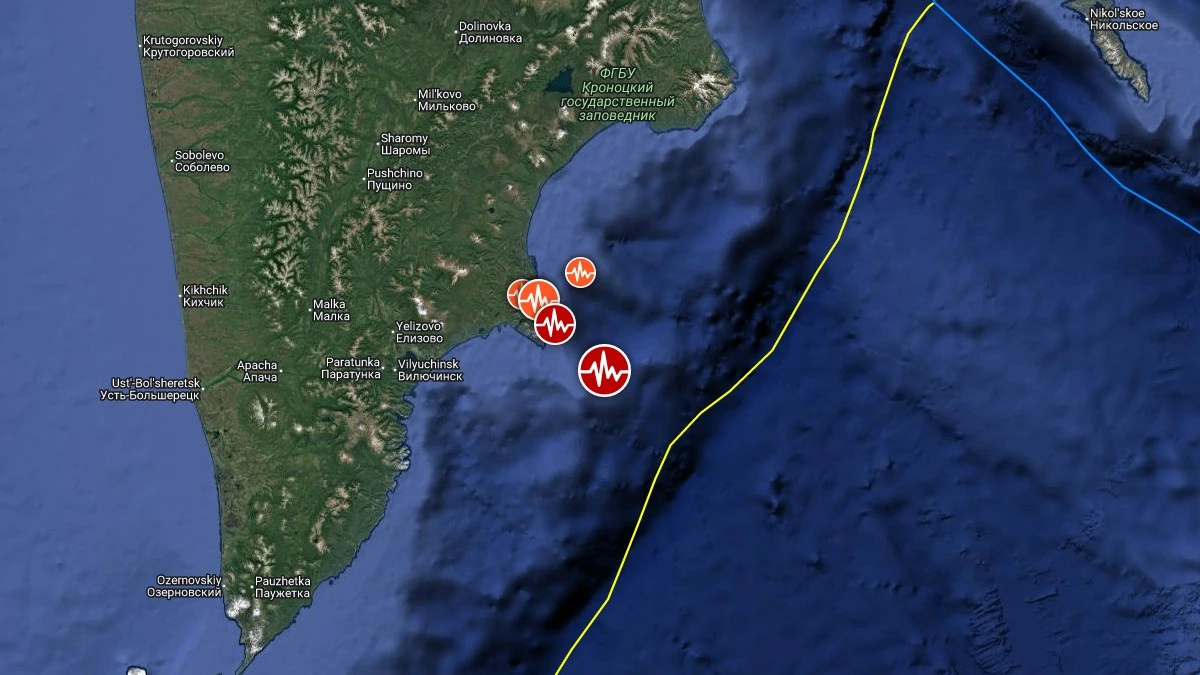
Epicenter of M6.0 earthquake near the coast of Kamchatka, Russia on September 15, 2025. Credit: TW/SAM, Google
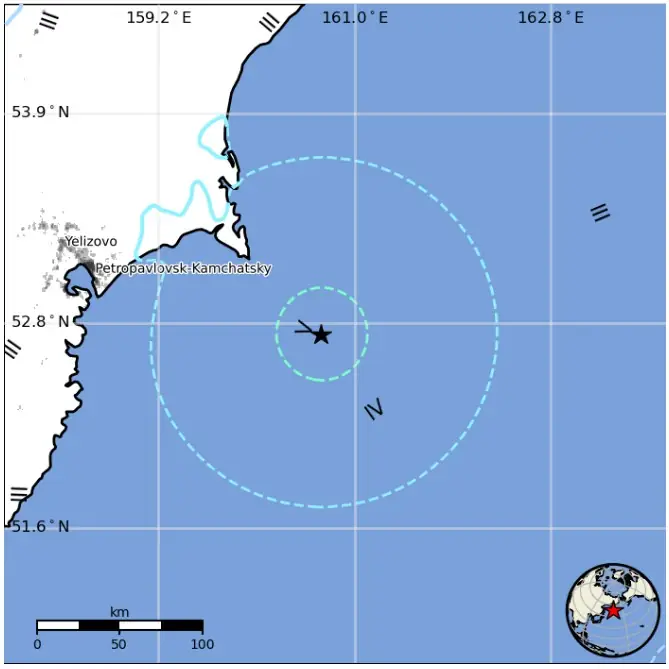
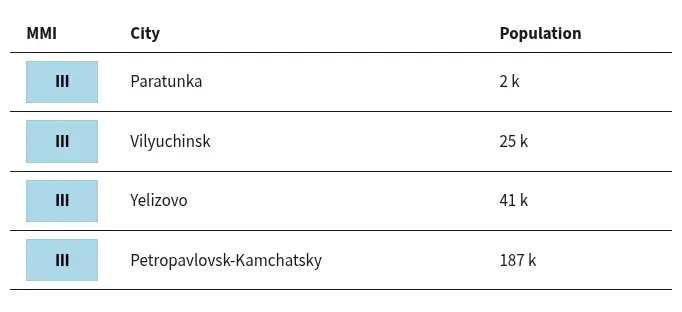
The epicenter was located 145 km (90 miles) ESE of Petropavlovsk-Kamchatsky (population 181 216), and 156 km (97 miles) E of Vilyuchinsk (population 24 204), Kamchatka, Russia.
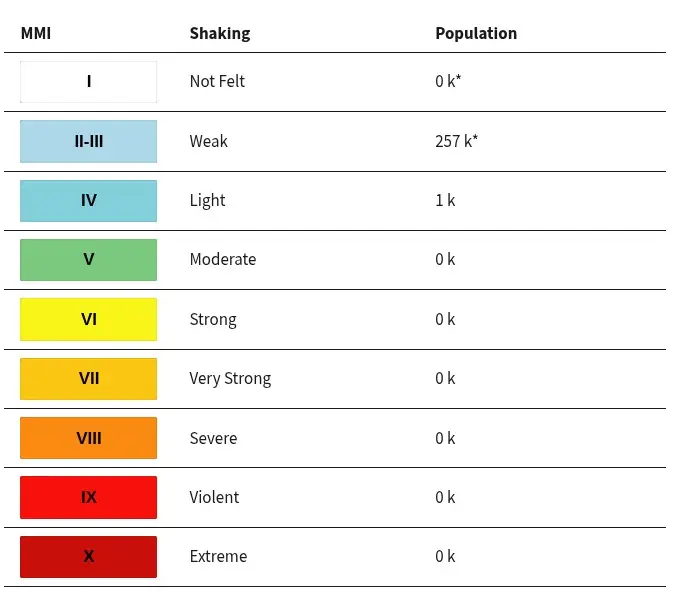
1 000 people are estimated to have felt light shaking and 257 000 weak.
There is no tsunami threat from this earthquake.
The USGS issued a Green alert for shaking-related fatalities and economic losses. There is a low likelihood of casualties and damage.
Overall, the population in this region resides in structures that are resistant to earthquake shaking, though vulnerable structures exist. The predominant vulnerable building types are adobe block and unreinforced brick with mud construction.
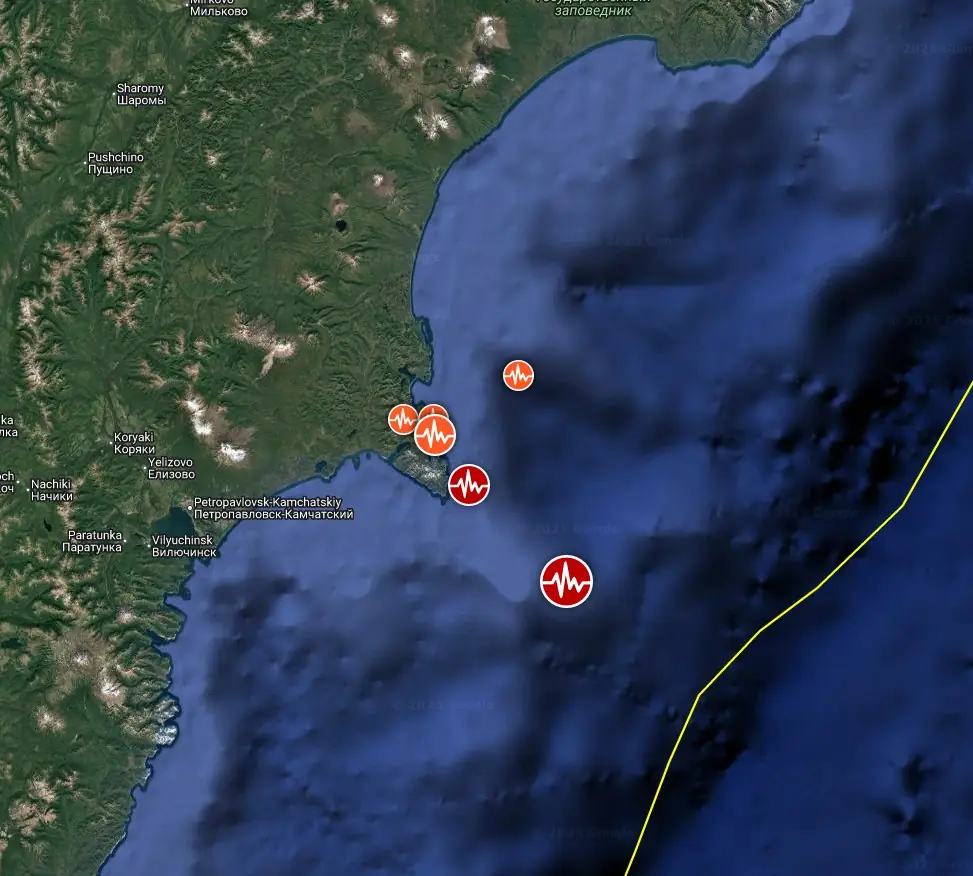
The same region was hit by M7.4 quake on September 13, at a depth of 39.5 km (24.3 miles). Both are considered aftershocks of powerful M8.8 earthquake on July 29, 2025.
The M8.8 earthquake struck at 23:24 UTC, generating a Pacific-wide tsunami and ranking as the sixth strongest earthquake ever recorded instrumentally. The event ruptured a large portion of the Kuril–Kamchatka subduction zone, with ground displacement recorded across southern Kamchatka.
Satellite and geodetic data indicate that southern Kamchatka shifted horizontally by up to 2 m (6.6 feet) during the rupture. The deformation was widespread, with coastal subsidence and uplift altering local topography. Such large-scale displacements are consistent with megathrust events of this magnitude.
The tsunami generated by the earthquake was observed across the Pacific basin. Amplitudes reached 2.7 m (8.9 feet) at Ust-Kamchatsk and 2.4 m (7.9 feet) at Nikolskoye on the Commander Islands. In Japan, tide gauges recorded waves up to 0.4 m (1.3 feet), while Hawaii registered minor fluctuations. Despite the wide distribution, the most severe effects were confined to the Russian Far East.
The Kuril–Kamchatka trench is one of the world’s most seismically active subduction zones. Historical records include the 1952 M9.0 Kamchatka earthquake and tsunami, which caused widespread damage and fatalities across the Pacific.
Estimated population exposure to earthquake shaking
Selected cities exposed
Regional seismicity
References:
1 M6.0 earthquake Kamchatka, Russia – USGS – September 15, 2025

Teo Blašković founded The Watchers in 2011 and edited it until 2026, covering seismic and volcanic activity, extreme weather, space weather and near-Earth objects. Articles on this page are his archive.
Published in the last 24 hours
- Second nationwide US flight halt since 9/11: how the November 13 FAA ground stop compares with September 2001 and January 2023 Epicenter
- FAA grounds all departing flights across the US after communications outage hits air traffic control centers nationwide
- In September 1859, a solar storm lit up the night sky so brightly that gold miners in the Rocky Mountains woke up after midnight and started cooking breakfast, convinced the aurora glowing over their camp was the sunrise Epicenter
- A patch of warm Pacific water that could become the strongest El Niño in more than 70 years sits thousands of miles from any American town, yet it is already the main reason NOAA expects a wetter winter across the South and a milder one across the North
