
Very bright fireball over Morocco

Image credit: Jm Madiedo
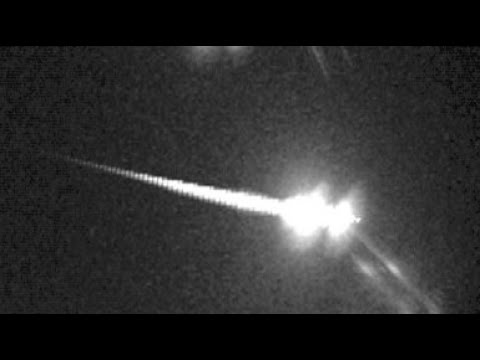
This impressive fireball was recorded over Morocco at 02:16 UTC on January 30, 2022. It was as bright as the full Moon.
The event was generated by a rock (a meteoroid) from a comet that hit the atmosphere at about 255 000 km/h (158 450 mph).
It began at an altitude of about 146 km (91 miles) over Oulad Sidi Abd el Hakem (eastern Morocco), moved northwest, and ended at a height of around 62 km (38 miles) over Tafersit (northeastern Morocco).
This bright meteor was recorded in the framework of the SMART project, operated by the Southwestern Europe Meteor Network (SWEMN) from the meteor-observing stations located at Calar Alto, Sierra Nevada, Sevilla, La Sagra (Granada), Huelva, El Aljarafe, and La Hita (Toledo).
The event has been analyzed by the principal investigator of the SMART project: Dr. Jose M. Madiedo, from the Institute of Astrophysics of Andalusia (IAA-CSIC).

The Watchers team and our contributors bring the latest on extreme weather, earthquakes, volcanic eruptions, space weather, and all things science. We're all about making sense of the natural world and keeping you informed on what’s happening. Got a tip or a question? Hit us up using the form at newstips!
Published in the last 24 hours
- A meteorite blew a crater beside a village near Lake Titicaca in 2007, and dozens of villagers who went to see it got headaches and nausea, though tests found nothing the rock had added to the water Epicenter
- The people who pay closest attention to the weather are the ones storms have already cost the most, a study of 946 students found, with one damaging storm making little difference to how much attention a student paid, but two or more making a clear one Epicenter
- The sea is falling in Juneau, Alaska, because land freed from melted glaciers is rising about 0.6 inches a year Epicenter
- A dam above Los Angeles collapsed just before midnight on March 12, 1928, and the flood killed more than 400 people, hours after the engineer who built it had spent two hours looking at a new leak and decided there was no danger Epicenter
