
Persistent rainfall deficits, crop production significantly below average for second season, Kenya
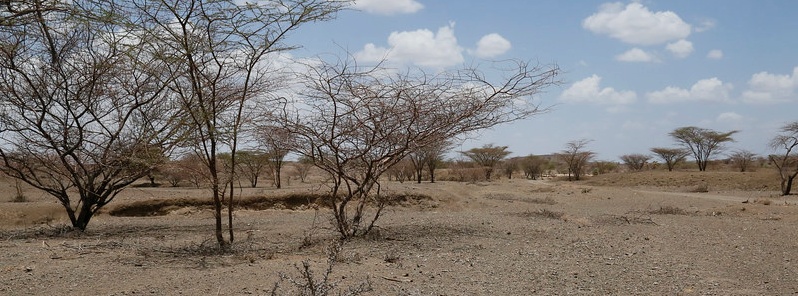
Image credit: Russell Watkins/DFID
Persistent rainfall deficits are causing high levels of atypical livestock migration in response to below-average forage and water availability, crop production significantly below average for the second consecutive season and food price increase, the Famine Early Warning System Network (FEWS) reported.
Incidence of livestock disease and resource-based conflict are consequently on the rise, while livestock body conditions and milk production remain below average, it said.
In marginal agricultural areas, replanted crops in the southeast are moisture stressed and withering, diminishing prospects for partial recovery of short-cycle and main crop production.
Crop production will be significantly below average for the second consecutive season.
Below-average food and income sources are expected to drive Crisis (IPC Phase 3) and Stressed (IPC Phase 2) outcomes in most areas through September.
The 2019 March to May long rains have continued to perform significantly below average. According to satellite-derived data, cumulative rainfall through May 25 is at least 20% below average across most of the country. Pastoral and coastal areas in eastern Kenya, as well as parts of western Kenya’s high and medium potential agricultural zones, have accumulated larger deficits that range from 50 to 75% below average. Deficits are least severe in northwestern pastoral Kenya, where rainfall is 20% below average to normal.
Although planting was delayed and substantial rainfall deficits persist in unimodal crop production areas, a forecast of increased rainfall through August is currently anticipated to support near-normal crop development.
From March to April, maize prices increased by 6 to 52% in most key reference markets, driven by the anticipation of below-average long rains production and by current high household demand and reduced supply.
However, prices widely remain comparable to the April five-year average, with few exceptions, FEWN said.

I'm a dedicated researcher, journalist, and editor at The Watchers. With over 20 years of experience in the media industry, I specialize in hard science news, focusing on extreme weather, seismic and volcanic activity, space weather, and astronomy, including near-Earth objects and planetary defense strategies. You can reach me at teo /at/ watchers.news.

Commenting rules and guidelines
We value the thoughts and opinions of our readers and welcome healthy discussions on our website. In order to maintain a respectful and positive community, we ask that all commenters follow these rules.