
Florida enters worst drought in 25 years as extreme conditions expand
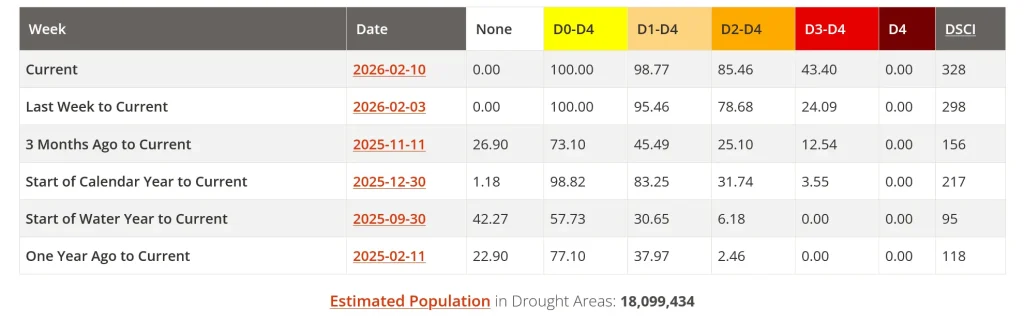
Florida has entered its worst drought in 25 years, with 100.00% of the state classified in drought categories D0–D4, according to the U.S. Drought Monitor. Severe to extreme drought now covers 85.46% of the state, marking the most extensive spatial coverage since the 2000–2001 drought event.
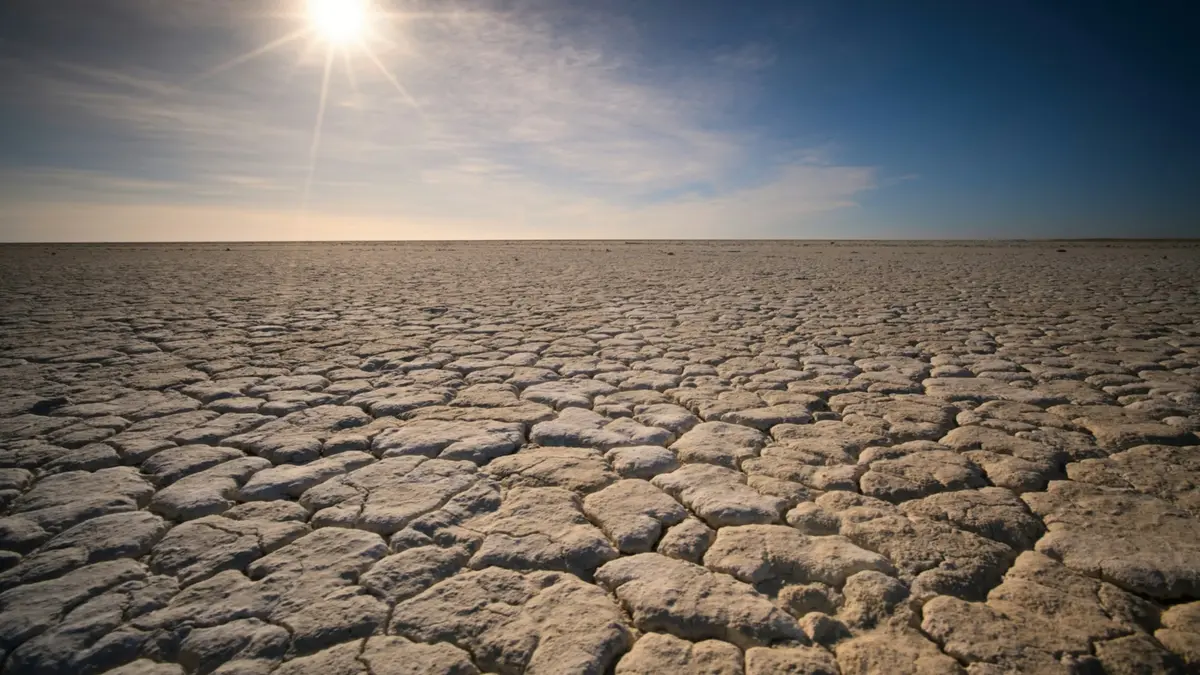
Image credit: Oleksandr Sushko
The February 10, U.S. Drought Monitor shows 98.77% of Florida in Moderate Drought (D1) or worse and 85.46% in Severe Drought (D2) or worse. Extreme Drought (D3) now covers 43.40% of the state, a sharp increase from 12.54% recorded on November 11, 2025. No areas are currently classified in Exceptional Drought (D4).
Extreme drought expanded across portions of northern Florida and re-intensified in south Florida, including areas surrounding Lake Okeechobee and sections of the Everglades. Severe drought conditions extend across most of the peninsula and into the central Panhandle.
A Drought Information Statement issued February 12, by the National Weather Service (NWS) Miami–South Florida reports that Severe Drought has returned to portions of South Florida following continued below-average rainfall through early to mid-February. Most of South Florida remains in Severe Drought (D2), with Extreme Drought (D3) present over portions of the Everglades and near Lake Okeechobee.

Since November 1, 2025, Palm Beach International Airport has recorded 44 mm (1.75 inches), approximately 252 mm (9.94 inches) below normal, or about 15% of typical precipitation for the period. Moore Haven has measured 28 mm (1.10 inches), around 134 mm (5.27 inches) below average, representing 17% of normal rainfall. Across South Florida, several locations have received between 15% and 59% of normal precipitation during this period.
The Climate Prediction Center (CPC) analysis valid February 11 shows large portions of South Florida in the 1–5 percentile range for soil moisture, with broader areas across the state below the 10th percentile. The values indicate significantly drier-than-normal conditions for this time of year.
Lake Okeechobee stood at 3.85 m (12.63 feet), approximately 0.60 m (1.96 feet) below its seasonal normal level of 4.45 m (14.59 feet), while Fisheating Creek measured 0.20 m (0.64 feet), about 0.55 m (1.81 feet) below its normal level of 0.75 m (2.45 feet).
Water Conservation Area levels show mixed but generally below-normal conditions:
- WCA-1 in Interior Palm Beach County measured 4.96 m (16.28 feet), 0.13 m (0.44 feet) below normal.
- WCA-2 in Interior Broward County measured 3.84 m (12.61 feet), 0.49 m (1.61 feet) above normal.
- WCA-3 in Interior Miami-Dade County measured 2.65 m (8.68 feet), 0.47 m (1.55 feet) below normal.
Keetch-Byram Drought Index values range from 600 to above 700 across portions of South Florida,
The National Weather Service office in Tampa Bay reports that parts of west-central Florida are experiencing their driest conditions on record for this time of year. Polk County farmers describe the current dryness as the worst observed in at least 15 years, with agricultural impacts reported across pasture, citrus, and row crop operations.
The National Drought Summary released on February 10 states that most of Florida received less than 12.7 mm (0.5 inches) of rainfall during the previous week, with many areas below 25% of normal precipitation. Extreme drought expanded across both northern and southern Florida as short- and medium-term precipitation deficits deepened.
Rainfall accumulations across South Florida are expected to remain below 12.7 mm (0.5 inches) through February 19. The Climate Prediction Center 8–14 day outlook favors precipitation 33% to 50% below normal across Florida. Seasonal outlooks valid February-April forecast above-normal temperatures and below-normal rainfall. The CPC Seasonal Drought Outlook valid through April 30, indicates drought persistence across South Florida.
An estimated 18 099 434 people are currently living in drought-affected areas across Florida.
References:
1 Drought Information Statement for South Florida – NWS – February 12, 2026

I’m a science journalist and researcher at The Watchers, contributing to the Epicenter edition, where I cover peer-reviewed scientific research and emerging discoveries across Earth and space sciences. With a background in astronomy and a passion for environmental science, I’ve worked in shark and coral conservation in Fiji, conducting reef and shark-behavior research, contributing to mangrove restoration, and earning PADI Open Water and Coral Reef Certifications. I bring a blend of scientific rigor and storytelling to illuminate the discoveries shaping our planet and beyond.

Commenting rules and guidelines
We value the thoughts and opinions of our readers and welcome healthy discussions on our website. In order to maintain a respectful and positive community, we ask that all commenters follow these rules.