High-level eruption at Bezymianny volcano, Russia
A strong explosive eruption began at Bezymianny volcano, Kamchatka, Russia, at 15:10 UTC on July 24, 2024, ejecting ash up to 12 km (40 000 feet) above sea level.


A strong explosive eruption began at Bezymianny volcano, Kamchatka, Russia, at 15:10 UTC on July 24, 2024, ejecting ash up to 12 km (40 000 feet) above sea level.

The Southern Annular Mode (SAM) has started shifting into its negative phase this week, likely caused by a recent sudden stratospheric warming (SSW) event over Antarctica, which is expected to bring colder and wetter conditions to southern Australia.
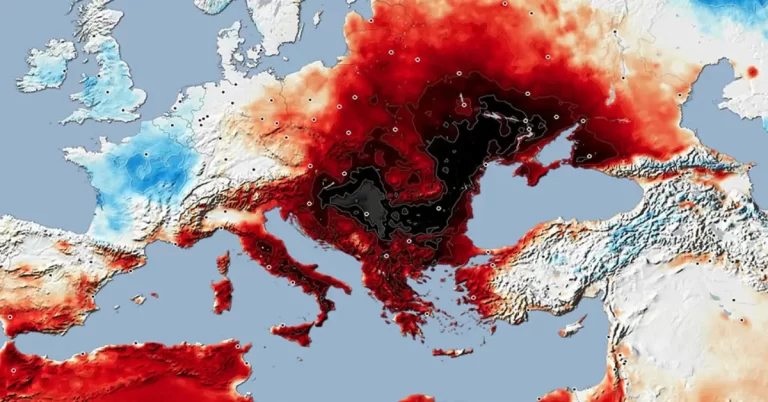
Southern and eastern Europe have endured a prolonged heatwave since early July, with temperatures forecast to remain high for at least another two weeks. The most intense heat was felt across the Balkan Peninsula and eastern Europe, where daily temperatures exceeded 40 °C (104 °F) in many areas. The Mediterranean Sea has also seen unprecedented warmth, with water temperatures reaching 30 °C (86 °F) in some areas.

A rare Sudden Stratospheric Warming (SSW) event has been detected in the stratosphere above the Antarctic region over the past week. Forecast models predict it will start to filter down through the atmosphere later this month.

As a polar wave continues to affect Argentina, the city of Gualeguaychú hit a record-breaking low temperature of -7.6 °C (18.3 °F) on July 9, 2024. Meanwhile, all provinces of Argentina recorded temperatures below 0 °C (32 °F) on July 10, 2024. The severe cold snap prompted authorities to issue numerous Red, Orange, and Yellow alerts for extreme cold.

Extremely heavy rains hit South Korea on July 9 and 10, 2024, claiming 4 lives and forcing thousands to evacuate for safety. The rains caused multiple flights and trains to be delayed and caused severe damage to infrastructure all over South Korea.

At least 12 people have been killed and millions were left without power in the United States after Category 1 Hurricane “Beryl” made landfall near Matagorda in Texas on July 8, 2024. This brought the total death toll caused by the system to 28, as of July 10.

Hurricane “Beryl” made landfall near Matagorda, Texas at around 09:00 UTC on Monday, July 8, 2024, with maximum sustained winds of 130 km/h (80 mph), making it a Category 1 hurricane on the Saffir Simpson scale.

A series of destructive tornadoes struck China’s Shandong province on July 5, 2024, claiming at least five lives and leaving 83 injured. The tornadoes damaged 2 820 houses, 48 powerlines, and 4 060 ha (10 032 acres) of crops, according to local media reports.

Tropical Storm “Beryl” is anticipated to re-strengthen again and is forecast to become a hurricane again before making landfall in Texas, U.S. on Monday, July 8, 2024.
