• M6.3 solar flare, geomagnetic storm still in progress

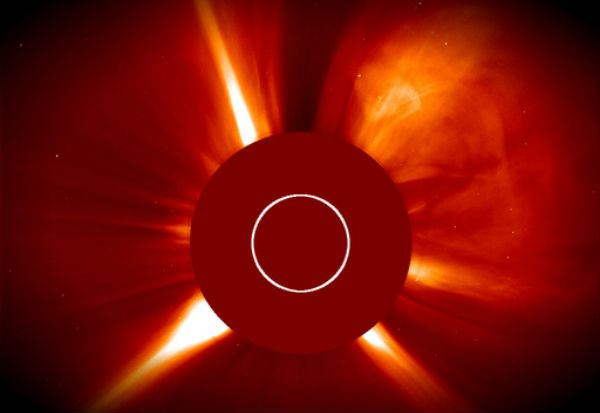
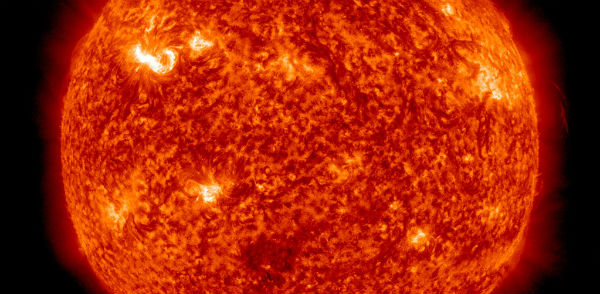
    Sunspot 1429  just produced a strong M6.3 Solar Flare. AR 1429 is now located in the center of the visible solar disk so this solar flare and its CME is heading straight toward Earth. The Bz Component of the Interplanetary Magnetic Field (IMF) is pointing south and
  • Polar magnetic disturbance, farside eruptions and auroras

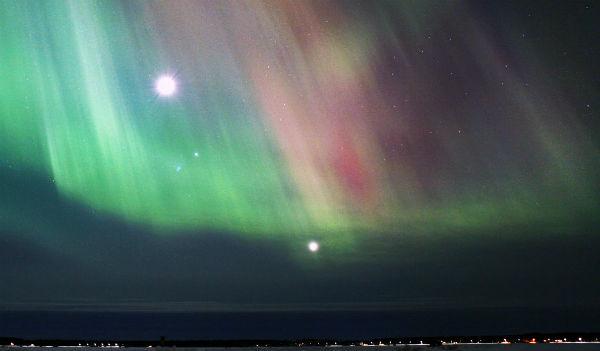
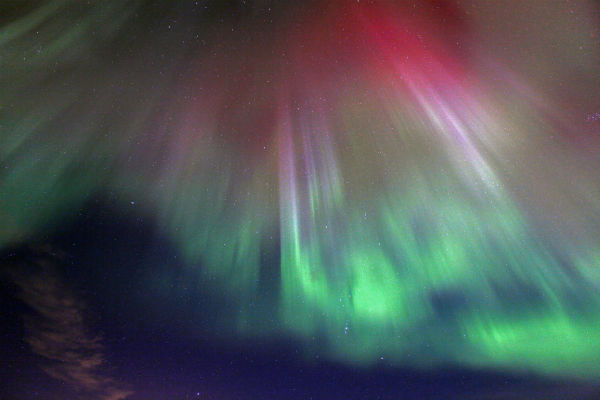
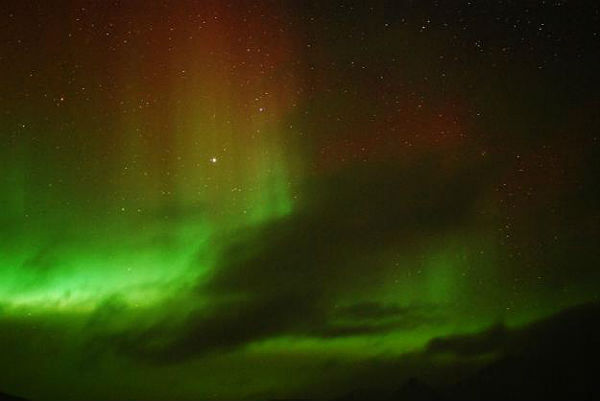
    A disturbance is rippling through Earth’s polar magnetic field on March 1st. Bright auroras have been sighted in Sweden and Finland. Rob Stammes of the Polar Light Center in Lofoten reports about magnetometer needles start to swing. This magnetic storm came as a

  • February auroras and blue flashes

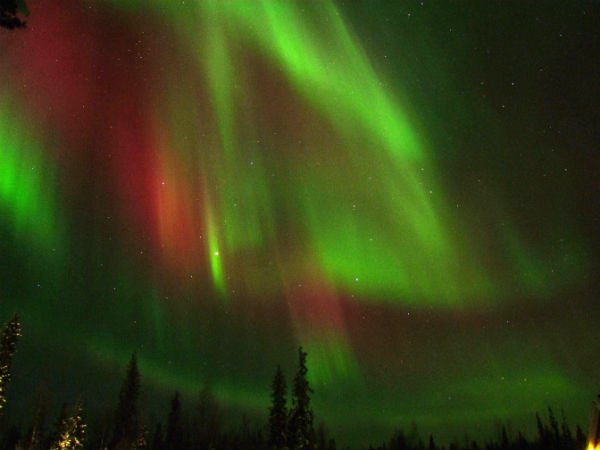
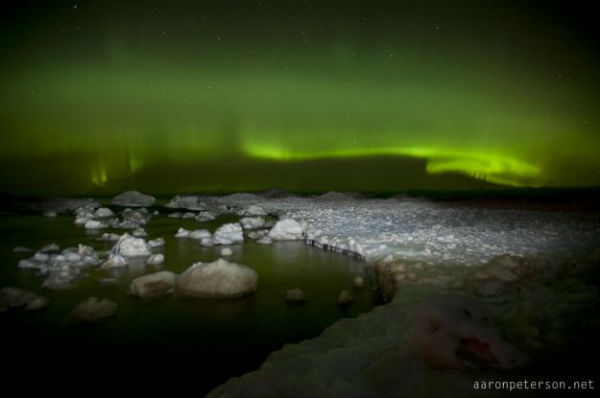
    A CME impact followed by a gusty solar wind stream have combined to produce bright lights around the Arctic Circle on Feb. 26-29.  Arctic sky watchers should be on alert for more auroras tonight. The green flash, the fleeting emerald light that sometimes appears

  • Weak CME impact sparks some auroras around Arctic circle

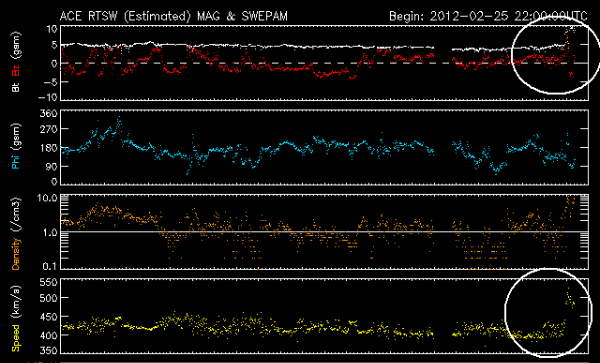
    A CME hit Earth’s magnetic field on Feb. 26th at 21:00 UTC. Brief outburst subsided before it reached geomagnetic storm levels. A geomagnetic sudden impulse was detected by the Boulder station at 21:41 UTC. Maximum levels of planetary Kp index was listed as 4, just

  • The weak CME impact, auroras still possible

    A CME hit Earth’s magnetic field on Feb. 26th at ~2100 UTC. The impact was weak and does not appear set to cause a strong geomagnetic storm according to SpaceWeather. A solar wind increase to near 550 km/s was detected by the ACE Spacecraft around 20:50 UTC. A

  • Solar filament channel eruption and aurora forecast

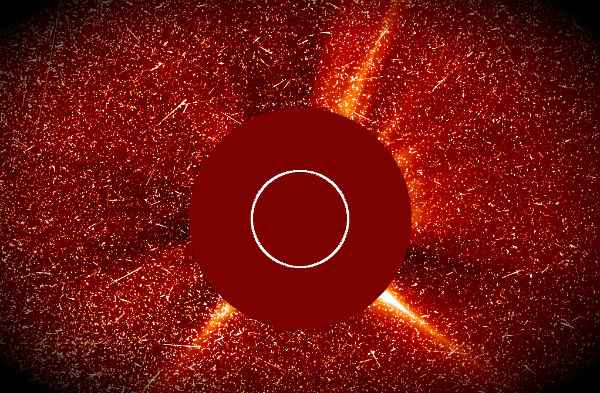
    A Coronal Mass Ejection (CME) is seen in the latest STEREO Ahead COR2 images on Thursday morning, and the source appears to be a filament channel eruption near region 1419 in the northwest quadrant. After a close look, the expanding cloud appears to be directed mostly

  • Subsiding geomagnetic storm with beautifull auroras

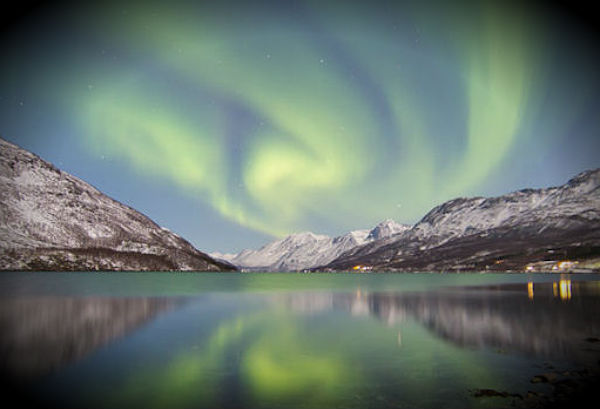
    The expected CME impact sparked aurora lights around the Arctic Circle on Feb. 14th. The display was probably caused by a CME, launched from the sun on Feb. 10th. Solar wind poured in and fueled a G1-class geomagnetic storm (Kp index was at level 5). Our

  • Auroras seen around parts of the Arctic Circle

    Earth passed through a minor solar wind stream on Feb. 4-5. The weak impact of the solar wind was just enough to spark auroras around parts of the Arctic Circle. The effects of the solar wind are subsiding, and the auroras might disappear into the moonlight for the