
Scientists find evidence of early continental rifting beneath Zambia
A study published in Frontiers in Earth Science presents isotopic evidence that parts of southern and central Africa may already be undergoing the early stages of continental breakup beneath a proposed tectonic corridor extending from Tanzania toward Namibia.
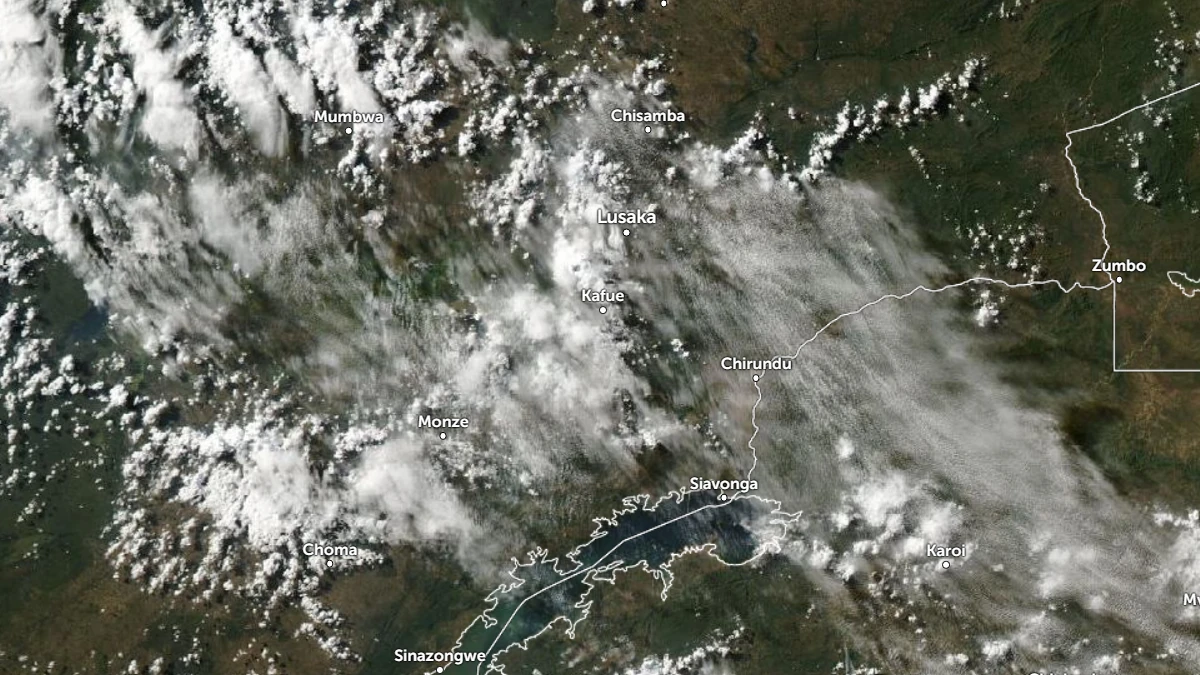
Satellite image of Kafue, Zambia, on May 11, 2026. Credit: EUMESAT/METEOSAT, Zoom Earth, The Watchers
Researchers studying geothermal springs in Zambia found chemical evidence that parts of southern and central Africa may already be entering the early stages of continental rifting. The study, published on May 12, 2026, identified mantle-derived helium and carbon isotope signatures in hydrothermal systems within Zambia’s Kafue Rift.
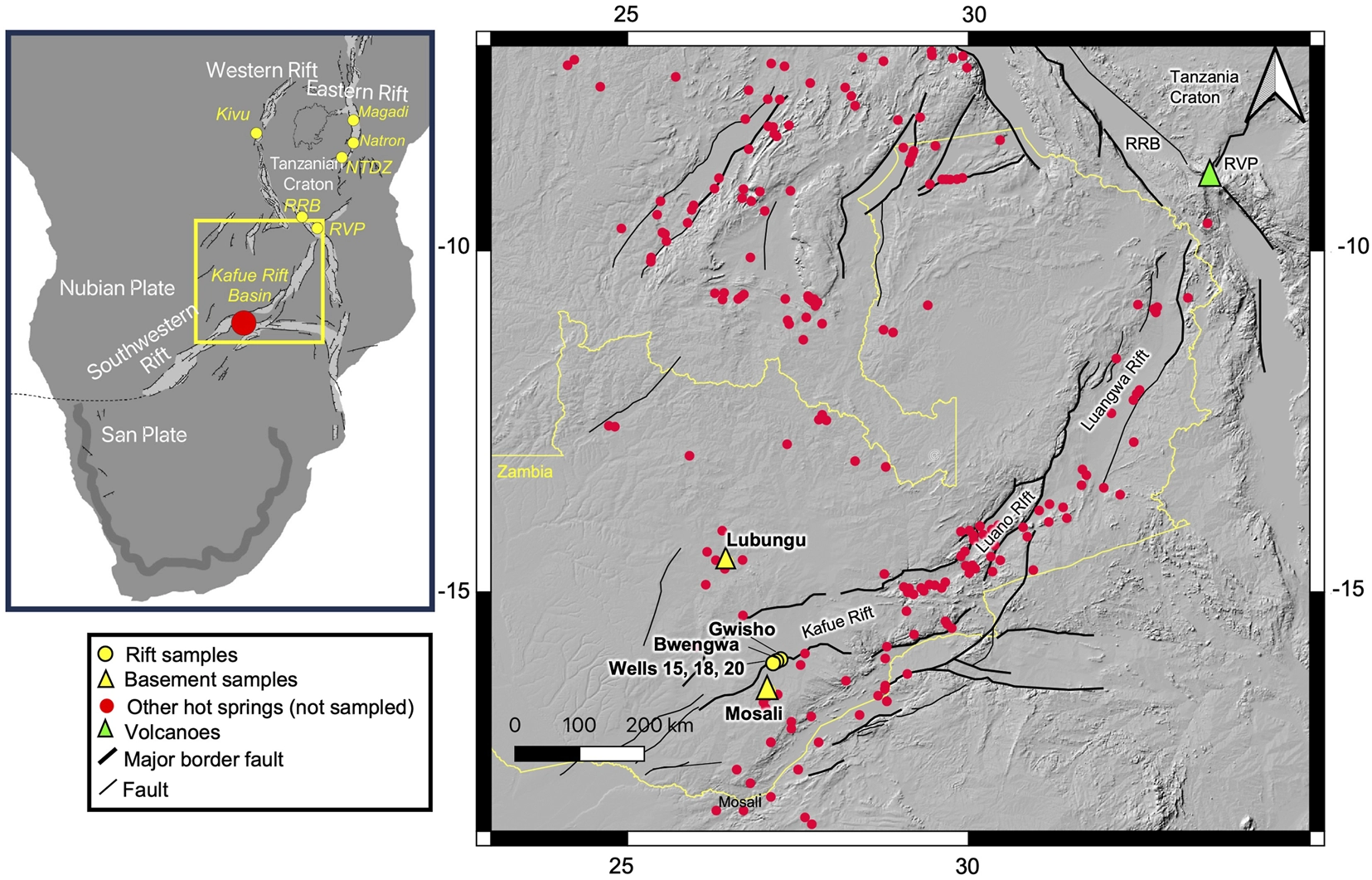
The findings support the idea that a broad tectonic corridor stretching from Tanzania through Zambia toward Botswana and Namibia may represent a developing continental rift system.
The structure extends about 2 500 km (1 553 miles) and connects the Luangwa, Luano, and Kafue rifts with the Okavango and Eiseb rift systems further southwest.
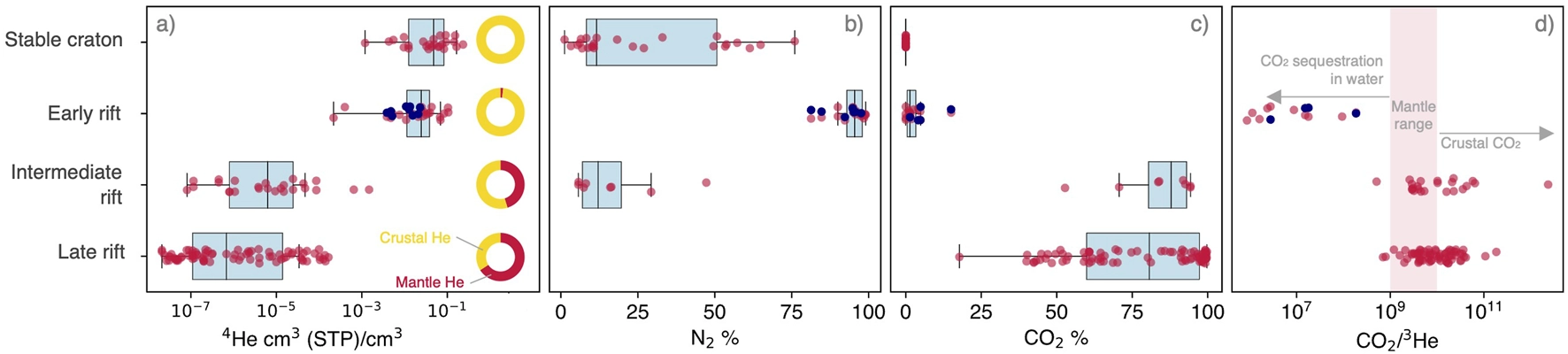
Continental rifting happens when tectonic forces slowly stretch and thin Earth’s lithosphere. Over long geological timescales, these processes can split continents apart and eventually form new ocean basins.
Scientists consider the East African Rift System one of the clearest modern examples of active continental breakup, but the earliest stages of rifting are often difficult to identify because deformation can remain subtle for millions of years.
To investigate whether active rifting is already underway beneath the Central African Plateau, the research team collected gas samples from geothermal wells and hydrothermal springs in and around the Kafue Rift. Six samples came from springs and wells located within the rift zone, while two were collected from older cratonic terrain outside the active fault system.
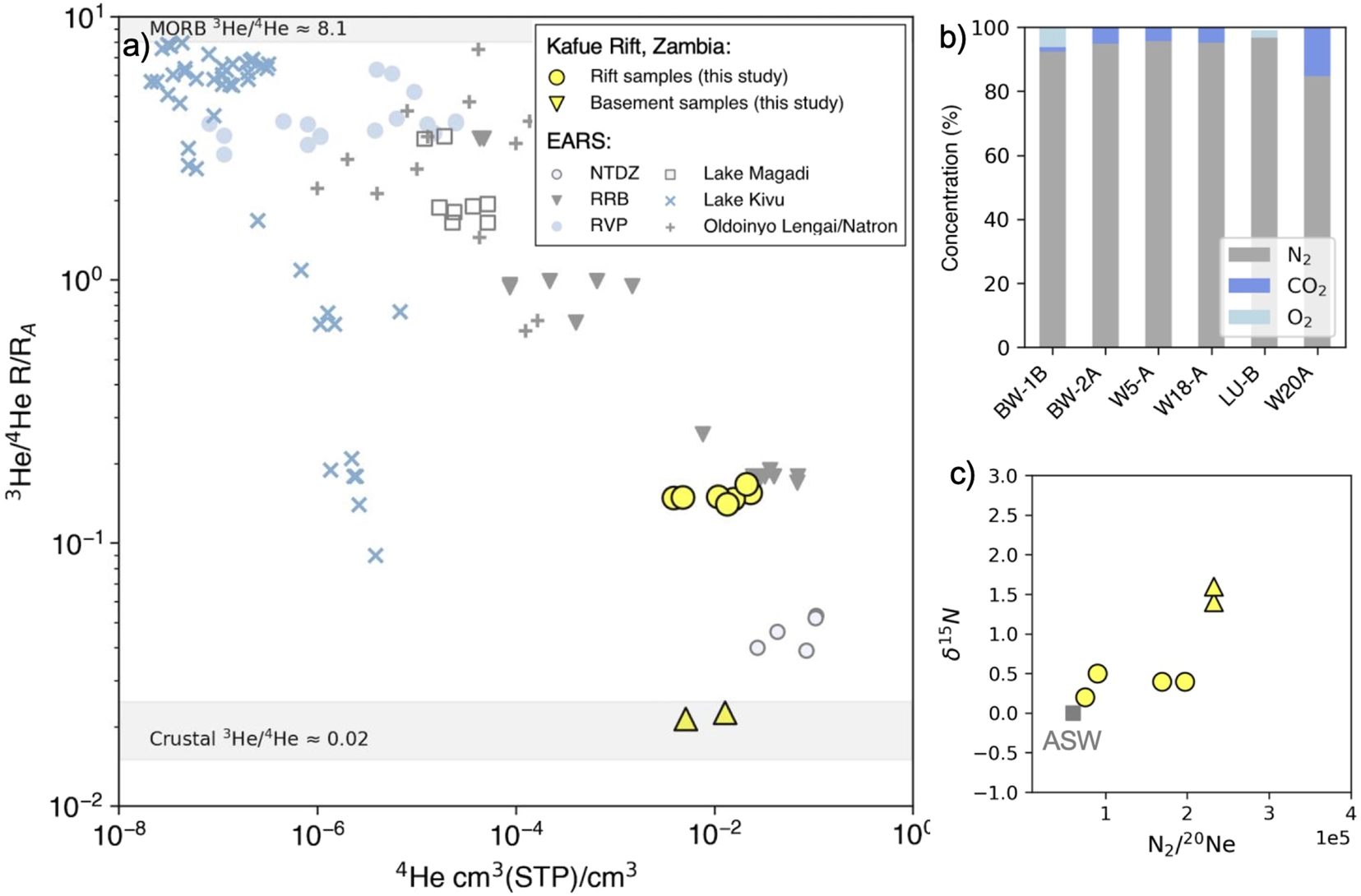
The samples collected within the Kafue Rift contained helium isotope ratios between 0.14 and 0.17 R/Ra and carbon isotope values near −3.9‰. According to the study, these measurements are consistent with mantle-derived fluids rising through deep crustal fault systems. Springs located outside the rift boundaries did not contain similar isotopic signatures.
The researchers said this contrast between rift-zone springs and surrounding basement-hosted springs is important because it points to active mantle-crust interaction beneath the Kafue Rift.
The geochemical patterns resemble conditions previously documented in the early development stages of segments within the East African Rift System, including the Rukwa Rift Basin and the Northern Tanzanian Divergence Zone.
The study references earlier geophysical research that identified several signs of active extension across the region, including fault scarps, elevated heat flow, low-gravity anomalies, and low-level seismicity. Previous work documented geothermal gradients exceeding 120 °C/km (248 °F/km) in parts of the area.
The researchers examined possible energy and resource implications associated with active fluid movement through deep fault systems. The combination of elevated heat flow, crustal permeability, seismic activity, and mantle-derived gases may create favorable conditions for geothermal energy development as well as helium and hydrogen exploration.
The paper also discusses a broader tectonic hypothesis proposing that ongoing deformation across Southern Africa may eventually separate part of the Nubian Plate into a distinct tectonic block referred to as the San Plate. If future seismic, geodetic, and geochemical studies support that interpretation, the Southwestern Rift of Africa would alter current tectonic interpretations of African plate dynamics.
References:
1 Karolytė R, Daly MC, Vivian-Neal P, Hillegonds D, Li L, Sherwood Lollar B and Ballentine CJ (2026) The Southwestern Rift of Africa: isotopic evidence of early-stage continental rifting. Front. Earth Sci. DOI: 10.3389/feart.2026.1799564

I am an Assistant Editor and Severe Weather & Science Journalist at The Watchers, specializing in real-time severe weather coverage, geophysical event reporting, and research-driven scientific analysis. You can reach me at rishav(at)watchers(.)news.

Good analysis.
Might we tie this to the LLSVP beneath we suspect has long persisted?
What about a line of questioning, ‘why is it so relatively stable?’ and why this stress pattern, where is the energy flow for this torque?
Craig Stone (ECDO hypothesis) might find this pertinent, for which I would also be carefully examining for freeze-thaw signatures from Holocene-onset depth, could make a very enjoyable extended field-trip on this most beautiful part of our restless planet. Thank you, Rishav.
I suspect Craig Stone ( ECDO hypothesis) may have a few words to say on this, thank you for highlighting.