
Long dormant Methana volcano was accumulating magma for over 100 000 years
A recent study found that the Methana volcano in Greece remained inactive for over 100 000 years while magma continued accumulating beneath the surface, a process the authors describe as “silent” magma reservoir growth. This challenges the traditional idea of volcanic dormancy, in which volcanoes that haven’t erupted in the last 10 000 years are classified as dormant.
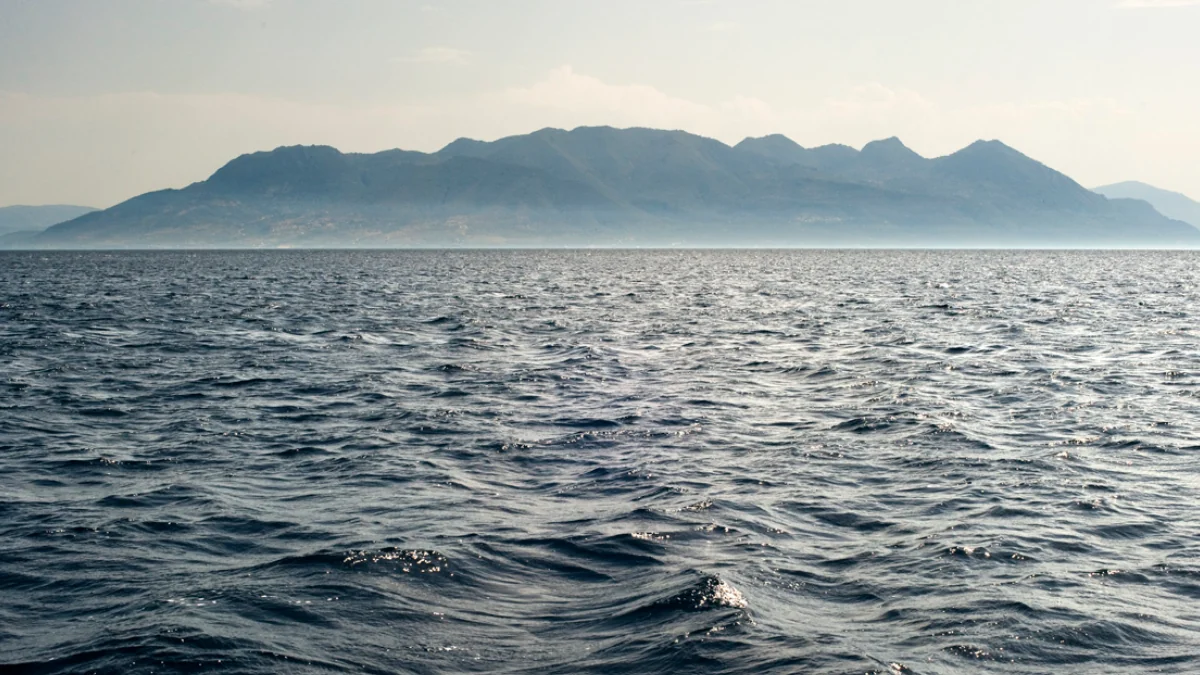
Panoramic view of the Methana peninsula. Credit: Ggia
The findings of the study change how scientists understand dormant volcanoes and suggest that long periods without eruptions do not always mean a volcano is extinct.
Methana volcano is part of the South Aegean Volcanic Arc and lies less than 60 km (37 miles) from Athens. The volcanic field contains more than 31 known eruptions spread across an area about 8 km by 6 km (5 by 3.7 miles).
Its most recent eruption took place about 2 250 years ago and may correspond to an eruption described by the ancient Greek historian Strabo.
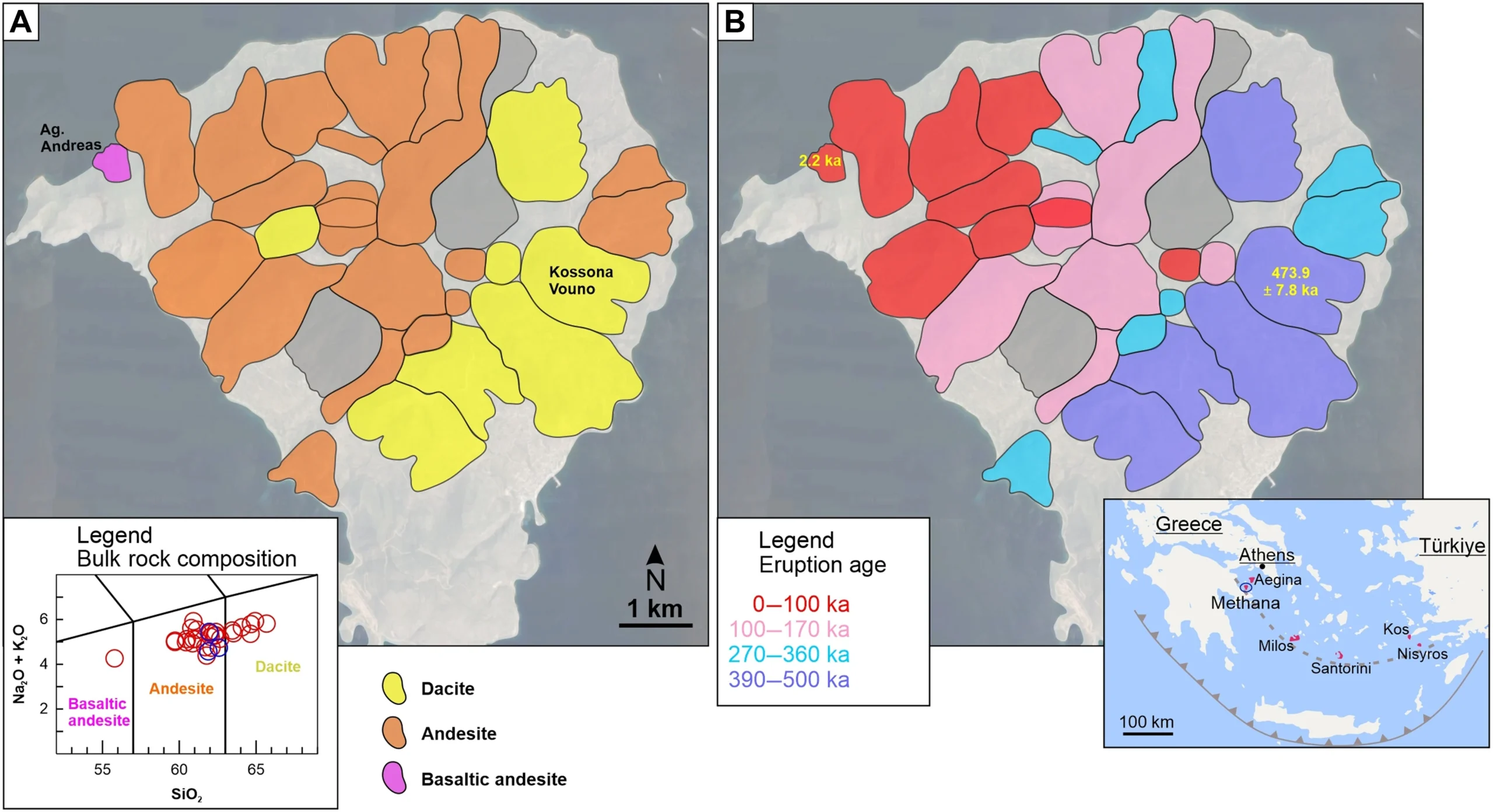
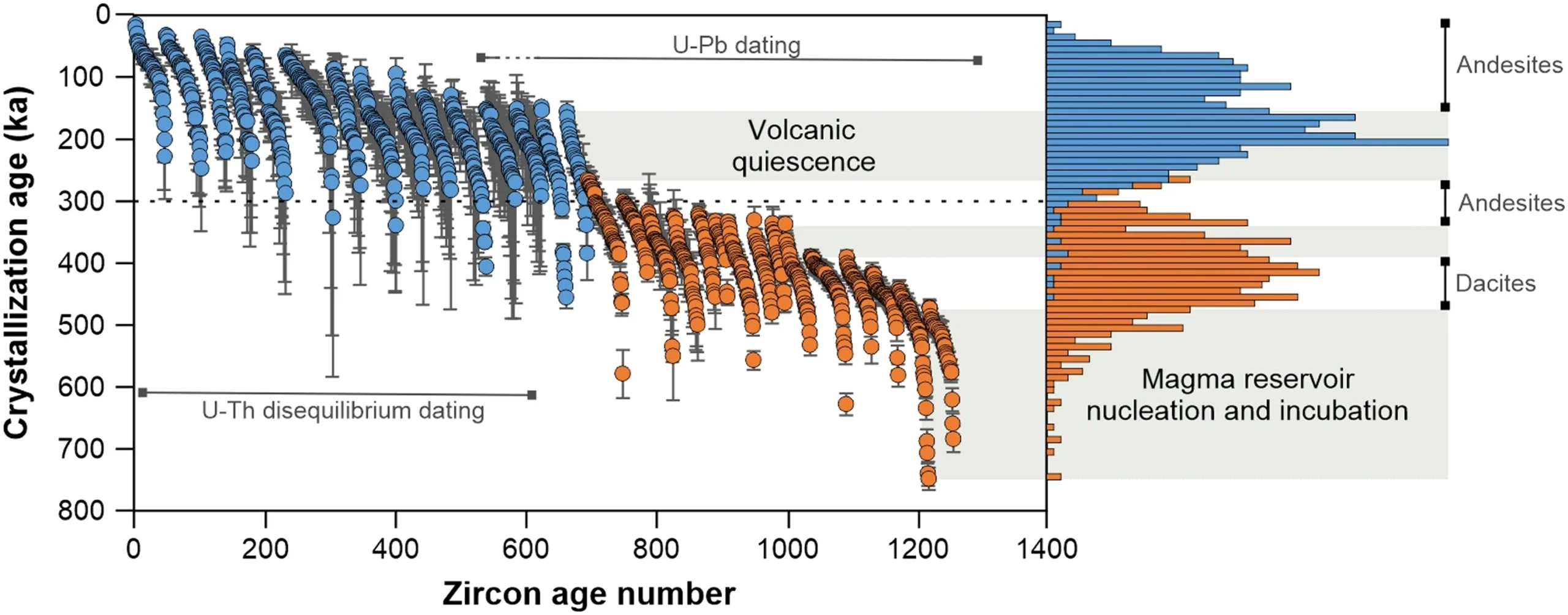
Researchers analyzed more than 1 250 zircon crystals collected from volcanic rocks. The crystals act like tiny geological clocks by preserving the information from when they were crystallized due to the magma and helped scientists reconstruct about 700 000 years of magma reservoir evolution beneath Methana.
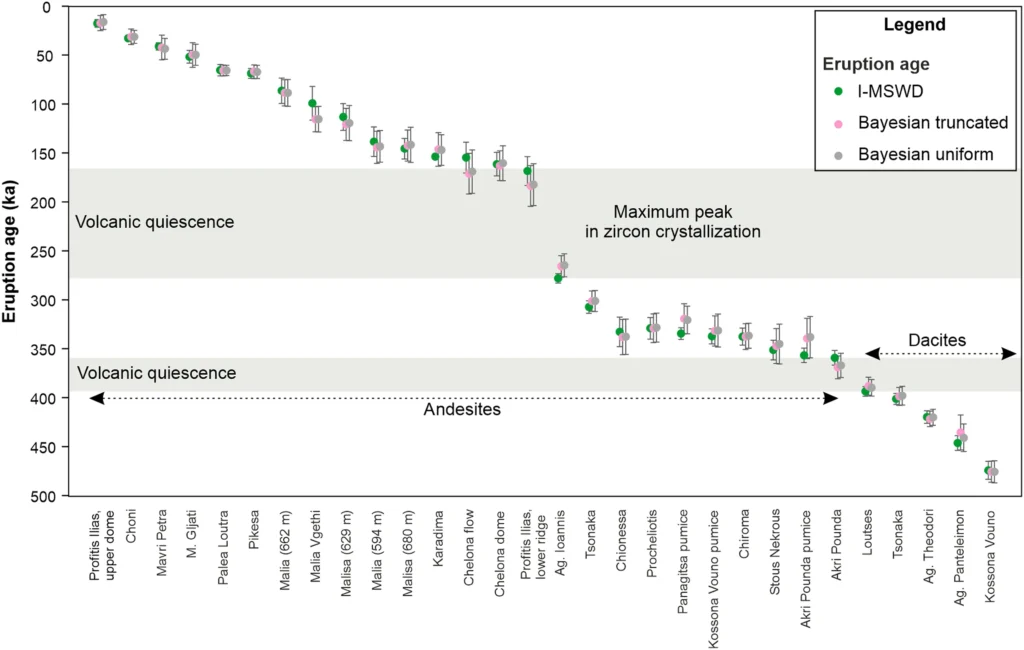
The data showed that the volcano’s underground magma system was active for hundreds of thousands of years before the first known eruption.
Later, after eruptions slowed around 280 000 years ago, the volcano entered a quiet period lasting more than 100 000 years. However, zircon formation actually increased during this time, meaning magma was still accumulating underground despite no eruptions happening at the surface.
The period before the 110 000-year eruptive pause showed the strongest signs of water-rich magma. Researchers believe the magma evolved from containing about 4–5% dissolved water to more than 6%, which likely helped magma remain trapped underground.
As the magma rose through the crust, it cooled, released gas, and became thicker and more viscous. Instead of erupting at the surface, much of the magma stalled underground and slowly expanded the magma reservoir beneath the volcano.
While such developments are usually accompanied by eruptions that create magma chambers, researchers say Methana is an example of “silent” magma reservoir growth, where the underground system continued developing even though the volcano appeared inactive at the surface.
The study also found that the underground magma system changed over time as the mantle beneath the volcano became more influenced by materials released from the subducting tectonic plate. This process increased the amount of water in the magma and helped create the conditions needed for long-term magma storage beneath the crust.
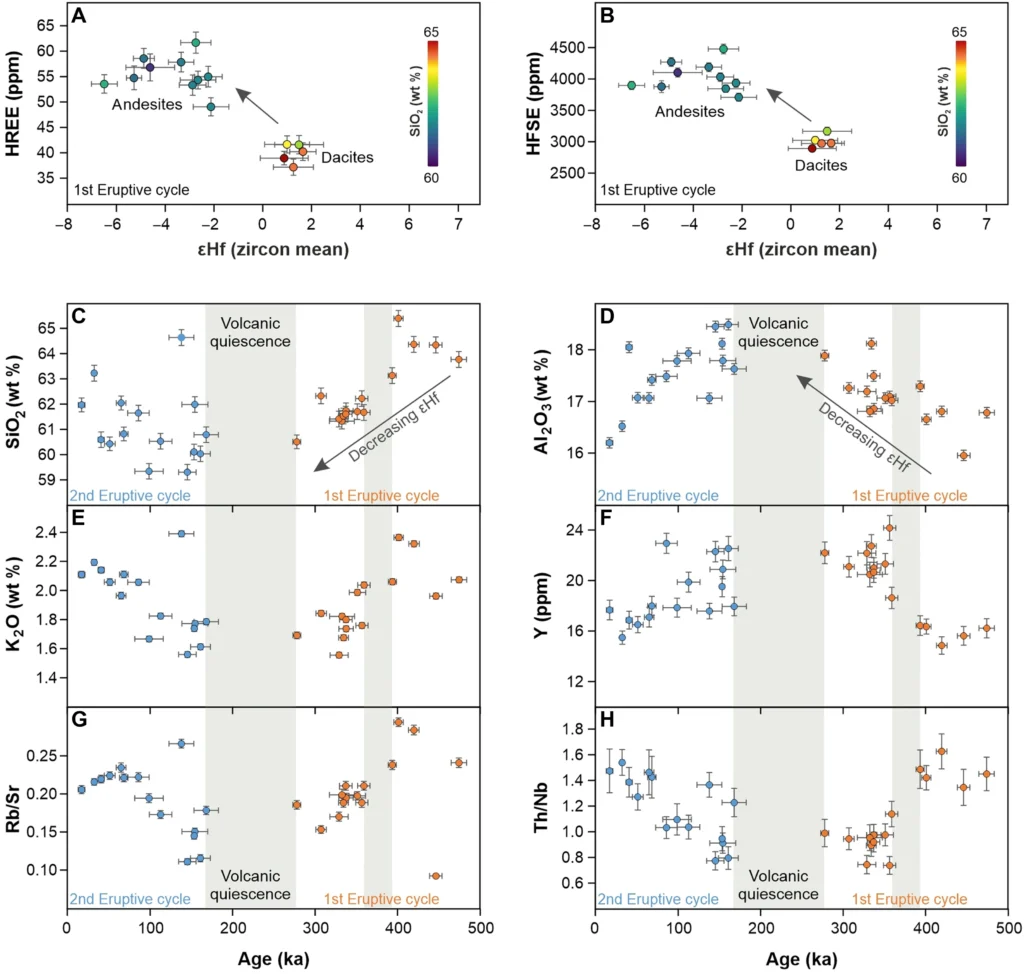
The study challenges the idea that volcanoes are extinct after very long quiet periods. Scientists often classify volcanoes as extinct if they have not erupted for more than 10 000 years, but Methana shows magma can still be building underground during these dormant periods
The researchers also suggest that repeated periods of underground magma growth may eventually help some volcanic systems develop into larger and potentially more dangerous caldera-forming volcanoes.
References:
1 Popa, R.-G., Bachmann, O., Guillong, M., & Giuliani, A. (2026). A volcano reawakens after more than 100,000 years of “silent” magma reservoir growth. Science Advances, 12(17), eaec9565. https://doi.org/10.1126/sciadv.aec9565

I am an Assistant Editor and Severe Weather & Science Journalist at The Watchers, specializing in real-time severe weather coverage, geophysical event reporting, and research-driven scientific analysis. You can reach me at rishav(at)watchers(.)news.

Commenting rules and guidelines
We value the thoughts and opinions of our readers and welcome healthy discussions on our website. In order to maintain a respectful and positive community, we ask that all commenters follow these rules.