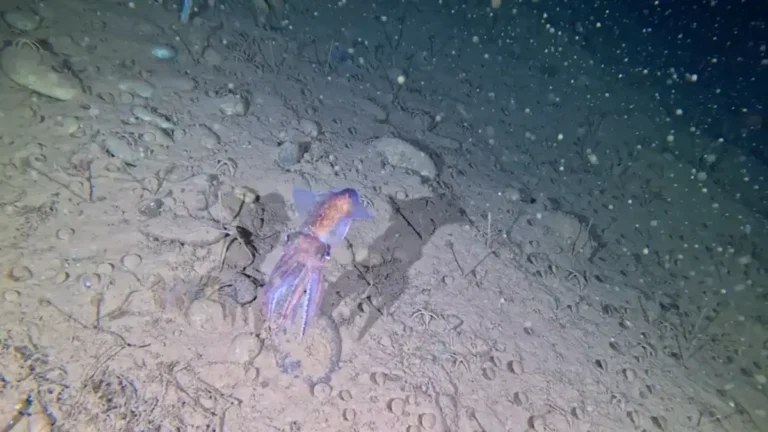
• Underwater robot captures first confirmed sighting of Arctic bobtail squid in the wild

    An underwater robot launched from a small expedition vessel has captured the first confirmed images of the elusive Arctic bobtail squid (Rossia moelleri) in its natural habitat, including a mature female alongside clusters of eggs in the icy waters of Northeast Greenland National Park. The discovery, published on July 18, 2026, in Polar Biology, provides the first confirmed in situ record of the species and the first direct evidence of it reproducing in its natural Arctic habitat.
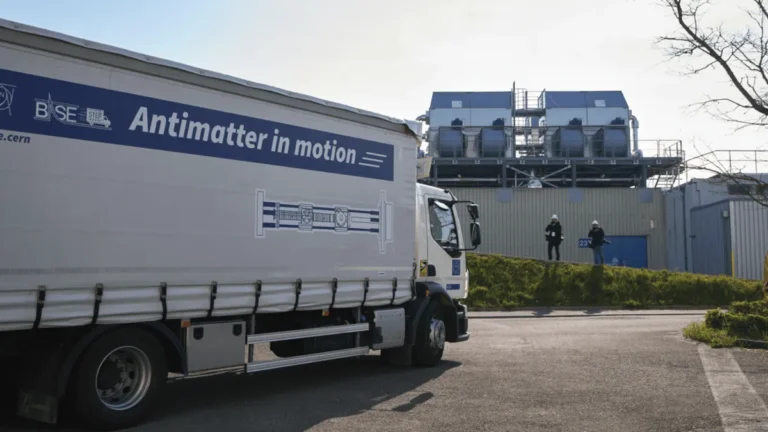
  • CERN achieves first transport of trapped antimatter by truck

    Scientists from CERN’s BASE experiment transported a trap containing 92 antiprotons across the laboratory’s main site on March 23, 2026, marking the first successful truck transport of trapped antimatter at CERN. The portable cryogenic trap remained operational during and after the move, demonstrating that antiprotons can be relocated for future high-precision measurements in lower-noise laboratories.

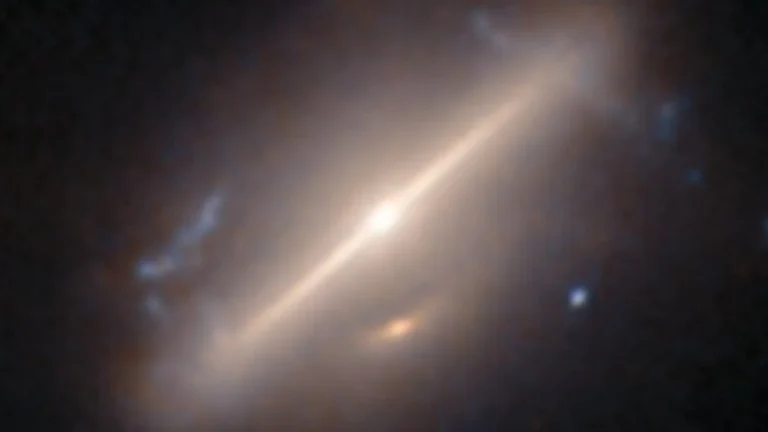
  • ESA researchers use neural network to identify hundreds of rare cosmic anomalies, including several dozen that defy classification

    A neural network tool developed by the European Space Agency (ESA) analyzed nearly 100 million cutouts from the Hubble Legacy Archive in just two and a half days, identifying about 1 400 anomalous objects – more than 800 never previously catalogued. Several dozen of these defied classification altogether, showing the potential and the limits of AI in astronomical discovery.

  • Structured AI beats humans in disaster decision-making by 39%

    Researchers have created a new AI framework that achieved 60.94% greater stability in decision accuracy compared to judgment-only AI systems, and outperformed human operators by 38.93%. The codebase is openly available and evaluated on CrisisMMD, xBD, and RescueNet datasets, with a public web app used to gather human responses.