• Geomagnetic storm reaches G3 – Strong level after dual CME impact

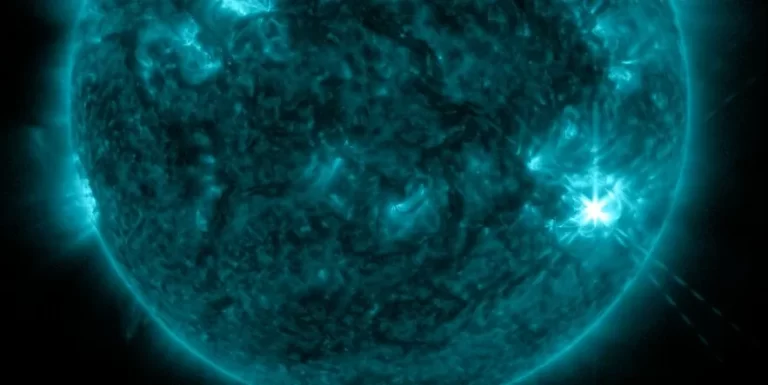
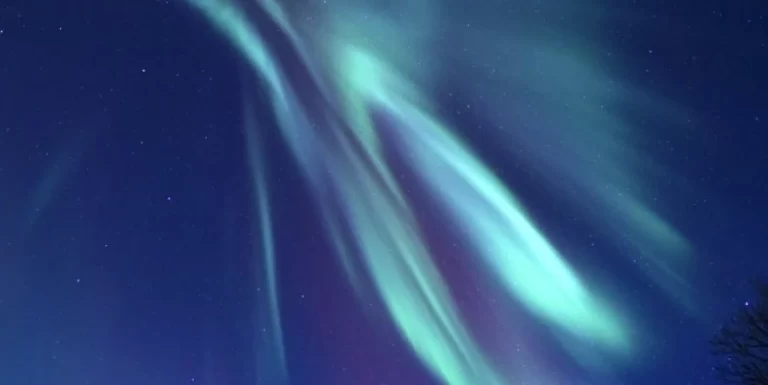
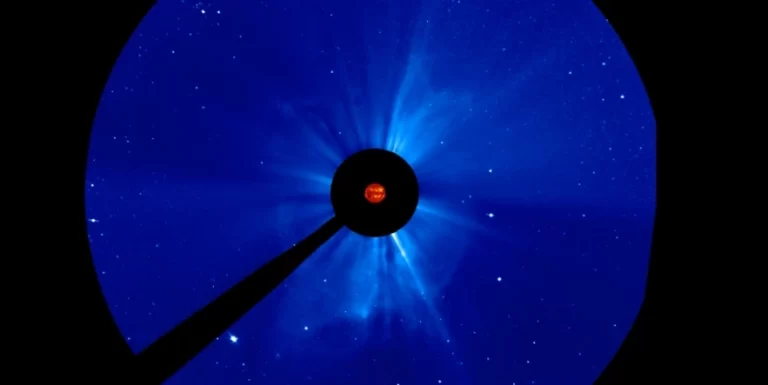
    A G3 – Strong geomagnetic storming was observed on Sunday, November 5, 2023, as a result of the impact of two successive coronal mass ejections (CMEs) from the Sun. The storm produced auroras extending into the lower latitudes such as Colorado and Texas in the United States and Greece in Europe, which is unusual for such regions. Many people across both hemispheres have also recorded and captured rare red aurora.

  • Rare pure sine wave detected in Earth’s magnetic field

    On October 17, Rob Stammes, a Norwegian citizen scientist, detected a rare magnetic oscillation in Earth’s magnetic field from his space weather observatory in Lofoten, Norway. The event, termed a “pulsation continuous” or Pc3 in this case, lasted for over 20 minutes and was caused by a gentle gust of solar wind.

  • Rare red auroras seen as far south as France

    The Coronal Mass Ejection (CME) that was launched on September 22, 2023, hit Earth’s magnetic field on September 24 at 20:43 UTC, sparking a moderate G2 – Moderate geomagnetic storm and rare red auroras. Initially detected in Canada where magnetometer readings spiked by 129 nT, the event later became visible across Europe, reaching as far south as France.

  • Strong M8.7 solar flare erupts from Region 3435

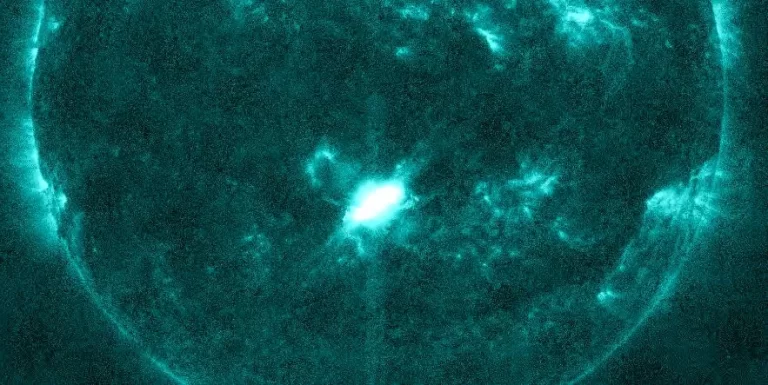
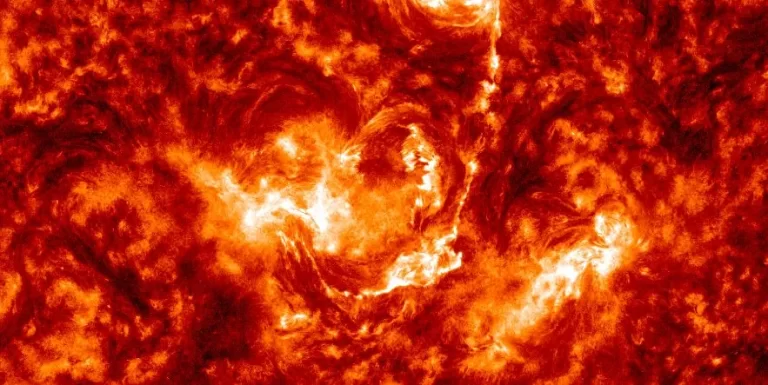
    A strong solar flare measuring M8.7 erupted from Active Region 3435 at 12:54 UTC on September 21, 2023. The event started at 12:42 and ended at 13:02 UTC. This is the second M8+ solar flare since M8.2 at 14:11 UTC on September 20.

  • G2 – Moderate to G3 – Strong geomagnetic storm conditions forecast for September 19

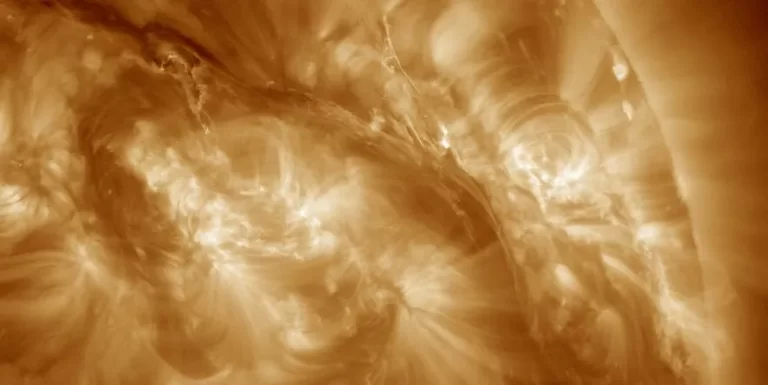
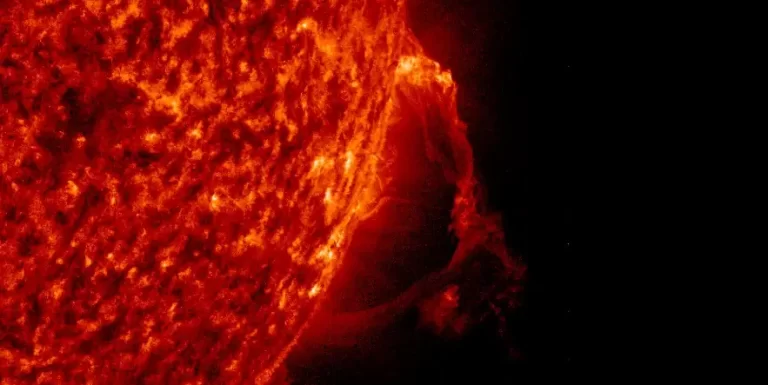
    An approximate 35-degree solar filament eruption centered near N22W17 began lifting off at 04:34 UTC on September 16, 2023. The event resulted in a halo coronal mass ejection (CME) that was first observed off the W limb at 09:12 UTC. Analysis of the filament eruption and subsequent halo CME determined a likely arrival early on September 19.