Long-duration M4.2 solar flare erupts from Region 3575
A long-duration M4.2 solar flare erupted from Active Region 3575 at 03:12 UTC on February 6, 2024. The event started at 02:37 UTC and ended at 03:37.

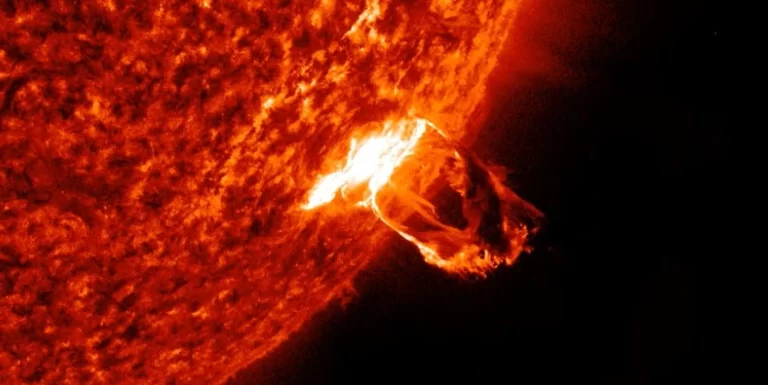
A long-duration M4.2 solar flare erupted from Active Region 3575 at 03:12 UTC on February 6, 2024. The event started at 02:37 UTC and ended at 03:37.
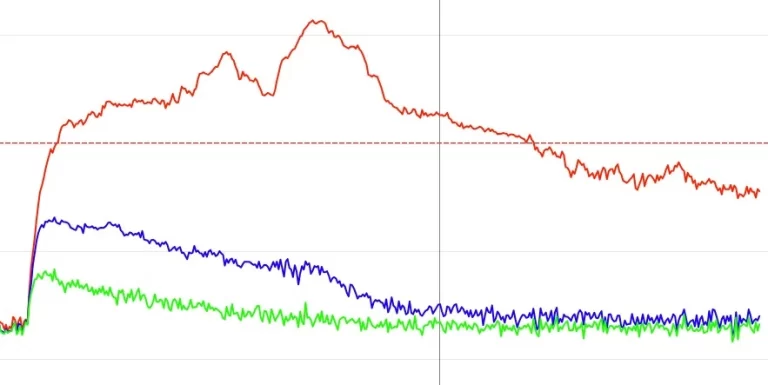
Following the M6.7 solar flare from Active Region 3559 on January 29, 2024, enhanced proton levels were recorded, with the greater than 10 MeV reaching the S2 – Moderate threshold and greater than 100 MeV peaking at 0.67 pfu.
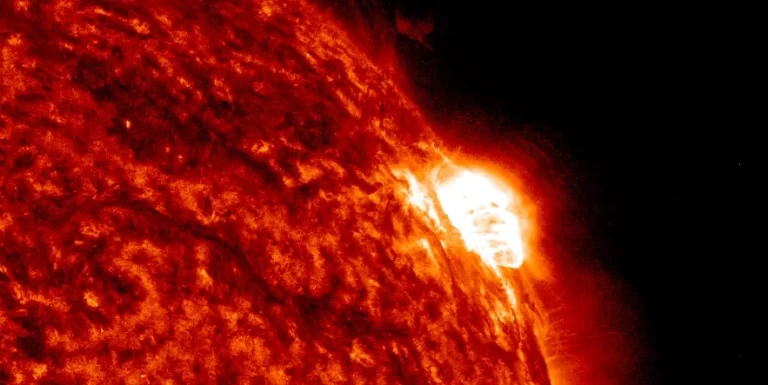
A moderately strong solar flare measuring M6.7 erupted from Active Region 3559 (beta-gamma) at 04:38 UTC on January 29, 2024. The event started at 03:54 and ended at 05:15 UTC.
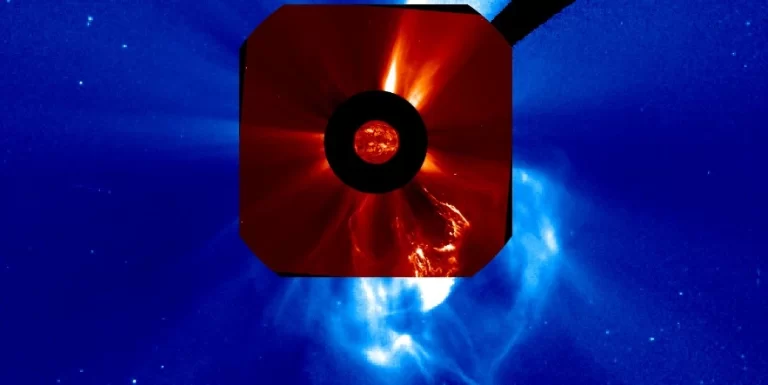
An approximately 25 degrees in length filament eruption centered near S35W09, began erupting after 09:00 UTC on January 22, 2024, producing an Earth-directed CME. The estimated time of arrival is January 25.
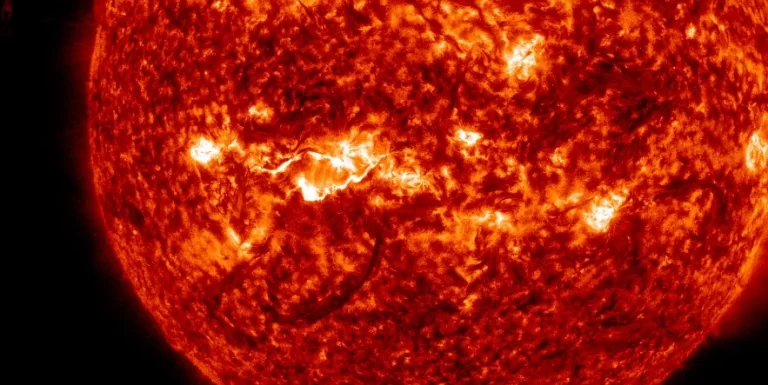
A coronal mass ejection produced by a filament eruption on January 20, 2024, is expected to reach Earth late January 22, producing G2 – Moderate geomagnetic storming.
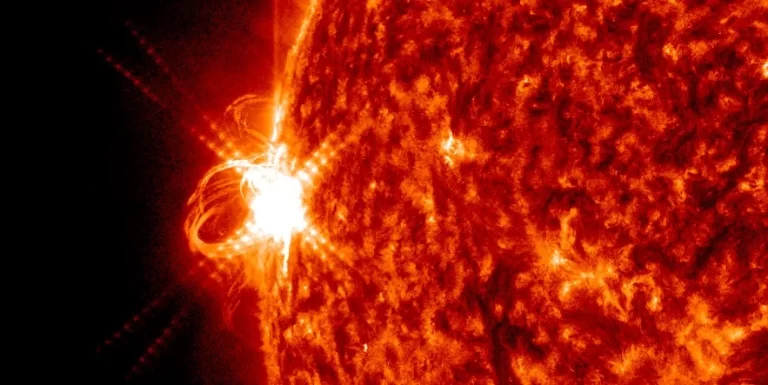
A major X5.0 solar flare erupted from Active Region 3536 at 21:55 UTC on December 31, 2023. The event started at 21:36 and ended at 22:08 UTC. This is now the strongest solar flare of the current solar cycle — Solar Cycle 25 — and the strongest flare since X9.3 on September 6, 2017.
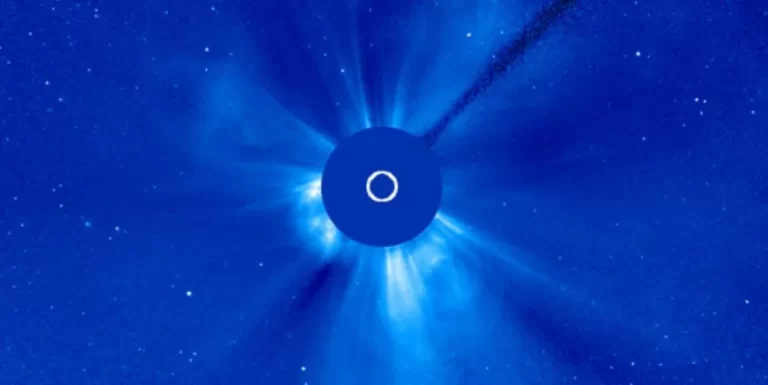
Multiple M-class solar flares and CMEs were recorded on December 24, 2023. Forecasts indicate potential geomagnetic disturbances with a grazing blow expected late on December 27, 2023.
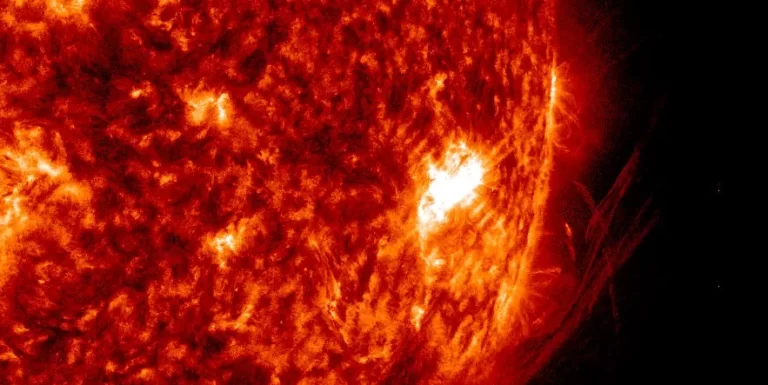
A moderately strong solar flare measuring M4.2 erupted from Active Region 3519 at 05:38 UTC on December 21, 2023. The event started at 05:19 and ended at 05:49 UTC.

A major solar event occurred on December 14, 2023, when a powerful solar flare measuring X2.8 erupted from Active Region 3514. This event, which started at 16:47 and ended at 17:12 UTC, is the strongest solar flare since September 10, 2017, and the strongest solar flare of the current Solar Cycle.
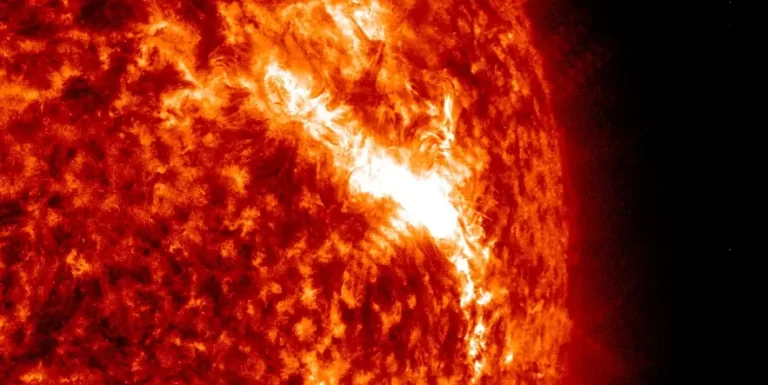
A powerful solar flare measuring X2.8 erupted from Active Region 3514 at 17:02 UTC on December 14, 2023. The event started at 16:47 and ended at 17:12 UTC. This is the strongest solar flare of the current Solar Cycle.
