SAR arc outbreak over the Baltics and Russia
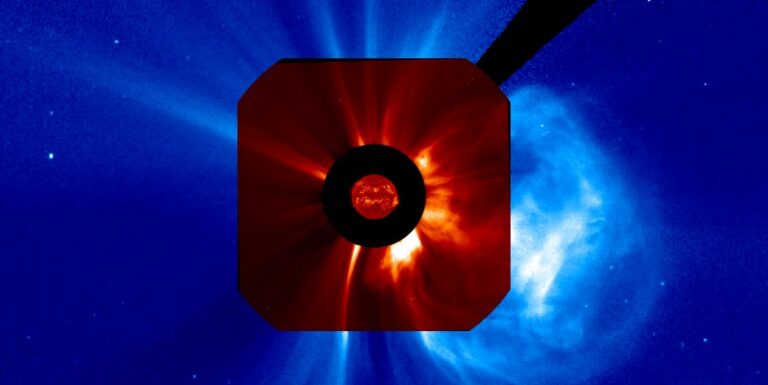
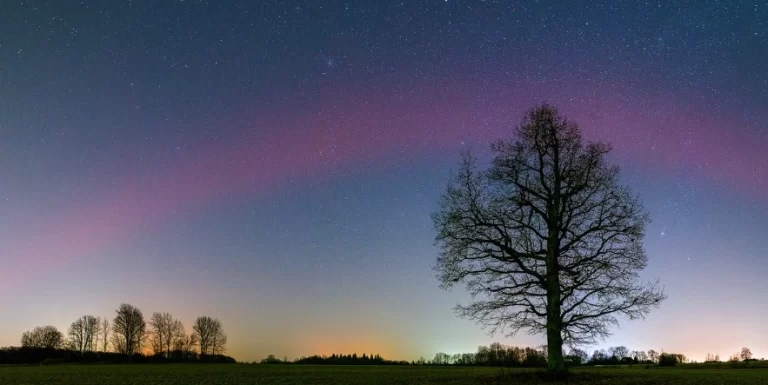
A coronal mass ejection (CME) that hit Earth on March 3, 2024, sparked G2 – Moderate geomagnetic storming with widespread Stable Auroral Red (SAR) arcs over the Baltics and Russia.

A coronal mass ejection (CME) that hit Earth on March 3, 2024, sparked G2 – Moderate geomagnetic storming with widespread Stable Auroral Red (SAR) arcs over the Baltics and Russia.

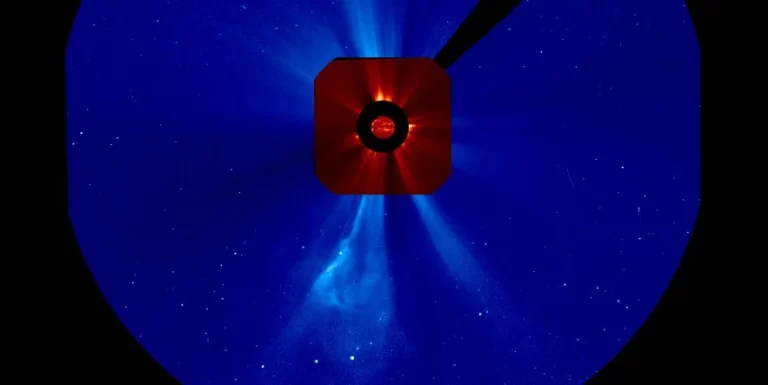
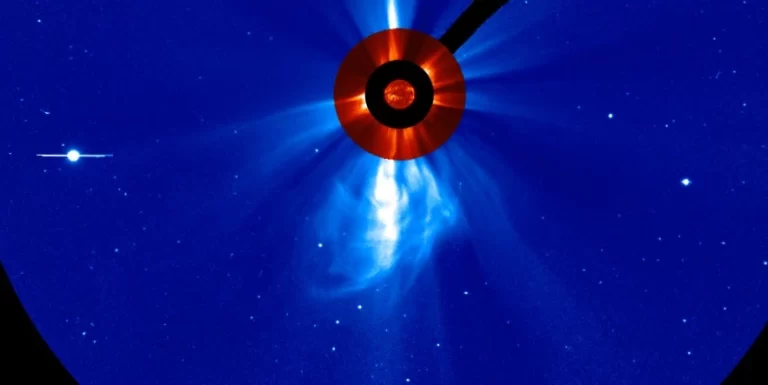
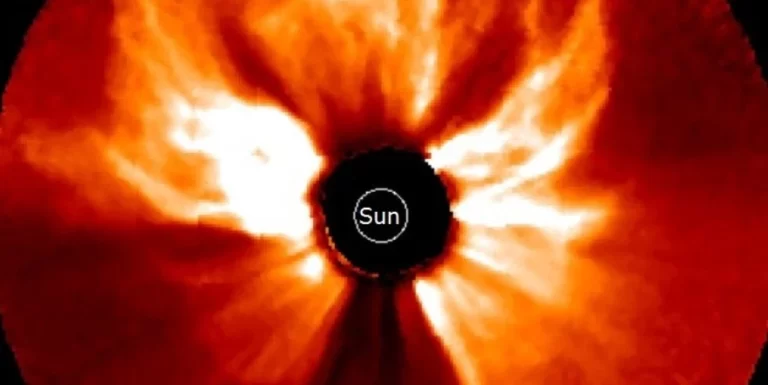
A solar filament eruption centered near S35E50 took place around 20:00 UTC on March 5, 2024, producing a large coronal mass ejection (CME) which is expected to slightly graze Earth late March 8. G1 – Minor geomagnetic storms are possible on March 9 due to the combined effects of a negative polarity CH HSS and this CME.

A coronal mass ejection (CME) produced by C5.1 solar flare on February 28, 2024, impacted Earth at approximately 08:45 UTC on March 3, producing G2 – Moderate geomagnetic storming.

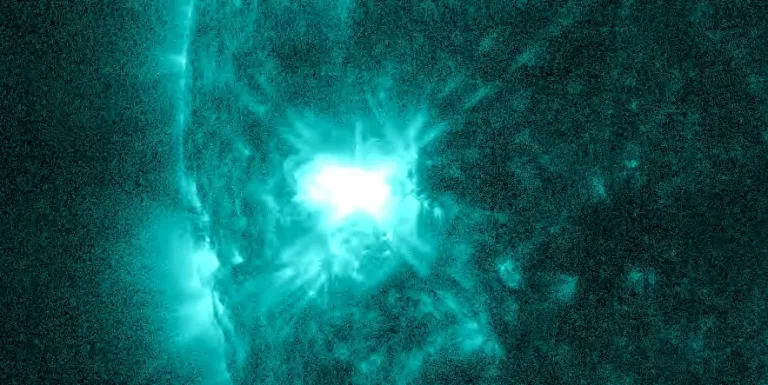
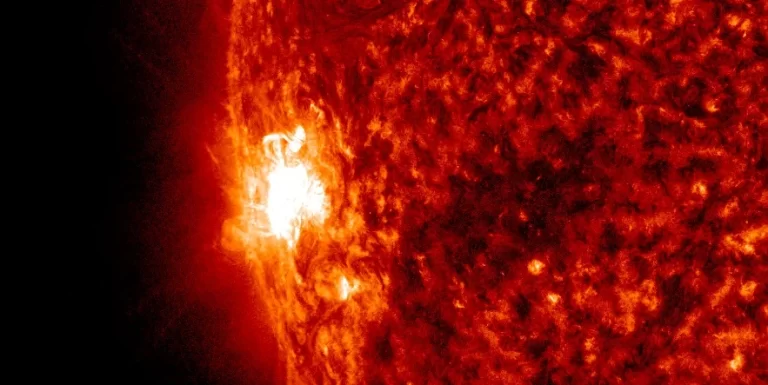
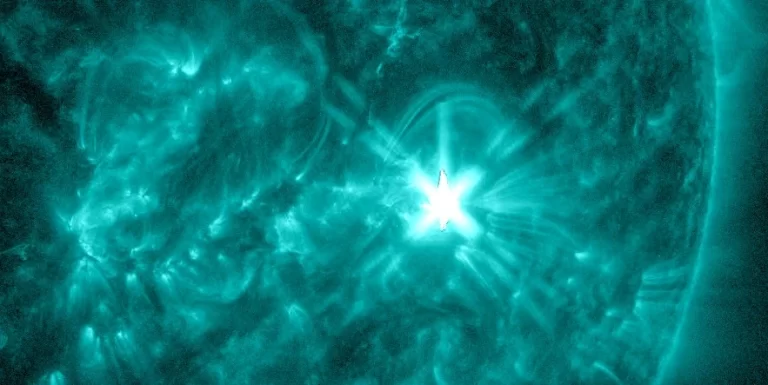
A major X6.3 solar flare erupted from Active Region 3590 at 22:34 UTC on February 22, 2024. The event started at 22:08 UTC and ended at 22:43.

Two X-class solar flares erupted over the past 9 hours — the first was X1.8 at 23:07 UTC on February 21 and the second X1.7 at 06:32 UTC on February 22, 2024. Both erupted from Active Region 3590.

A recent study by the University of Oulu, Finland, has revealed a significant connection between the aurora borealis, or Northern Lights, and variations in winter temperatures and electricity consumption in Finland, highlighting the role of energetic particle precipitation in affecting regional climate and energy demands.

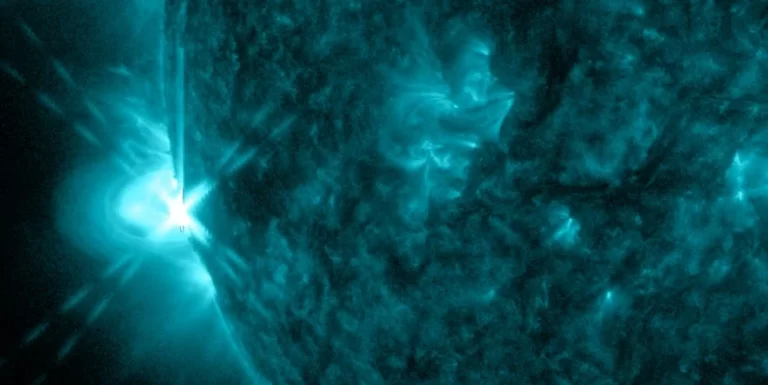
An impulsive solar flare measuring X2.5 erupted from Active Region 3576 (beta-gamma) at 06:53 UTC on February 16, 2024. The event started at 06:42 and ended at 06:58 UTC. This is the fourth strongest solar flare of Solar Cycle 25 — after X5.0 on December 31, 2023, X3.3 on February 9, 2024, and X2.8 on December 14, 2023.

At least three coronal mass ejections (CMEs) are heading toward Earth. The impact is expected early on February 13 (UTC), producing G2 – Moderate or stronger geomagnetic storming.

Proton flux started rapidly rising at 07:30 UTC on February 12, 2024, following what appears to be an eruption from the old Region 3575 – now traversing the farside of the Sun.

A moderately strong M6.5 solar flare erupted from Active Region 3576 at 03:48 UTC on February 12, 2024. The event started at 03:23 and ended at 03:53 UTC.