Harsha Borah is an experienced content writer with a proven track record in the industry. Harsha has worked with LitSpark Solutions and Whateveryourdose, honing skills in creating engaging content across various platforms. A gold medalist in a state-level writing competition organized by Assam Tourism, Harsha’s travelogue on Tezpur was widely appreciated. Harsha’s article, "The Dark Tale of the Only Judge in India to Be Hanged," ranks second on Google and has garnered over 11 000 views and 8 900 reads on Medium. Outside of writing, Harsha enjoys reading books and solving jigsaw puzzles.

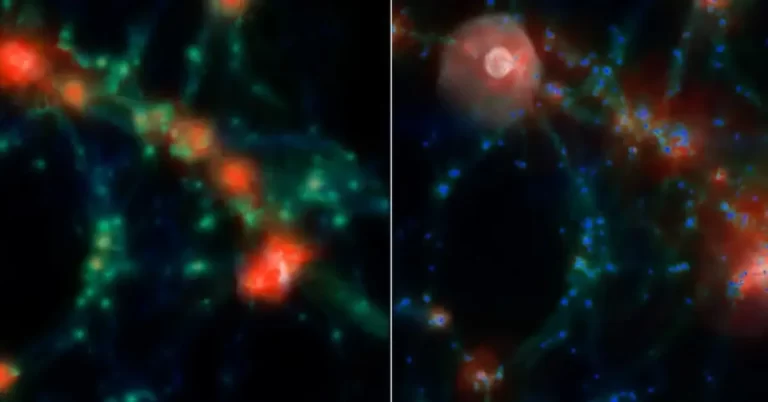
  • Galaxies in denser regions up to 25% larger than those in less crowded locations

    A new study discovered that galaxies in denser astronomical surroundings are up to 25% larger than those in less crowded locations. This study, published on August 14, 2024, in The Astrophysical Journal, stressed the importance of ambient density in galaxy size, refuting prior theories that focused solely on internal processes.

  • Discovery of a diamond-rich core-mantle boundary offers new information into Mercury’s evolution

    Scientists discovered that Mercury may have a 16 km (10-mile) thick diamond layer at its core-mantle barrier. This revelation, based on NASA’s MESSENGER mission data and high-pressure laboratory experiments, shed new light on the planet’s complicated interior structure and thermal development. The team was led by Yongjiang Xu and Yanhao Lin of the Center for…

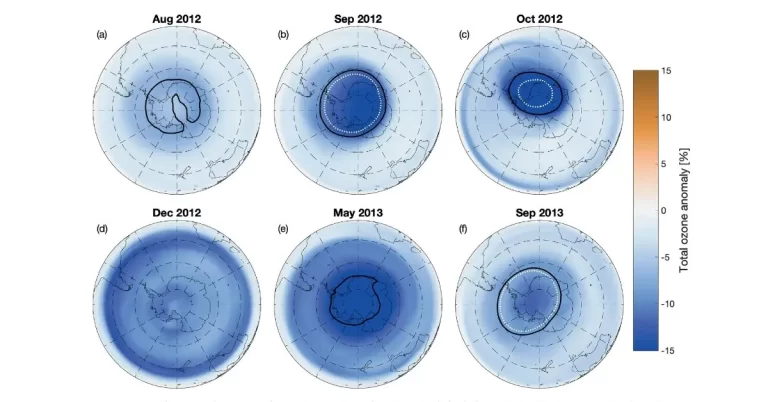
  • 20-year study reveals significant ozone depletion due to decades of solar proton events

    A comprehensive study led by Grigoriy Doronin, using data from NASA’s Aura MLS and NOAA’s SWPC, examined mesospheric ozone depletion due to solar proton events (SPEs) over the past two decades. The study, which ran from 2004 to 2024, demonstrated the considerable impact of high-energy protons from the Sun on ozone levels, indicating notable changes in depletion patterns across the northern and southern hemispheres.

  • Historic solar wind event reveals Alfvén wings in Earth’s magnetosphere

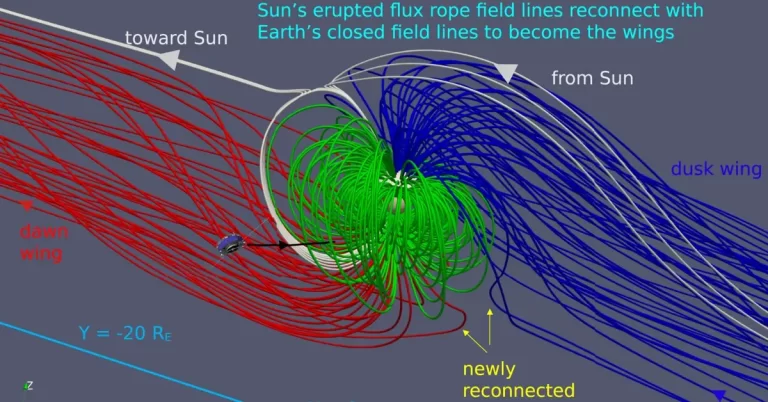
    New research published in Geophysical Research Letters reveals an unprecedented solar wind event observed by NASA’s Magnetospheric Multiscale (MMS) mission on April 24, 2023, when a massive coronal mass ejection (CME), with a low plasma beta of 0.01, caused Earth’s magnetosphere to lose its typical tail and form Alfvén wings. This event, lasting about two hours, provides new insights into space weather processes and the interaction between CME plasma and Earth’s magnetic field.

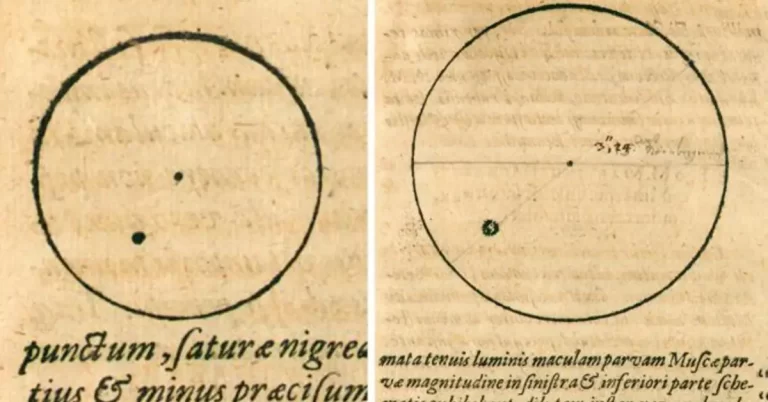
  • Kepler’s forgotten sunspot observations reshape our understanding of Maunder Minimum, coldest part of Little Ice Age

    Johannes Kepler’s half-forgotten 1607 sunspot drawings were re-examined in a 2024 study and revealed previously hidden information about the solar cycles before the Maunder Minimum, a unique grand solar minimum in observational history. This study questions previous assumptions and improves on the historical chronology of solar cycles.

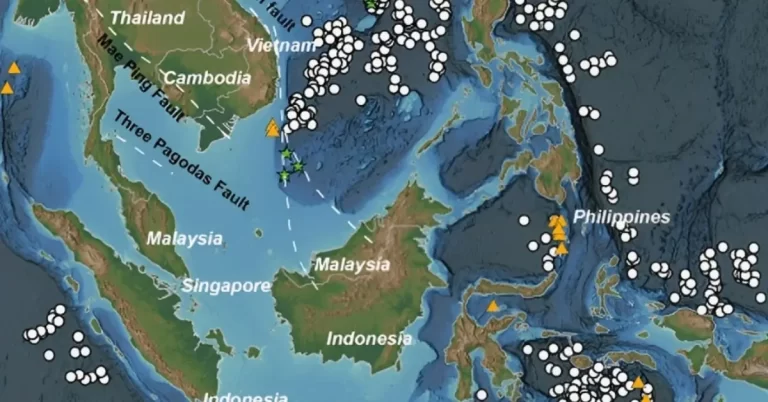
  • Study maps 466 submarine volcanoes in Southeast Asia and surrounding regions

    Recent research from the Earth Observatory of Singapore (EOS) at Nanyang Technological University (NTU) has indicated that Singapore, which was previously thought to be safe, may be vulnerable to volcanic eruptions and tsunamis. The study, published in EGU’s Natural Hazards and Earth System Sciences in April 2024, discovered 466 submarine volcanoes in the region, emphasizing the potential threats posed by submerged seamounts in the South China Sea.