Harsha Borah is an experienced content writer with a proven track record in the industry. Harsha has worked with LitSpark Solutions and Whateveryourdose, honing skills in creating engaging content across various platforms. A gold medalist in a state-level writing competition organized by Assam Tourism, Harsha’s travelogue on Tezpur was widely appreciated. Harsha’s article, "The Dark Tale of the Only Judge in India to Be Hanged," ranks second on Google and has garnered over 11 000 views and 8 900 reads on Medium. Outside of writing, Harsha enjoys reading books and solving jigsaw puzzles.

  • Ancient asteroid impact shifted Ganymede’s axis by 7 degrees, changing its geological history

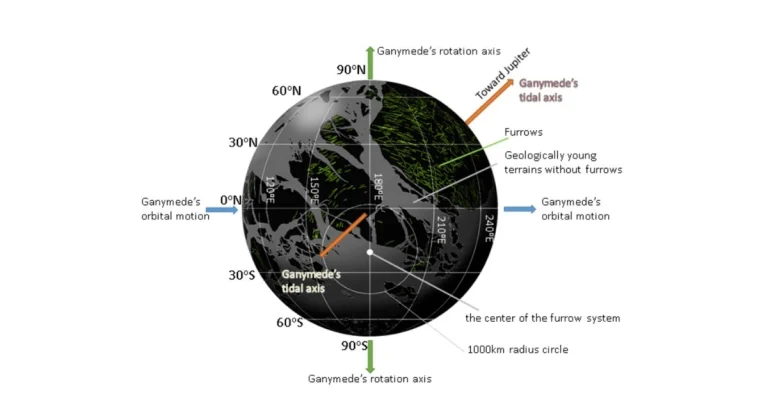
    A massive asteroid struck Ganymede, Jupiter’s and the Solar System’s largest moon, roughly 4 billion years ago, producing a significant shift in its rotational axis. This event, which formed the conspicuous Valhalla Basin, was so powerful that it shifted Ganymede’s axis about 7 degrees, changing the moon’s geological history.

  • ESA’s Juice spacecraft flies through Van Allen radiation belts

    ESA’s Jupiter Icy Moons Explorer (Juice) spacecraft successfully passed through Earth’s Van Allen radiation belts, completing a significant achievement in its mission to explore Jupiter. The mission, led by ESA, tested the RADiation-hard Electron Monitor (RADEM), designed to measure high-energy particles in severe settings.

  • Magnetic waves behind decades-long mystery of solar wind acceleration

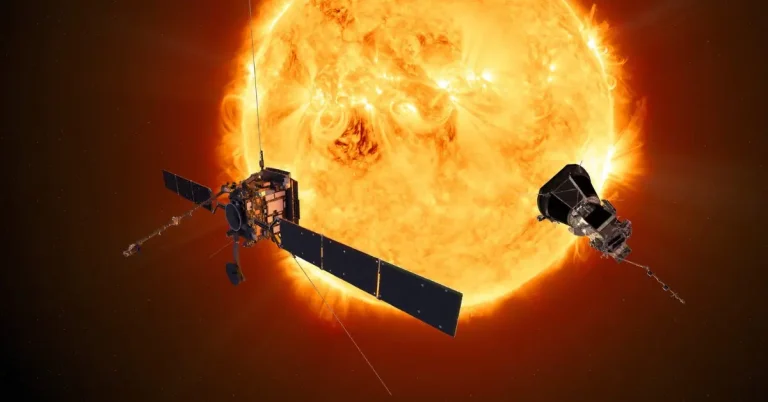
    A team of scientists compared data from NASA’s Parker Solar Probe and ESA’s Solar Orbiter and discovered that magnetic waves known as Alfvén waves, essentially a form of plasma wave, are responsible for pumping energy into the solar wind, causing it to accelerate and heat up as it travels away from the Sun.

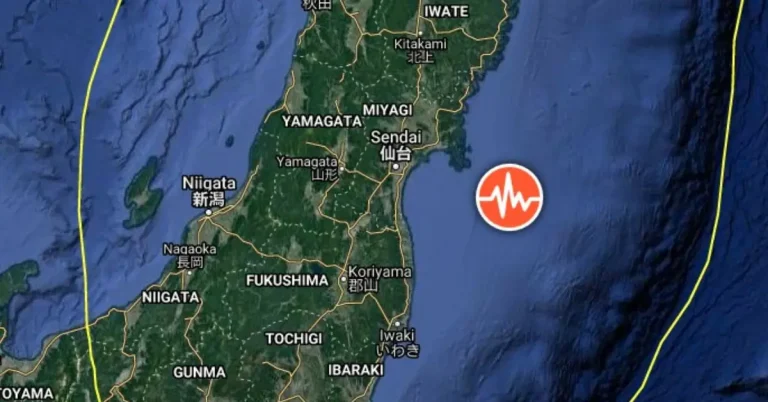
  • Study reveals precursors to the 2021 Fukushima earthquake through multi-parameter analysis

    A new study was conducted to understand the precursors to the 2021 Fukushima Prefecture Offshore Earthquake (Mj = 7.3), which occurred on February 13, 2021, off the coast of Fukushima, Japan, as an aftershock of the 2011 Tōhoku earthquake and tsunami. The investigation, led by Masashi Hayakawa and Yasuhide Hobara, focused on the Lithosphere-Atmosphere-Ionosphere Coupling (LAIC) channels and multi-parameter anomalies that occurred before the earthquake.

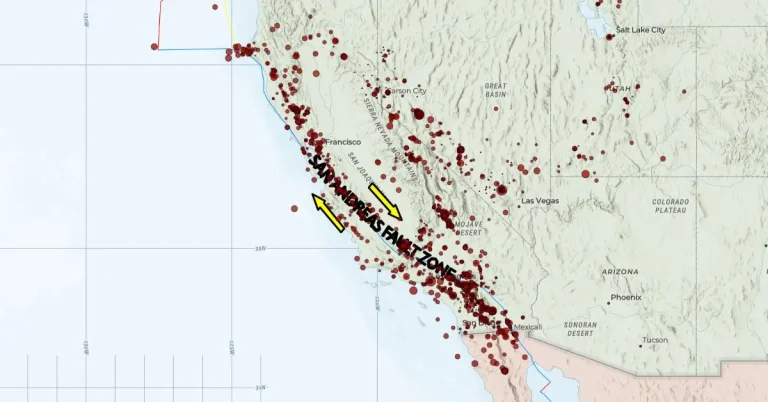
  • Researchers use AI to predict major earthquakes months in advance

    A recent study by Társilo Girona of the University of Alaska Fairbanks and Kyriaki Drymoni of Ludwig-Maximilians-Universität in Munich proposed a new machine learning technique for predicting big earthquakes months in advance. The study, published in Nature Communications on August 28, 2024, intended to improve earthquake predictions and public safety.

  • Juice mission on track, world’s first lunar-Earth flyby successfully redirects spacecraft to Venus

    The European Space Agency’s JUICE mission successfully completed the world’s first lunar-Earth flyby on August 20, 2024, a vital maneuver that used the gravitational forces of the Moon and Earth to send the spacecraft toward Venus. This accomplishment is critical for saving fuel and modifying the spacecraft’s trajectory as it travels to Jupiter.

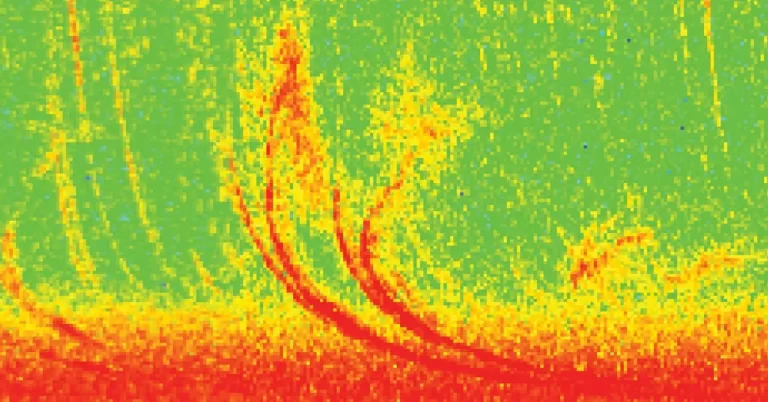
  • Discovery of electromagnetic wave reveals new phenomenon affecting Earth’s radiation belts

    Researchers at the University of Alaska Fairbanks identified a new electromagnetic wave called the “specularly reflected whistler.” This wave, caused by low-latitude lightning, challenged earlier notions by revealing that lightning energy can escape the ionosphere and enter the magnetosphere, impacting space weather dynamics. The discovery of the “specularly reflected whistler” which is an electromagnetic wave…

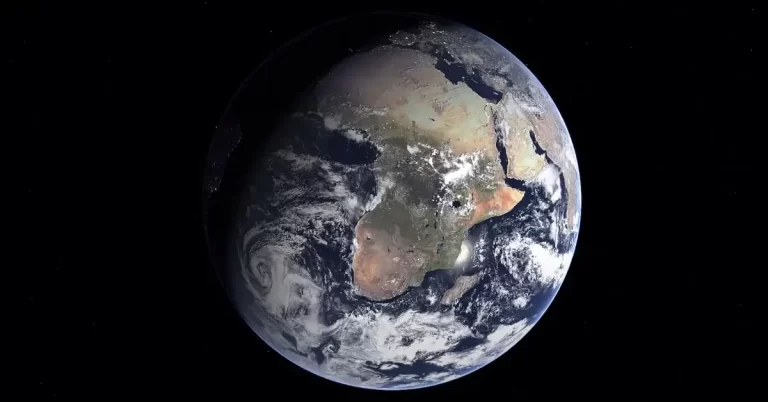
  • Study reveals complex behavior and environmental impact of unpredictable deep-sea currents

    A comprehensive investigation headed by Lewis P. Bailey of the National Oceanography Centre and involving global collaborations revealed the complicated and unpredictable behaviour of deep-sea currents. This four-year study offshore North Mozambique investigates how these currents interact with the seafloor, challenging existing models and bringing new insights into marine ecosystems.

  • Staircase pattern discovered in Earth’s rotational deceleration evolution

    Researchers discovered that Earth’s rotational slowing occurs in a staircase pattern rather than a flat drop. This pattern, discovered after intensive geological and astronomical investigation, shows alternating periods of stability and fast change in Earth’s rotation over the last 650 million years.