
Toronto records one of its hottest summers on record with six heatwaves, Canada
Toronto, Ontario recorded one of its hottest summers on record in 2025, with six heatwaves, 14 days above 32°C (90°F), and 24 nights above 20°C (68°F) as of August 24, according to Environment Canada.
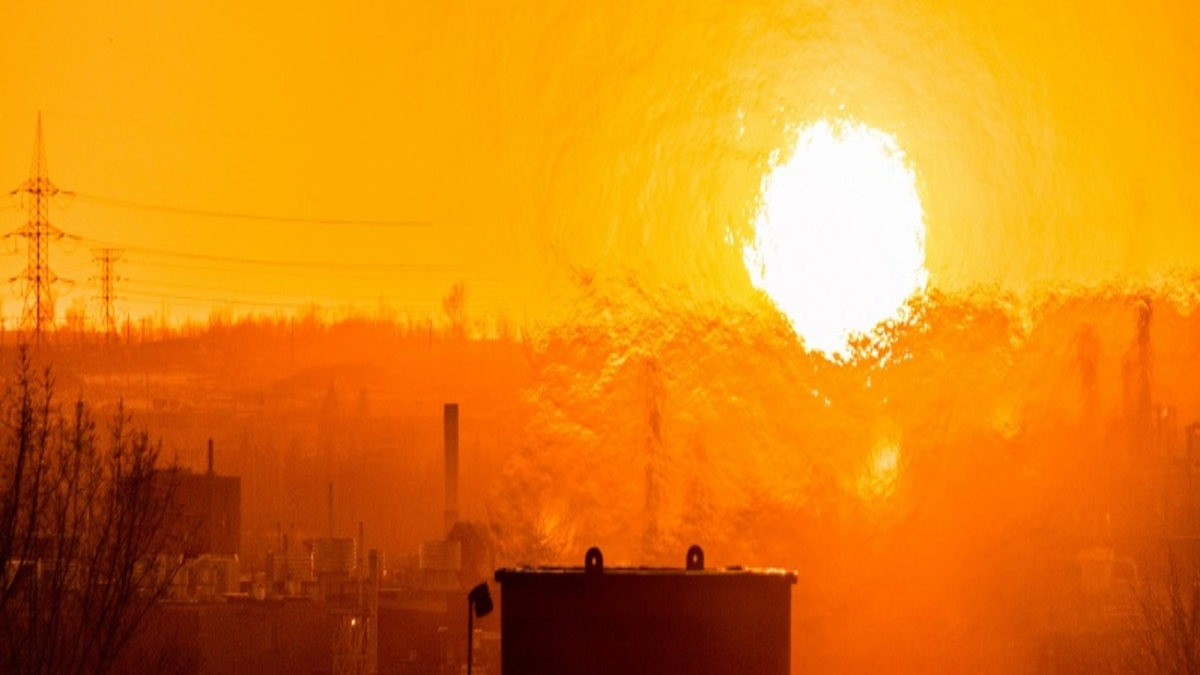
Image credit: Mark Langdon
Toronto, Ontario experienced one of its hottest summers on record in 2025, marked by six heatwaves and prolonged extreme heat events. As of August 24, the city recorded 14 days with maximum temperatures above 32°C (90°F), double the recent five-year average of seven days and more than triple the average of four days recorded in 2000, data from Environment Canada show.
The highest temperature of the year was 36.5°C (98°F) on June 25, followed by 36°C (96.8°F) on June 23. Additional significant heat days included 33.3°C (92°F) on July 28 and 34.7°C (94.5°F) on August 12.
Nighttime temperatures also set records. Toronto has recorded 24 nights so far in 2025 with minimums above 20°C (68°F), compared to a historical average of 12 such nights. Urban heat retention from asphalt, concrete, and high building density contributed to elevated nighttime values, Environment Canada climatologist David Phillips said.
Phillips noted that conservative climate models forecast summers like 2025 becoming the average by 2050, with projections of 15–16 days above 32°C (90°F) and about 23 nights above 20°C (68°F) each year.
The impacts of prolonged heat in Toronto this summer were compounded by poor air quality and widespread wildfire smoke, as Canada recorded its three worst fire seasons in the past three years. Heat also affected infrastructure, with risks of rail track warping and asphalt melting.

I’m a science journalist and researcher at The Watchers, contributing to the Epicenter edition, where I cover peer-reviewed scientific research and emerging discoveries across Earth and space sciences. With a background in astronomy and a passion for environmental science, I’ve worked in shark and coral conservation in Fiji, conducting reef and shark-behavior research, contributing to mangrove restoration, and earning PADI Open Water and Coral Reef Certifications. I bring a blend of scientific rigor and storytelling to illuminate the discoveries shaping our planet and beyond.
Published in the last 24 hours
- The Leonid meteor shower peaks on the night of November 17, exactly 60 years after the 1966 storm, when some observers reported meteors falling at up to 40 a second, though this year’s show should be closer to 15 an hour
- When Arctic air reached South Florida in January 2020, Miami fell to 40°F and the National Weather Service warned residents to watch for cold-stunned iguanas dropping out of the trees Epicenter
- In May 2024, the strongest solar storm in 20 years put northern lights over the southern US, and across the Plains, GPS-guided tractors built to plant within an inch drifted about 10 feet off their rows Epicenter
- In 1943, a flight instructor in Texas flew a two-seat training plane into the eye of a hurricane because he was curious, then landed and took the base weatherman up for a second pass Epicenter
