
France forecasts lowest grain-maize yield since 1991 after record heatwaves in summer 2026
France’s 2026 grain-maize yield is forecast to fall to 6.3 tonnes per hectare (2.81 short tons per acre), its lowest level since 1991, after repeated heatwaves and persistent drought damaged crops. Agreste estimates production, including seed maize, at 7.3 million tonnes (8 million short tons), nearly half the 2025 level, as grain-maize area fell 28% and yield declined 27%.
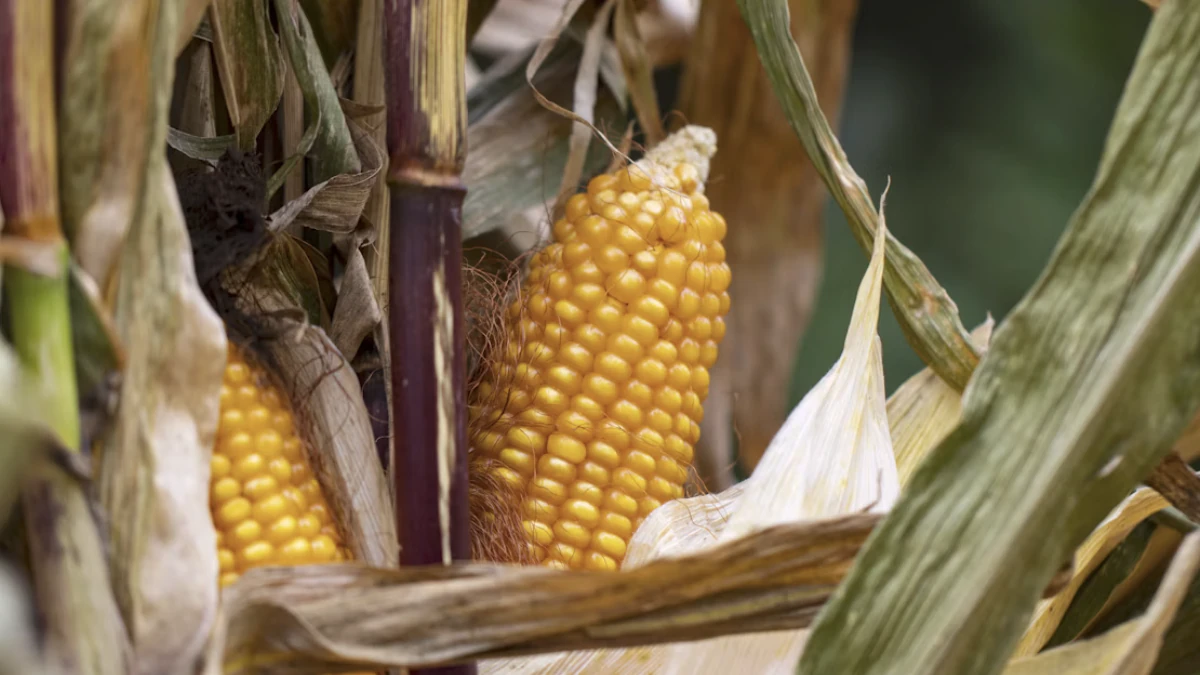
Image credit: Wouter Supardi Salari
Agreste reduced its 2026 grain-maize production estimate from 8.1 million tonnes in September to 7.3 million tonnes in October as harvest progress and responses to its Terres labourables survey showed lower yields than previously expected. Production would be nearly 48% below the 13.9 million tonnes harvested in 2025.
Agreste said grain-maize sowings had already fallen 19% from 2025 because of higher production costs, prices and disappointing yields during the previous season.
Over 10% of the area sown for grain was subsequently diverted to livestock silage or anaerobic digestion because the grain was unsuitable for sale or had failed to develop.
Meanwhile, the Arvalis crop institute and the General Association of Maize Producers (AGPM) on October 20 placed production at approximately 7.04 million tonnes (7.8 million short tons), down 49% from 2025 and the lowest since 1976.
The reduced maize yield was attributed to repeated heatwaves and persistent drought by Agreste. Its October assessment also placed sunflower and soybean production about 30% below their 2021–2025 averages and production of potatoes for storage 22% below the record 2025 harvest.
Sugar-beet production was forecast at 25.3 million tonnes (27.9 million short tons), potentially its lowest level since at least 1980.
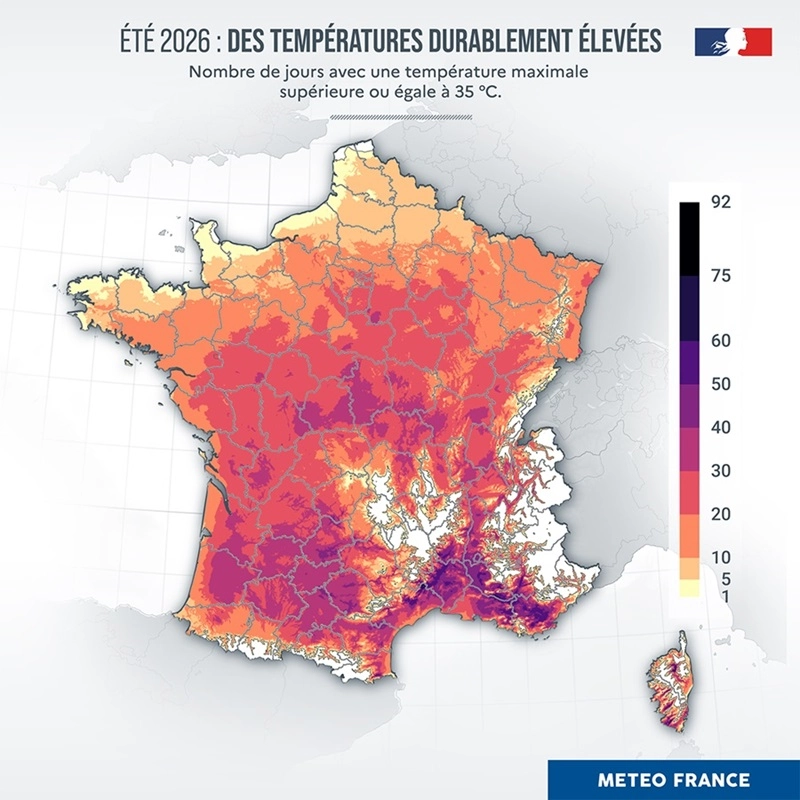
Météo-France measured a mean temperature of 24°C (75.2°F) from June through August 2026, 3.6°C (6.5°F) above the 1991–2020 average. This made 2026 France’s hottest summer since national temperature measurements began in 1900.
France experienced 53 heatwave days during three separate episodes, compared with 33 in 2022. Météo-France said persistent high-pressure conditions limited the passage of weather systems and contributed to the prolonged heat, lack of rain and soil drought.
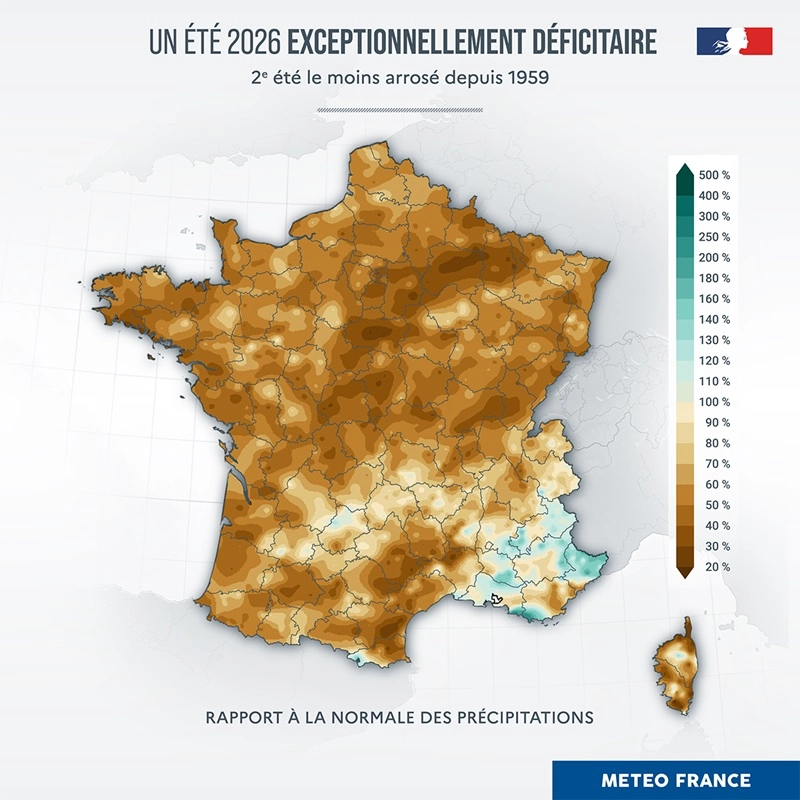
Rainfall across France was about 40% below normal during the summer, making it the country’s second-driest summer since the national series began in 1959. Spring precipitation had already been 30% below normal.
The prolonged rainfall deficit and exceptionally high temperatures pushed France’s national soil-moisture indicator to an unprecedented low. Soil drought had already spread nationwide in June and intensified through mid-August.
By early August, the indicator had fallen below the previous absolute minimum recorded in 2022. More than one-third of France, extending from the center-west to the northeast, was particularly affected.
Dry conditions continued into September, which Météo-France ranked as the country’s third-driest September since records began in 1958. Rainfall was about 70% below normal, and the national soil-moisture indicator remained at a record low for the time of year.
FranceAgriMer’s October 14 market balance projected French maize imports of 1.5 million tonnes (1.7 million short tons) in 2026/27, triple the previous season. Exports were forecast to fall about 55% to 1.5 million tonnes.
The FranceAgriMer balance used a separate production estimate of approximately 7.6 million tonnes, slightly above Agreste’s subsequent 7.3-million-tonne estimate.
The French government announced a broader agricultural support package of more than EUR 1 billion on September 4 following the heatwaves, drought and wildfires.
The plan included an estimated EUR 520 million for national solidarity compensation and EUR 235 million to help farms obtain feed, forage, seeds, planting material and other inputs.
References:
1 French maize production forecast at 7.04 million tonnes, according to Arvalis – Agra – October 20, 2026
2 Field crops: maize yield at its lowest in more than 30 years, compounded by reduced area – Agreste – October 16, 2026
3 Climate review of summer 2026 – Météo-France – September 3, 2026
4 Forecast balances for soft wheat, barley, grain maize and durum wheat – FranceAgriMer – October 14, 2026

Rishav Kothari is Editor-in-Chief of The Watchers, where he runs the newsroom and covers earthquakes, volcanoes, severe weather and space weather.
Published in the last 24 hours
- Hawaii's largest freshwater lake was 200 feet deep at 10 a.m. on June 2, 2018. By that afternoon, lava from Kilauea had boiled it away Epicenter
- Flying glass cut a teacher in Russia but none of her 44 pupils, because when a meteor flashed across the sky in 2013, she told them to get under their desks Epicenter
- A South Dakota man put the widest and heaviest hailstone on US record in his freezer, and a power cut melted part of it before NOAA measured it at 8 inches across and nearly 2 pounds in 2010 Epicenter
- Black kites and brown falcons in northern Australia have been seen snatching smoldering sticks from wildfires, flying them into unburned grass and dropping them, starting new fires that send lizards, rodents and insects running straight toward the waiting birds Epicenter
