
Major X1.1 solar flare erupts from Region 3947, G1 geomagnetic storm in progress
A major solar flare measuring X1.1 erupted from Active Region (AR) 3947 at 22:41 UTC on January 3, 2025. The event started at 22:32 and ended at 22:51 UTC. This is the second X-class solar flare produced on January 3 — both from AR 3947. Meanwhile, CME produced on January 1 impacted Earth early January 4, sparking G1 – Minor geomagnetic storm.
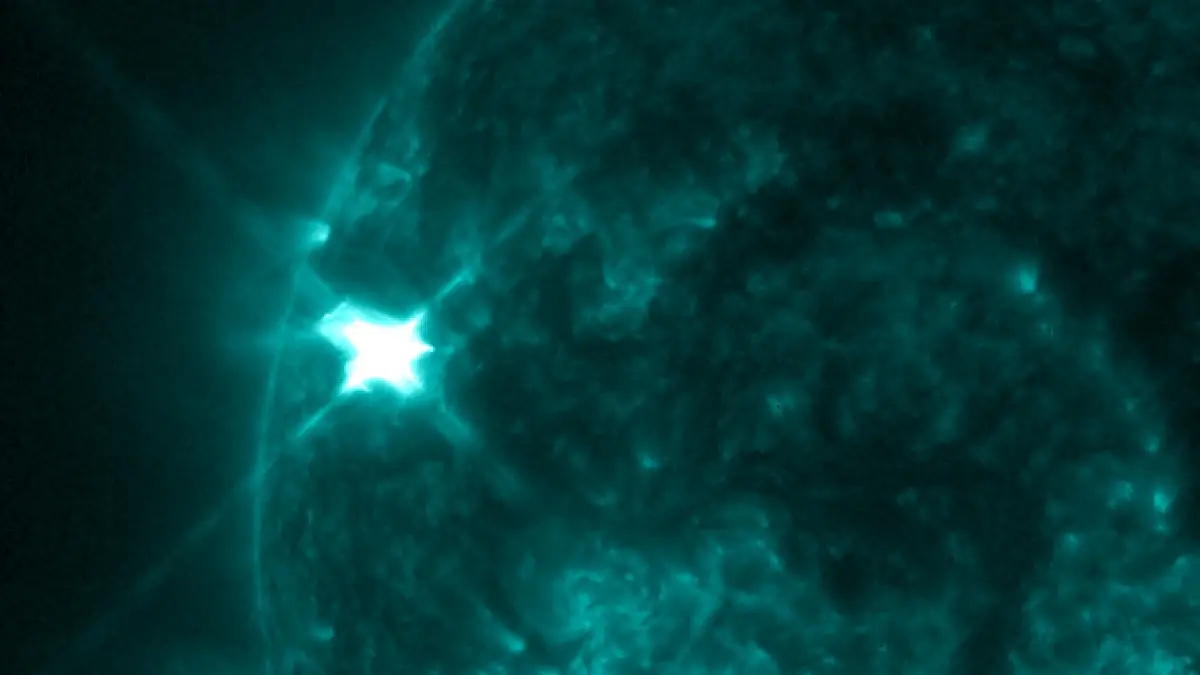
X1.1 solar flare on January 3, 2025. Image credit: NOAA/GOES SUVI, Helioviewer, The Watchers
A Type II Radio Emission, with estimated velocity of 465 km/s was detected at 22:44 UTC, suggesting a coronal mass ejection (CME) is associated with the flare event.
Radio frequencies were forecast to be most degraded over the Pacific Ocean at the time of the flare.
This is the second X-class solar flare of the day, following X1.2 at 11:39 UTC from the same region — AR 3947 (beta-delta).
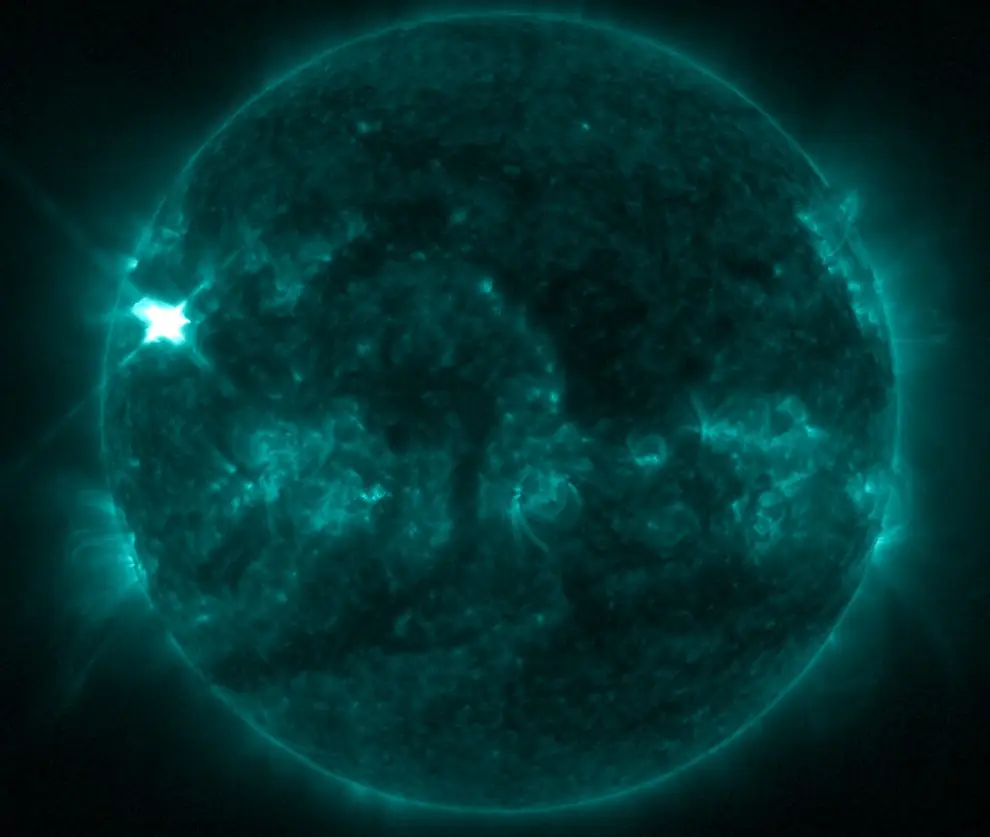


The X1.2 event resulted in an easterly CME that was first visible in NASA C2 coronagraph imagery near 12:00 UTC. “However, analysis and modeling have determined this event to be well off the Sun-Earth line,” SPWC forecasters said.
Four M-class were produced following the X1.1 late January 3, including M5.8 at 23:56 UTC and M7.6 at 05:18 UTC on January 4 — all from AR 3947.
A CME produced on January 1 was detected at DSCOVR spacecraft at Sun-Earth L1 Lagrange point — about 1.5 million km (1 million miles) from Earth, at 02:11 UTC on January 4.
This was a glancing blow that sparked G1 – Minor geomagnetic storming over the next couple of hours.


There are currently 11 sunspot regions on the Earth side of the Sun.

Solar activity is expected to remain at moderate to high levels over the next 3 days, with 55% chance of M-class flares and 10 – 15% chance of X-class.
There’s a slight chance for S1 – Minor solar radiation storm through January 6.
Isolated periods of G1 – Minor geomagnetic storming are likely today and tomorrow due to combined effects of CME and positive polarity coronal hole high speed stream (CH HSS).
References:
1 Forecast Discussion – NOAA/SWPC – Issued at 00:30 UTC on January 4, 2025

Teo Blašković founded The Watchers in 2011 and edited it until 2026, covering seismic and volcanic activity, extreme weather, space weather and near-Earth objects. Articles on this page are his archive.
Published in the last 24 hours
- Hawaii's largest freshwater lake was 200 feet deep at 10 a.m. on June 2, 2018. By that afternoon, lava from Kilauea had boiled it away Epicenter
- Flying glass cut a teacher in Russia but none of her 44 pupils, because when a meteor flashed across the sky in 2013, she told them to get under their desks Epicenter
- A South Dakota man put the widest and heaviest hailstone on US record in his freezer, and a power cut melted part of it before NOAA measured it at 8 inches across and nearly 2 pounds in 2010 Epicenter
- Black kites and brown falcons in northern Australia have been seen snatching smoldering sticks from wildfires, flying them into unburned grass and dropping them, starting new fires that send lizards, rodents and insects running straight toward the waiting birds Epicenter
