
Floods and landslides claim 3 lives in West Java, Indonesia
At least 3 people have been reported dead in West Java, Indonesia after heavy rains triggered floods and landslides on Tuesday, December 3, 2024.
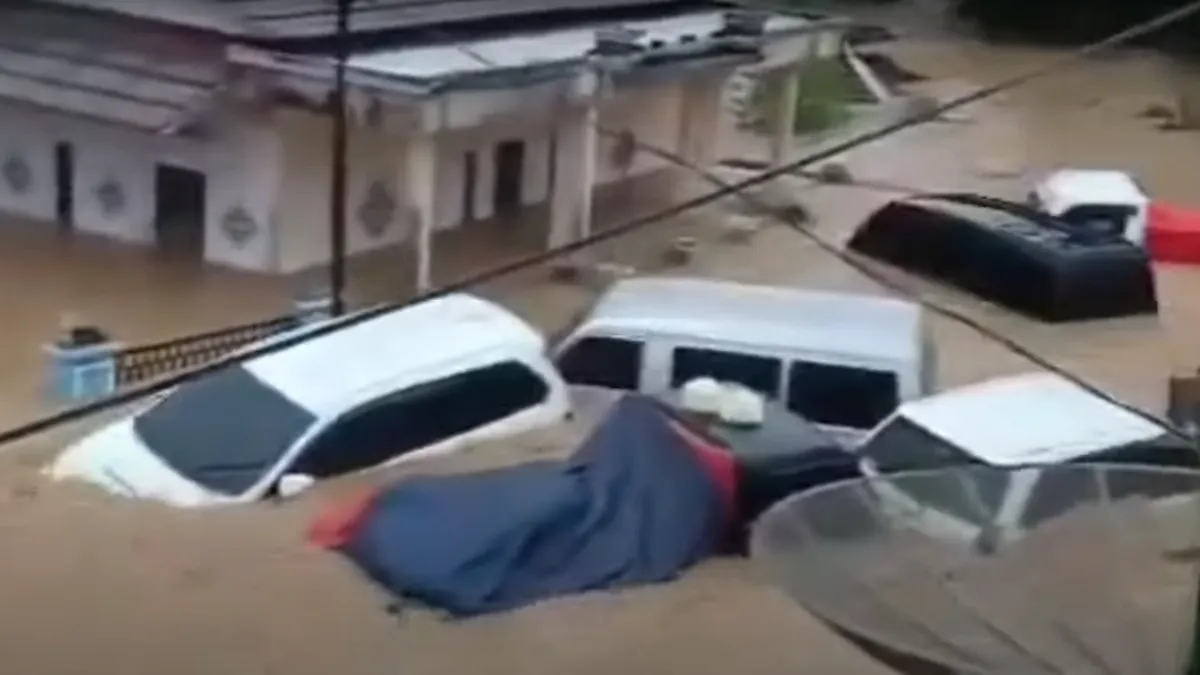
Vehicles submerged by floodwaters in West Java, Indonesia on December 3, 2024. Image credit: INFOMITIGASI
Heavy rains and floods triggered a landslide that claimed two lives in Cianjur, West Java, on December 3, 2024, according to the National Disaster Management Agency (BNPB).
Heavy and prolonged rainfall on December 3 caused the landslide, which buried a house with a family inside, according to BNPB spokesperson Abdul Muhari. Apart from the two fatalities, one person sustained injuries. “The heavy rainfall caused the hillside behind the house to collapse, burying a family inside their home,” Muhari explained.
Sukabumi also experienced heavy rainfall throughout December 3, resulting in floods in seven areas and landslides at 14 locations. Soil movements were reported in four areas, including Sukamaju Village and Bantargadung Village.
At least one person lost their life, and another sustained injuries in a landslide in Lebak Regency, Banten Province. Floods in the province impacted 1 252 families.

Floods impacted 1 717 residents in Cilacap Regency, Central Java Province. Meanwhile, approximately 4 000 people were affected in Binjai, North Sumatra Province.
The Leuwi Lalay bridge was swept away by floodwaters in Sukabira due to the overflowing Cimandiri River. Floodwaters also carried away several vehicles as roads turned into rivers.
Reference:
1 Echo Daily Flash – DGEcho – December 5, 2024
2 2 dead in landslide as extreme weather hits Indonesia’s West Java – Xinhua – December 4, 2024

Rishav Kothari is Editor-in-Chief of The Watchers, where he runs the newsroom and covers earthquakes, volcanoes, severe weather and space weather.
Published in the last 24 hours
- A Virginia park ranger was struck by lightning seven times and lived, even though three of the strikes set his hair on fire Epicenter
- The hole in the ozone layer over Antarctica was about twice the size of the US this year, and scientists say it would have been bigger still if ozone-eating chemicals were at their 2000 levels Epicenter
