
Comet Tsuchinshan-ATLAS enters LASCO C3 field of view, first full-resolution science data from STEREO shows comet is very bright
Comet C/2023 A3 (Tsuchinshan–ATLAS), discovered in January 2023 by the Tsuchinshan Observatory and the ATLAS project, reemerged from behind the Sun in September and garnered attention from astronomers across the world due to its rapid brightening. On October 7, 2024, the comet entered the LASCO C3 field of view, beginning a series of rare observations accessible to more than just astronomers with specialized equipment.
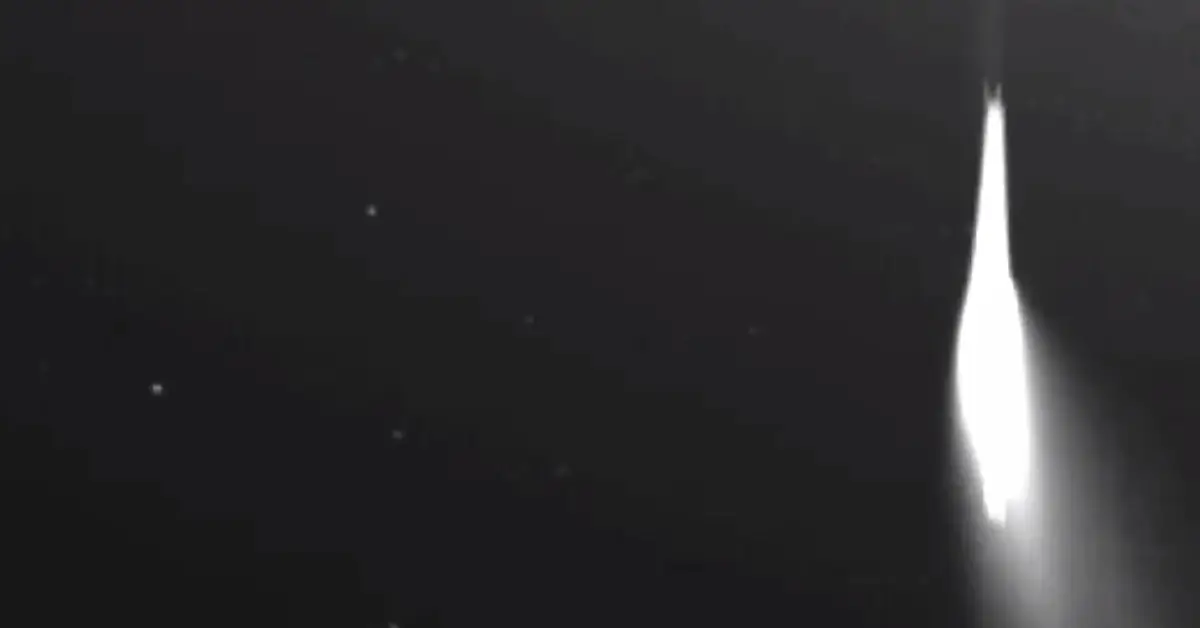
Comet C/2023 A3 Tsuchinshan–ATLAS. Image credit: STEREO/SECCHI HI-1
The first full-resolution science data from the STEREO/SECCHI HI-1 instrument has been made available now, showcasing Comet Tsuchinshan-ATLAS in remarkable brightness.
The images, shared by Karl Battams from the Sungrazer Comets project, are currently in their raw form, without any scaling or processing.
The comet’s brightness was anticipated, and these initial images provide a clear view of its current state.
At around 14:40 UTC on October 7, Comet Tsuchinshan-ATLAS entered the LASCO C3 field of view, beginning a series of rare observations accessible to more than just astronomers with specialized equipment.
We can all track it now using LASCO C3 data available on the SOHO website.
For even more convenience, there is a real-time LASCO movie viewer available on our Space Weather Monitor. Just look for a very bright object entering from the right side of the screen — that’s the comet!

The comet is expected to emerge from the Sun’s glare next week and hopefully provide great views for people in the Northern Hemisphere.
This is how some astrophotographers experienced ATLAS over the past couple of days:

Teo Blašković founded The Watchers in 2011 and edited it until 2026, covering seismic and volcanic activity, extreme weather, space weather and near-Earth objects. Articles on this page are his archive.
Earlier reporting
Nothing on Watchers was published in the last 24 hours. These are older articles.
- Asteroid 2026 WA passed Earth at 126,400 km, about a third of the Moon's distance, at 07:59 UTC on November 17
- On October 22, 2017, a single flash of lightning stretched 515 miles from eastern Texas to near Kansas City, a distance that takes eight hours to drive, and nobody realized how far it had gone until scientists went back through the satellite data years later Epicenter
- CPC posts a slight risk of heavy rain from the Gulf Coast to the Northeast urban corridor November 25-29, and a moderate risk of West Coast wind and Sierra snow on November 25
- Florida's east coast faces a moderate flash flood risk Wednesday through Friday, with 4 to 8 inches of rain forecast and the St. Johns River near Cocoa already in major flood at 17.13 feet
