
Eruption at Satsuma-Iojima volcano, Kikai caldera, Japan
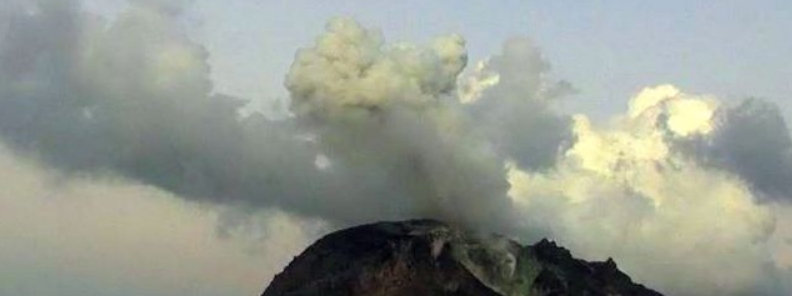
Featured image: Eruption of Satsuma-Iojima volcano, Kikai, Japan on November 2, 2019. Credit: JMA
Satsuma-Iojima volcano (also known as Tokara-Iojima), Kyushu, Japan erupted at 08:35 UTC (17:35 JST) on November 2, 2019. This is the first eruption at this volcano since 2013.
The volcano is a part of Kikai caldera, the source of one of the world's largest Holocene eruptions about 6 300 years. The eruption devastated southern and central Kyushu, which remained uninhabited for several centuries.
According to the Tokyo VAAC, volcanic ash column rose up to 1.8 km (6000 feet) above sea level, drifting NW.
The Japan Meteorological Agency (JMA) raised Volcanic Alert Level for the volcano to Level 2 at 08:50 UTC (17:50 JST) on November 2, 2019.
The agency is urging people to refrain from entering the danger zone.
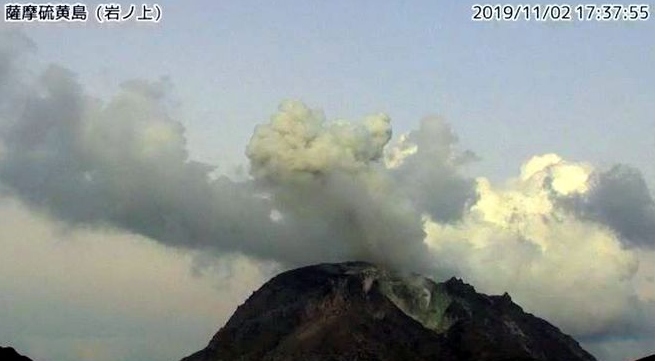
Image credit: JMA
Geological summary
Kikai is a mostly submerged, 19-km-wide (11.8 miles) caldera near the northern end of the Ryukyu Islands south of Kyushu. Kikai was the source of one of the world's largest Holocene eruptions about 6 300 years ago.
Rhyolitic pyroclastic flows traveled across the sea for a total distance of 100 km (62 miles) to southern Kyushu, and ashfall reached the northern Japanese island of Hokkaido.
The eruption devastated southern and central Kyushu, which remained uninhabited for several centuries. Post-caldera eruptions formed Iodake lava dome and Inamuradake scoria cone, as well as submarine lava domes.
Historical eruptions have occurred in the 20th century at or near Satsuma-Iojima (also known as Tokara-Iojima), a small 3 x 6 km (1.8 x 3.7 miles) island forming part of the NW caldera rim. Showa-Iojima lava dome (also known as Iojima-Shinto), a small island 2 km (1.2 miles) east of Tokara-Iojima, was formed during submarine eruptions in 1934 and 1935.
Mild-to-moderate explosive eruptions have occurred during the past few decades from Iodake, a rhyolitic lava dome at the eastern end of Tokara-Iojima. (GVP)

I'm a dedicated researcher, journalist, and editor at The Watchers. With over 20 years of experience in the media industry, I specialize in hard science news, focusing on extreme weather, seismic and volcanic activity, space weather, and astronomy, including near-Earth objects and planetary defense strategies. You can reach me at teo /at/ watchers.news.

Commenting rules and guidelines
We value the thoughts and opinions of our readers and welcome healthy discussions on our website. In order to maintain a respectful and positive community, we ask that all commenters follow these rules.