
Bright fireball, sonic boom reported over Japan

Featured image: Meteor explodes over Japan on January 2, 2019. Credit: KyodoNews
A very bright fireball followed by a loud rumbling noise was seen over a wide area of western Japan early January 3, 2019 (LT). It's quite possible that parts of it survived atmospheric entry.
The event took place at 19:50 UTC on January 2 (04:50 JST, January 3) and was captured from Habikino in Osaka Prefecture by amateur astronomer Masayoshi Ueda."I could not tape the sound but it flashed for a second and grew to a big fireball," Ueda said.
According to Kyodo, some people, including those living on the island of Shikoku, said they were woken up by a very loud sound.
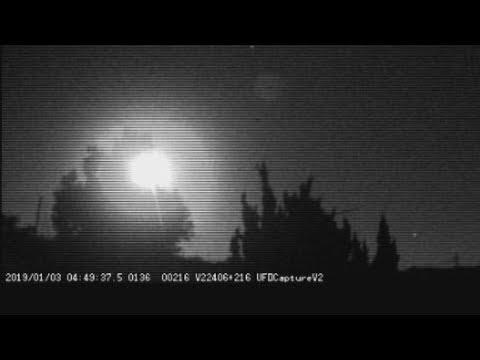
"We have bolides almost every day but it is very rare to hear one make a noise, only a few times a year," said Hitoshi Yamaoka, associate professor at the National Astronomical Observatory of Japan.
"I guess the one seen this time was a large object that may have measured around half a meter [1.6 feet] in length. Such objects typically evaporate in the air, but this one could have fallen to the ground," Yamaoka said.

Teo Blašković founded The Watchers in 2011 and edited it until 2026, covering seismic and volcanic activity, extreme weather, space weather and near-Earth objects. Articles on this page are his archive.
Published in the last 24 hours
- A meteorite blew a crater beside a village near Lake Titicaca in 2007, and dozens of villagers who went to see it got headaches and nausea, though tests found nothing the rock had added to the water Epicenter
- The people who pay closest attention to the weather are the ones storms have already cost the most, a study of 946 students found, with one damaging storm making little difference to how much attention a student paid, but two or more making a clear one Epicenter
- The sea is falling in Juneau, Alaska, because land freed from melted glaciers is rising about 0.6 inches a year Epicenter
- A dam above Los Angeles collapsed just before midnight on March 12, 1928, and the flood killed more than 400 people, hours after the engineer who built it had spent two hours looking at a new leak and decided there was no danger Epicenter
