
Night sky guide for November 2013
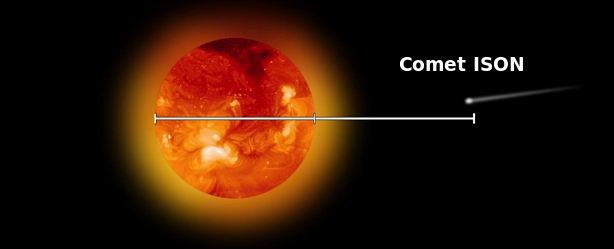
Image credit: NASA JPL
- November 3, Hybrid Solar Eclipse. Annular total solar eclipse will sweep over the Atlantic Ocean and the middle of Africa on November 3, 2013. The eclipse will be total only along a narrow path over the Atlantic Ocean and equatorial Africa from Gabon to Somalia. Most of Africa, the Middle East, southern Mediterranean including Spain, northern South America, and the Caribbean will see the partial phase of the eclipse. What makes makes it special is that it will be annular eclipse along the first 15 seconds before it transits to a total eclipse phase due the Moon's shadow which will pass close enough to the Earth to cover the disk of the Sun. Eclipse like this is rare and it is called a hybrid eclipse.
- November 12, Southern Taurids meteor shower. The Taurids are an annual meteor shower associated with the comet Encke. They are named after their radiant point in the constellation Taurus, where they are seen to come from in the sky. The shower runs annually from September 7 to December 10. They produce about 5-10 meteors per hour.
- November 15, the Moon reaches its furthest point from the Sun.
- November 16 and 17, Leonids meteor shower, a prolific meteor shower associated with the comet Tempel-Tuttle. The Leonids get their name from the location of their radiant in the constellation Leo. The shower runs annually from November 6-30. Unfortunately, the glare from the full moon will block many of the meteors this year.
- November 17, full moon. The Hunter's Moon reaches full phase. It will be directly opposite the Earth from the Sun and fully illuminated as seen from the Earth. This phase occurs at 15:16 UTC.
- November 28, Comet ISON closest approach to the Sun – This month is marked by ISON's closest approach to the Sun. This famous sungrazer is being tracked by astronomers around the world and great images are now being taken daily. If this comet survives its brush with the Sun it might make a spectacular show on Earth during December. See images and read more about Comet ISON.
Tonight’s Sky
guide to constellations, deep-sky objects, planets and events
Produced by the Space Telescope Science Institute, Office of Public Outreach (NASA/STScI)
- Check also: November 2013 SkyWeek videos by Sky & Telescope: October 28 – November 3, November 4 – 10, November 11 – 17, November 18 – 24.

I'm a dedicated researcher, journalist, and editor at The Watchers. With over 20 years of experience in the media industry, I specialize in hard science news, focusing on extreme weather, seismic and volcanic activity, space weather, and astronomy, including near-Earth objects and planetary defense strategies. You can reach me at teo /at/ watchers.news.

Commenting rules and guidelines
We value the thoughts and opinions of our readers and welcome healthy discussions on our website. In order to maintain a respectful and positive community, we ask that all commenters follow these rules.