
NASA prepares to launch the third generation advanced Tracking and Data Relay Satellites
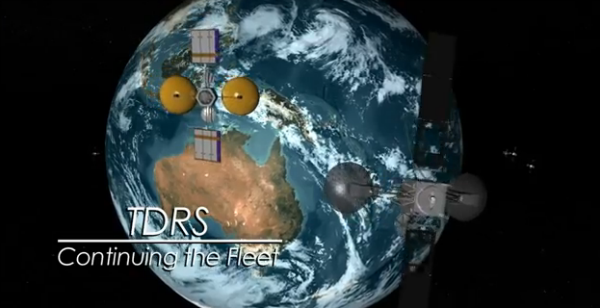
Image credit: Youtube screenshot
NASA is preparing to launch the first in a series of three third generation advanced Tracking and Data Relay Satellites, known as TDRS-K. This latest addition to the fleet of seven will augment a space communications network that provides the critical path for high data-rate communication to the International Space Station, Hubble Space Telescope, past shuttle missions and a host of other spacecraft. This system was designed to replace a pre-existing worldwide network of ground stations that had supported all of NASA’s manned flight missions and unmanned satellites in low-Earth orbits. The primary system design goal was to increase the amount of time that these spacecraft were in communication with the ground and improve the amount of data that could be transferred. These TDRSS satellites are all designed and built to be launched to and function in geosynchronous orbit, 35,786 kilometres (22,236 mi) above the surface of the Earth.

Seven TDRSS satellites are still in service. All of the TDRSS satellites have been managed by NASA’s Goddard Space Flight Center. It has been 10 years since NASA last launched a TDRS. This launch is the beginning of a welcome replenishment to the space network, which has served numerous national and international space missions since 1983.
Credit: NASAexplorer

Published in the last 24 hours
- Male toads abandoned a pond in Italy five days before a deadly 2009 earthquake, while a scientist was counting them Epicenter
- An asteroid was spotted 19 hours before it exploded over Sudan in 2008, and students picked its pieces off the desert Epicenter
- A wave up to 3 m (10 feet) high rose out of Lake Michigan on a sunny June morning in 1954 and swept fishermen off Chicago’s piers, and when a second came 10 days later, warnings had cleared the shore Epicenter
- Just 12 inches of rushing water can carry away most cars, and more than half of US flood drownings happen to people who drive into flood water Epicenter
