
Tropical Storm Gilma is nearing hurricane strength
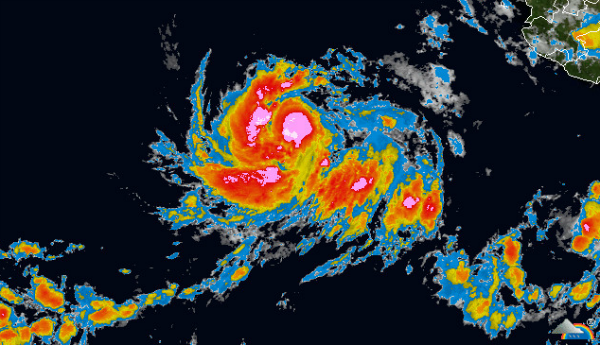
Image credit: TW
On August 7, Tropical Depression 7E had become more organized and has developed into Tropical Storm Gilma; moving through the eastern Pacific Ocean. Tropical Storm Gilma is being steered by a huge elongated area of high pressure that extends from the southwestern U.S. all the way west to Hawaii.
Gilma is in an environment of light wind shear and sea surface temperatures as warm as 29 Celsius degree. Tropical cyclones need sea surface temperatures as warm as 26.6 Celsius (80 Fahrenheit) to be maintained. Warmer temperatures help tropical cyclones strengthen, while cooler sea surface temperatures can inhibit intensification. Gilma is expected to remain at sea and is not a threat to any land areas.

According to latest public advisory issued by US National Hurricane Center (NHC), the center of Tropical Storm Gilma was located near latitude 15.6N and longitude 116.1W. Gilma is moving west-northwestward at speed of 20 km/h (13 mph) and this general motion with a decrease in forward speed is expected during the next 48 hours. Maximum sustained winds are near 110 km/h (70 mph) with higher gusts. Tropical-storm-force winds extend outward up to 130 km (80 miles) from the center. Estimated minimum pressure is 990MB. Additional strengthening is expected and Gilma could become a hurricane today.


Published in the last 24 hours
- Cyclone Akvan weakens after landfall near Gopalpur; more than 300 000 evacuated in Odisha, India
- High Risk of excessive rainfall covers Florida’s Space Coast as St. Johns River near Cocoa reaches 5.67 m
- Four small asteroids will pass close to Earth from November 21 to 23
- A broad low over southeastern Florida and the northwestern Bahamas has a 30 percent chance of subtropical or tropical development within 48 hours and a 50 percent chance within 7 days, the National Hurricane Center says
