• Long-duration X1.9 solar flare erupts from Region 4341, Earth-directed CME produced

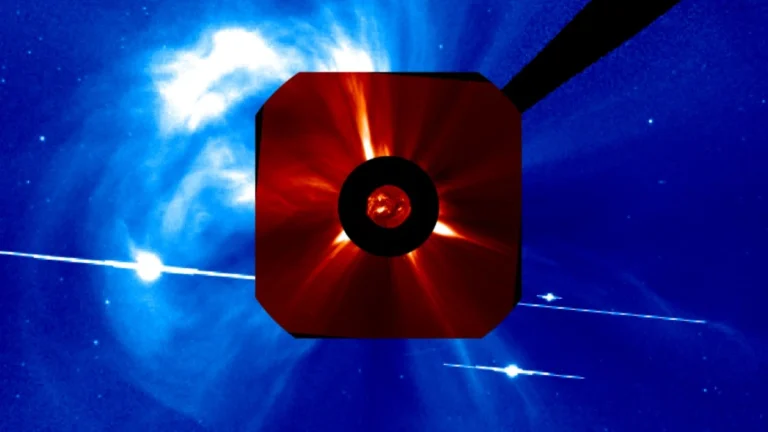
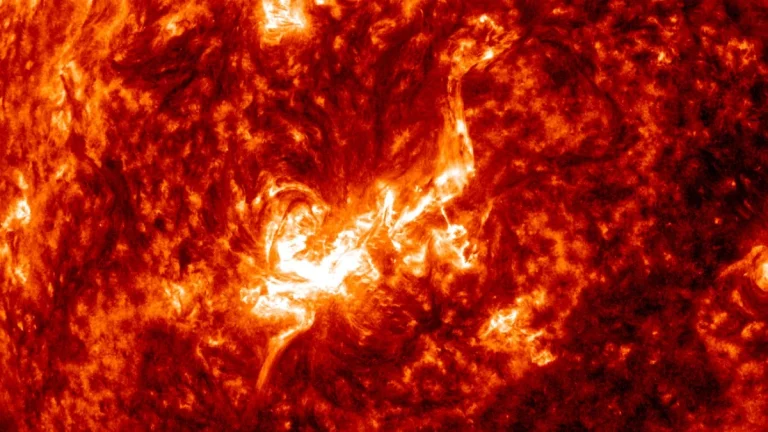
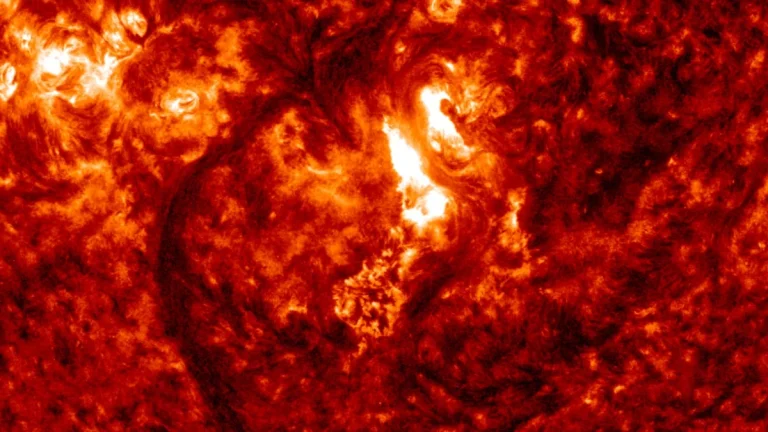
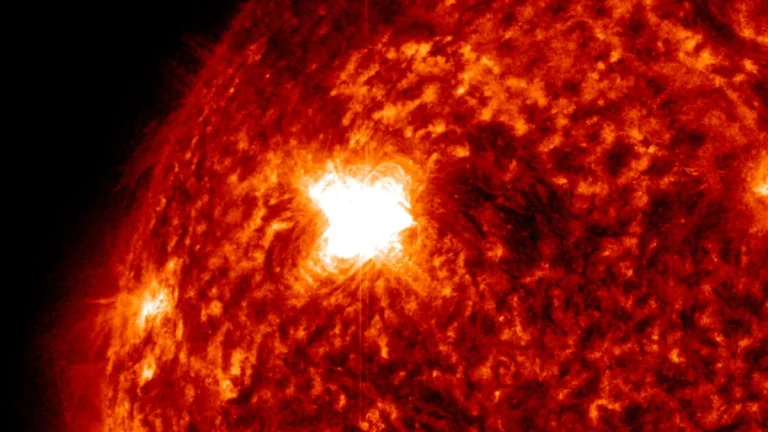
    A long-duration X1.9 solar flare erupted from Active Region 4341 at 18:09 UTC on January 18, 2026. The event began at 17:27 and ended at 18:51 UTC. Coronagraph imagery indicates that a full halo coronal mass ejection (CME) was produced during the eruption. Given the location of the source region on the solar disk, the CME is considered likely to be at least partially Earth-directed, pending further analysis of its speed and magnetic structure.

  • CME and coronal hole influences cause G1-G2 geomagnetic storming, M3.3 flare erupts beyond solar limb

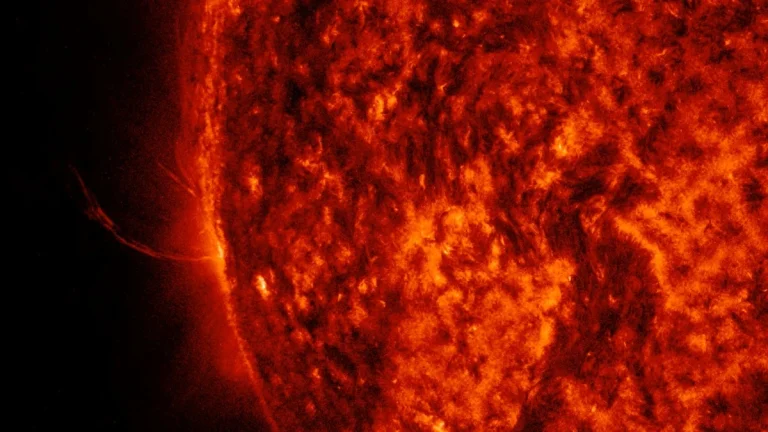
    A long-duration M3.3 flare erupted from just beyond the east-southeast limb at 11:00 UTC on January 11, 2026, as CME and coronal hole influences continued to disturb the solar wind environment. The geomagnetic field reached G1 – Minor to G2 – Moderate storm levels on January 10–11 under combined CME and coronal hole high-speed stream effects. Elevated solar wind parameters and unsettled-to-active geomagnetic conditions are expected to persist through January 14.

  • Multiple Earth-directed CMEs expected to trigger G1 geomagnetic storm and aurora at high latitudes

    Multiple coronal mass ejections (CMEs) launched from Active Region 4334 on January 8, 2026, are expected to deliver a glancing blow to Earth between late January 10 and early January 11, according to the U.S. Space Weather Prediction Center (SWPC). The interaction of several CMEs and a coronal hole high-speed stream is forecast to cause isolated G1 – Minor geomagnetic storm conditions. Aurora may become visible across high latitudes, including the northern tier of the United States, such as northern Michigan and Maine.

  • G3 – Strong geomagnetic storm forecast following Earth-directed CME produced by M8.1 solar flare

    A G3 – Strong geomagnetic storm watch is in effect following a powerful M8.1 solar flare from geoeffective Active Region 4299 at 20:39 UTC on December 6, 2025. The resulting full-halo coronal mass ejection (CME) is expected to impact Earth between early and midday UTC on December 9, possibly producing periods of strong geomagnetic storming.

  • Strong M6.0 solar flare erupts from Region 4300, brief G3 – Strong geomagnetic storm

    A strong M6.0 solar flare erupted from Region 4300 at 02:50 UTC on December 4, 2025, producing a non-Earth-directed CME. The flare occurred as Earth’s geomagnetic field remained in storm conditions, including a G3 – Strong interval driven by the arrival of a negative CH HSS and the flank of the CME launched on December 1. Solar wind parameters showed elevated density, strong IMF values, and Bz reaching −15 nT before transitioning to high-speed stream conditions.

  • G2 geomagnetic storm and aurora forecast for December 3-4 following CME from X1.9 solar flare

    NOAA’s Space Weather Prediction Center (SWPC) issued a G2 – Moderate geomagnetic storm watch for December 3 and 4, 2025, following a coronal mass ejection (CME) associated with the X1.9 solar flare from Active Region 4299 on December 1. The CME is expected to deliver a glancing blow to Earth’s magnetic field, coinciding with a co-rotating interaction region (CIR) and a sector boundary crossing, increasing the potential for moderate geomagnetic storming and visible auroras at mid-latitudes.