Videos show people fleeing as Mount Etna erupts, Italy
Footage captured on June 2, 2025, shows people fleeing as an eruption at Mount Etna’s Southeast Crater produces pyroclastic flow and an ash plume up to 6.5 km (21 325 feet).


Footage captured on June 2, 2025, shows people fleeing as an eruption at Mount Etna’s Southeast Crater produces pyroclastic flow and an ash plume up to 6.5 km (21 325 feet).

A sharp increase in volcanic tremor preceded a new Strombolian eruption at Mount Etna, Italy, early on June 2, 2025, with ash and SO2 clouds drifting southwest. The Aviation Color Code was raised to Red at 03:32 UTC and downgraded to Orange at 06:39 UTC.

A new earthquake swarm began in the Campi Flegrei caldera at 14:23 local time on May 14, 2025, just five hours after Italy’s National Institute of Geophysics and Volcanology (INGV) reported the end of a previous swarm that led to a state of emergency declaration.

Strombolian activity at Mount Etna’s Southeast Crater evolved into lava fountaining on April 30, 2025, producing ash emissions and prompting a temporary elevation of the Aviation Color Code to Red. This was the 11th eruptive episode at Etna since March 15.

Mount Etna’s Southeast Crater exhibited intensified Strombolian activity on April 8, 2025, leading to strong emission of volcanic ash clouds reaching altitudes of approximately 5.5 km (3.4 miles) above the volcano and drifting southeast. The Aviation Color Code was raised to Red.

A rapid increase in volcanic tremor was recorded at Mount Etna, Italy on March 24, 2025, followed by explosive activity at the Southeast Crater. The eruption occurred after tremor levels rose significantly, prompting authorities to raise the Aviation Color Code to Red at 10:18 UTC.

A shallow earthquake registered by the INGV as M4.4 hit the Campi Flegrei region of Italy at 00:25 UTC (01:25 LT) on March 13, 2025. The agency is reporting a depth of 2 km (1.2 miles). The earthquake matched the strongest event in 40 years but showed unprecedented ground accelerations, indicating greater intensity, according to the Vesuvius Observatory. The USGS and EMSC reported a magnitude of 4.2, with USGS reporting a depth of 10 km (6.2 miles) and EMSC 3 km (1.9 miles).
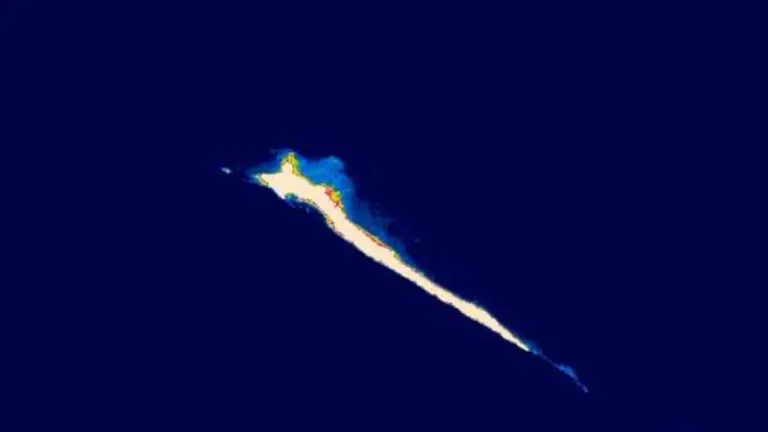
An increase in volcanic tremor accompanied by lava overflow from the North crater area has been observed at Stromboli volcano on February 28, 2025. The activity includes a modest lava fountain at vent N2, with the lava flow confined to the upper portion of the Sciara del Fuoco.

A new degassing pit crater was identified at 3.1 km (10 170 feet) a.s.l. on the southern flank of Etna’s Bocca Nuova Crater on February 28, 2025. A modest lava overflow was also observed from the Southeast Crater at 07:00 LT (06:00 UTC), producing a lava flow on the upper southern flank of the crater.

A new study published this month in Nature Communications reports that burst-like seismic swarms have been a defining feature of the volcanic unrest at Campi Flegrei since 2021.
