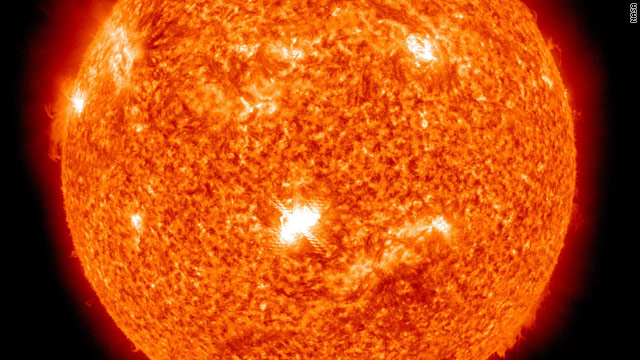
• February solar flare was sparked by five spinning sunspots

    The giant solar flare unleashed in February was caused by five rotating sunspots working in concert, the UK’s National Astronomy Meeting has heard.Images released from the Solar Dynamics Observatory (SDO) clearly show the sunspots, which are centres of magnetic
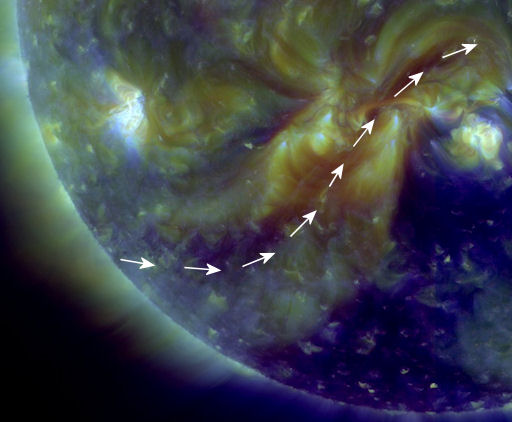
  • Filament of magnetism is curling around the sun’s southeastern quadrant

    Newly-arriving data from NASA’s STEREO probes suggest that a coronal mass ejection (CME) might be heading toward Earth. The source of the cloud appears to be sunspot complex 1185-1186, which experienced an episode of magnetic instability during the early hours of April

  • X1.5-flare produced Earth-directed CME

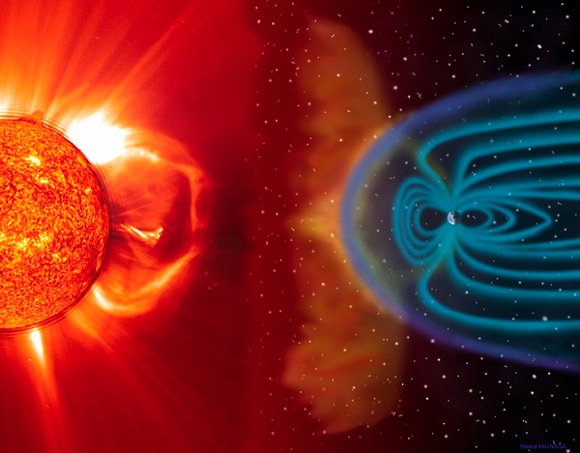
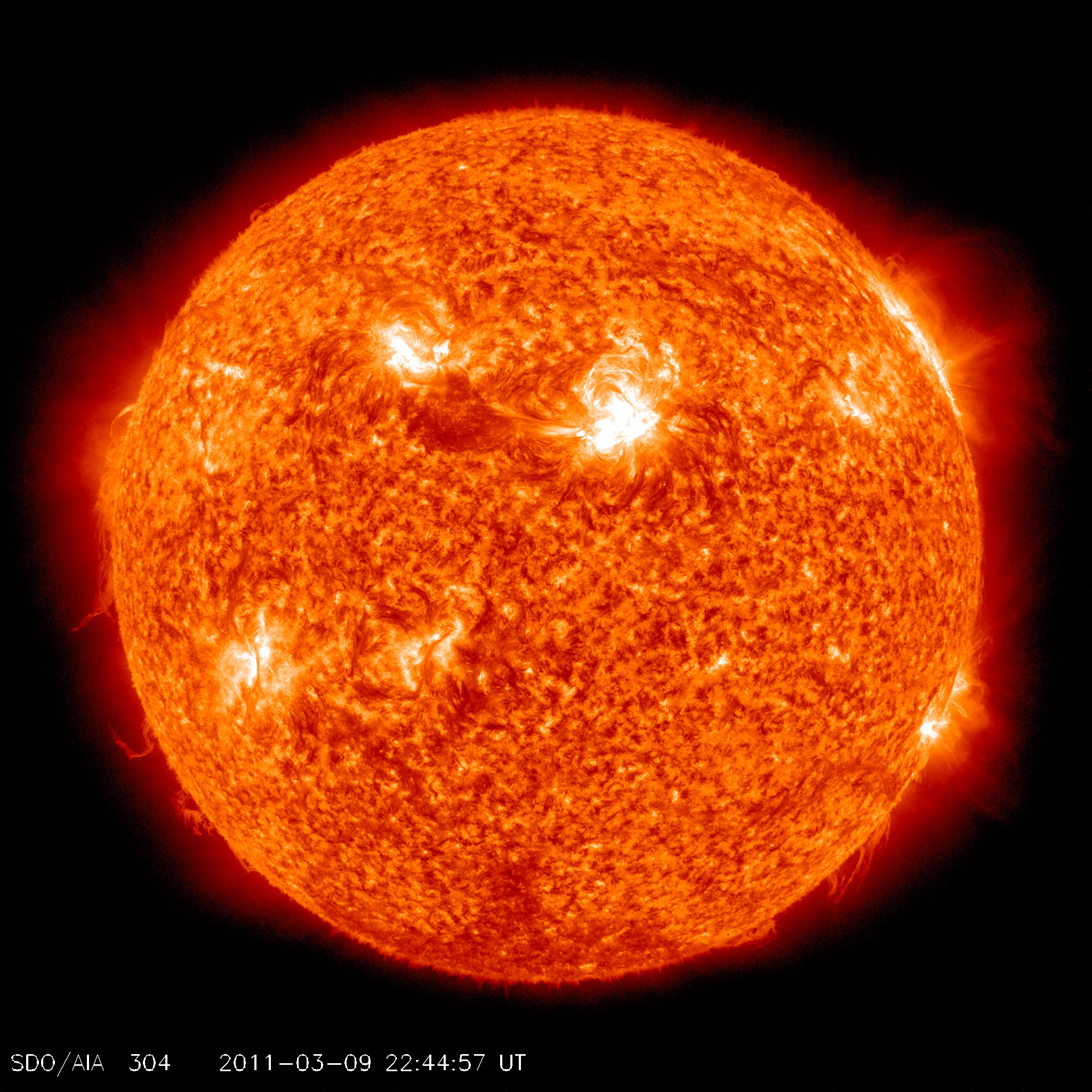
    UPDATE:A coronal mass ejection (CME) hit Earth’s magnetic field on March 10th around 0630 UT. Solar wind conditions, post-impact, are favorable for geomagnetic activity.March 9th ended with a powerful solar flare. Earth-orbiting satellites detected an X1.5-class

  • Sun’s fastest CME since 2005.

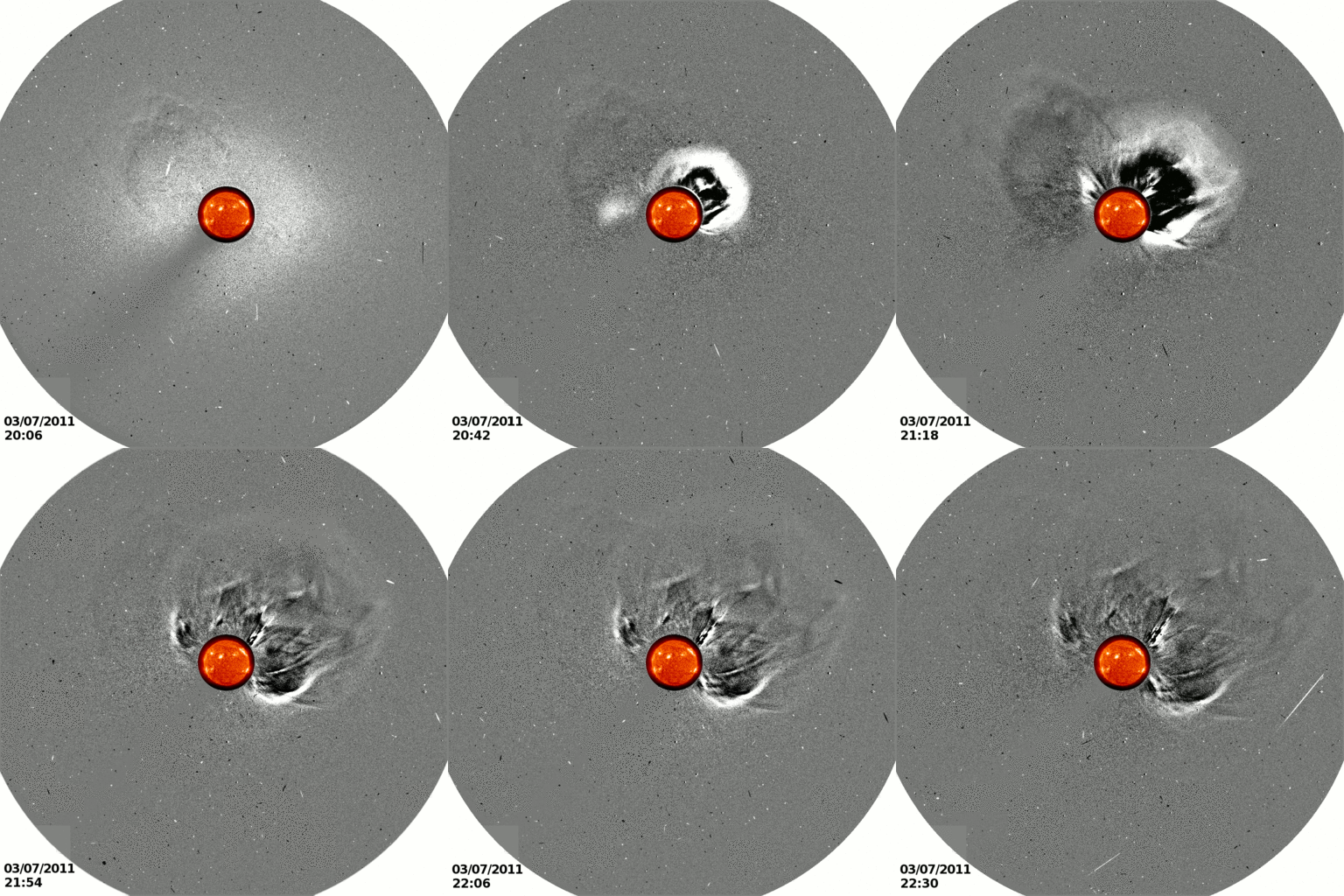
    A coronal mass ejection (CME) exploded from the vicinity of sunspot 1164 during the late hours of March 7th. It lept away from the sun traveling some 2200 km/s, making it the fastest CME since Sept. 2005. A movie of the cloud prepared by Karl Battams of the Naval

  • Several low level M-class solar flares occurred today

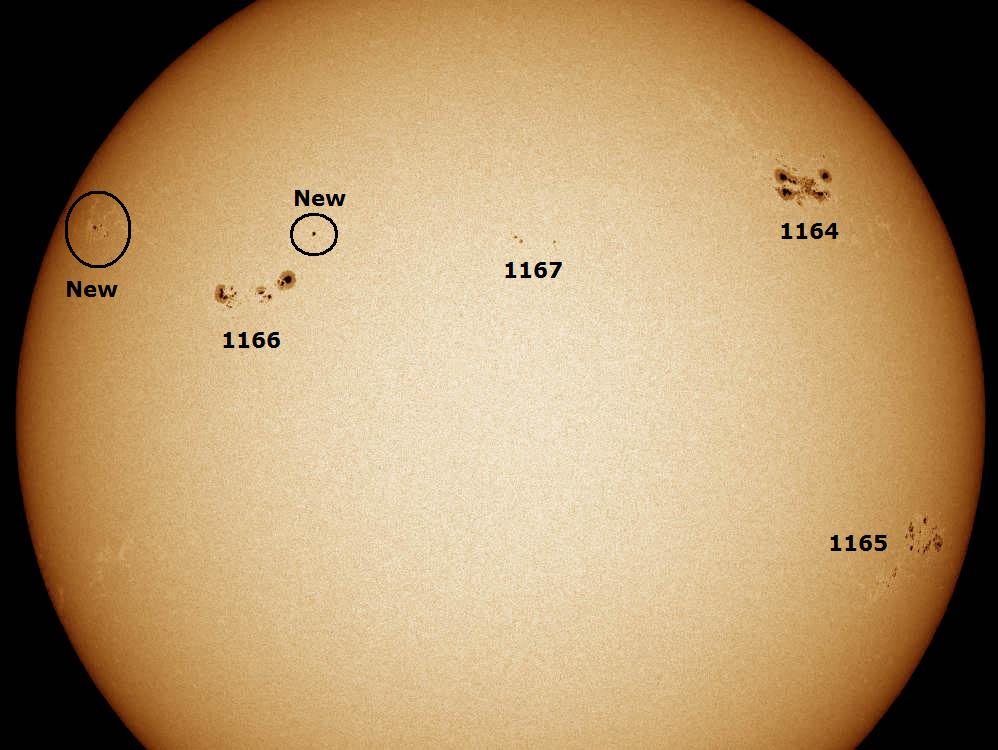
    Several low level M-Class flares have taken place around each of the big three regions 1164, 1165 and 1166 during the early parts of Monday. The largest one of these thus far was an M1.8 around Sunspot 1165. Sunspot 1165 will begin to rotate onto the western limb over

  • The beautiness of solar flare

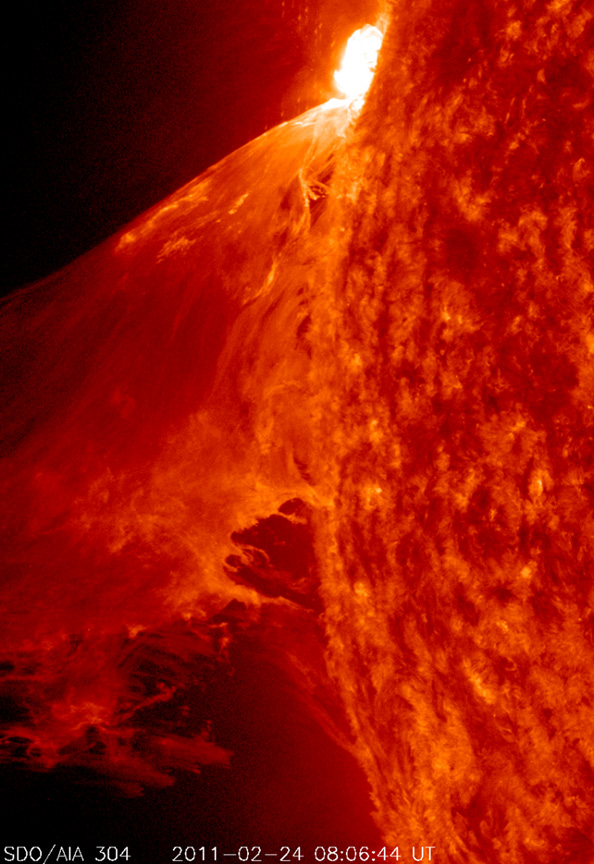
    M3.6 solar flare occurred on February 24 near the solar esatern limb and blew out a gorgeous CME plasma waves that swirled and twisted over a 90-minute period. Some of the material blew out into space and other portions fell back to the surface. This event was