
Hidden sulfur in Apollo 17 rocks reveals Moon’s mysterious ancient chemistry
Researchers from Brown University reported that Apollo 17 samples sealed since 1972 contain exotic sulfur isotopes, revealing a lunar mantle signature unlike any found on Earth.

Commander Eugene Cernan retrieves a drive tube from the Lunar Roving Vehicle during an Apollo 17 EVA. Samples from one of the Apollo 17 drive tubes was recently opened and analyzed by Brown University researchers, who found surprising sulfur isotopes signatures inside. Credit: NASA
For half a century, portions of the Apollo 17 samples collected from the Taurus-Littrow valley remained untouched inside NASA’s sealed containers. These samples, preserved in a helium environment since December 1972, were meant to be opened only when new technologies could reveal what earlier methods could not. That time has now arrived.
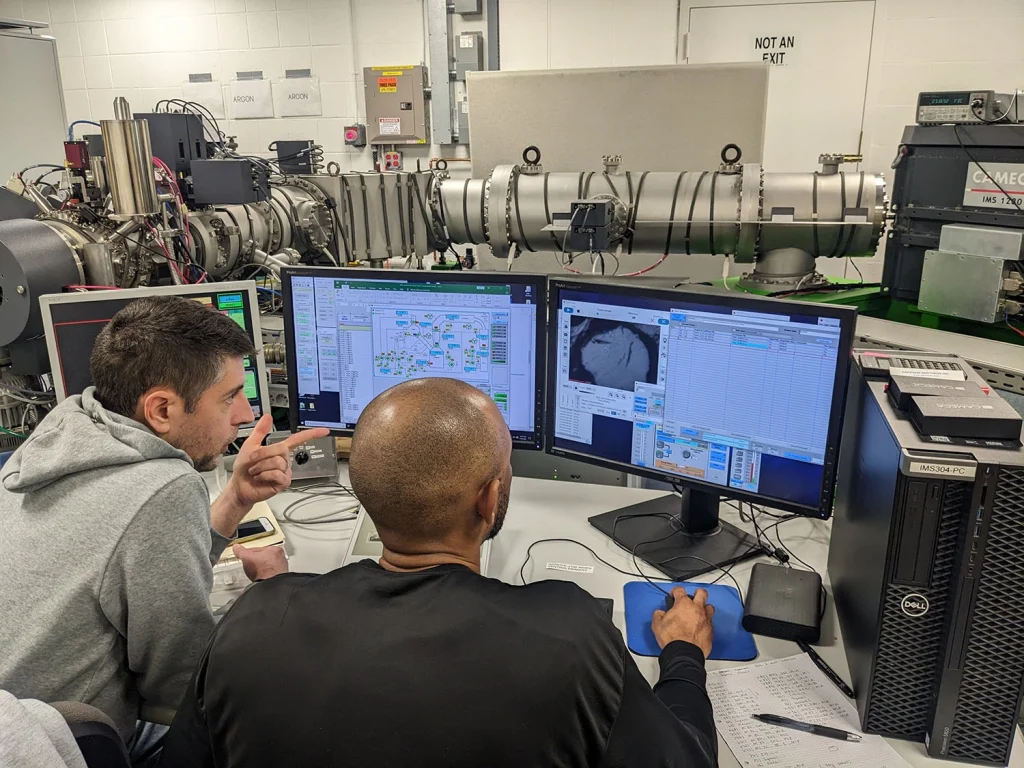
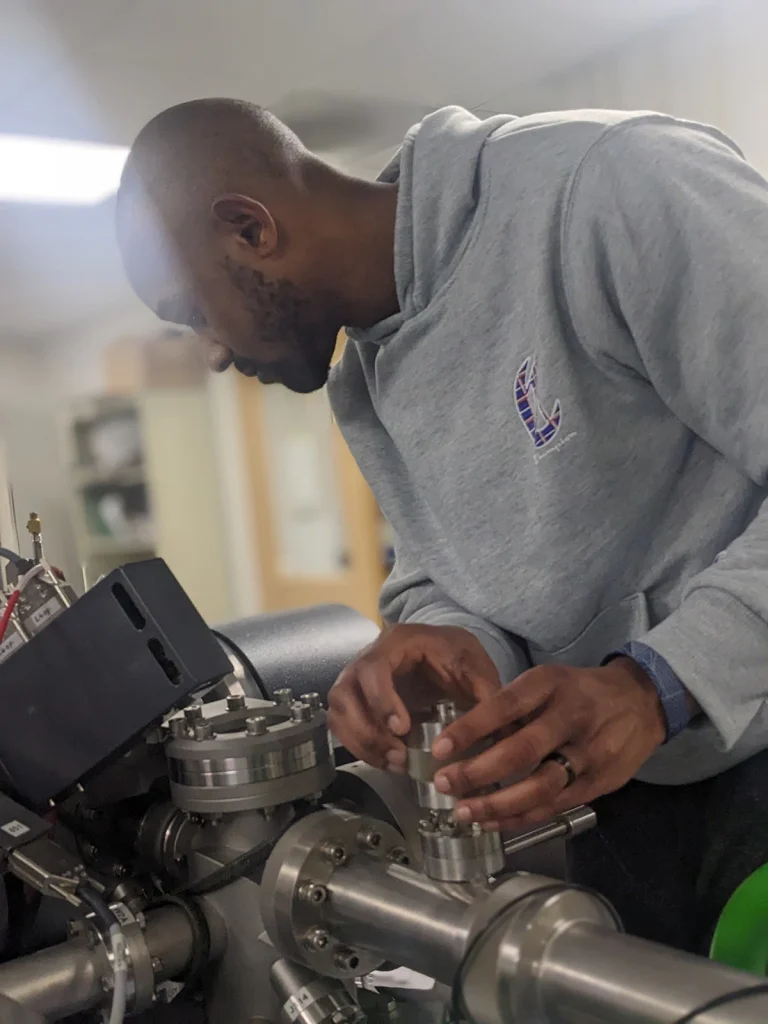
A Brown University research team led by geochemist James Dottin used a precision technique known as secondary ion mass spectrometry to analyze sulfur isotopes in the samples. The findings, published in JGR: Planets on September 10, 2025, show that sulfur compounds deep within the Moon’s mantle are depleted in sulfur-33 (³³S), one of the four stable isotopes of sulfur.
This depletion is unlike anything observed in terrestrial rocks. It suggests that the Moon’s mantle either experienced unique chemical processes early in its formation or preserved material inherited from another planetary body. In both cases, the result forces scientists to rethink long-standing assumptions about lunar origin and evolution.
Until now, most isotopic studies, particularly of oxygen, indicated that Earth and the Moon shared nearly identical chemical fingerprints, supporting the theory that the Moon formed from Earth’s outer layers after a massive impact. The new sulfur evidence disrupts that picture, revealing an unexpected layer of chemical diversity hidden beneath the lunar surface.
The research team analyzed material extracted from a double drive tube (73001/2) pushed about 60 cm (24 inches) into the lunar regolith by astronauts Gene Cernan and Harrison Schmitt. These core samples capture volcanic material from the Moon’s mantle, offering an unmatched window into its internal chemistry.
A sulfuric signature unlike anything on Earth
Every element contains isotopes—atoms of the same element with slightly different masses. These isotopic ratios act as unique fingerprints, allowing scientists to trace the processes that shaped a material’s origin. Dottin’s team measured the ratios of ³⁴S/³²S and ³³S/³²S within microscopic sulfide grains embedded in the lunar rock.
The results showed large variations: δ³⁴S values ranged from −4.1‰ to +1.5‰, and Δ³³S from −2.8‰ to −0.1‰. The numbers fall far outside the range seen in Earth’s rocks and reveal that the Moon’s interior contains at least two distinct sulfur sources, one typical of ordinary lunar basalt and another highly altered by exposure to ultraviolet light in a gaseous environment.
Such isotopic depletion can occur when sulfur gas interacts with ultraviolet radiation in a thin atmosphere, a process known as photochemical fractionation. For this signal to appear in mantle material, the altered sulfur must have somehow been transported from the lunar surface into the interior.
The discovery, therefore, implies that early in its history, the Moon may have had both a transient atmosphere and an internal system capable of recycling surface material downward, an extraordinary finding, given that the Moon lacks plate tectonics or any known large-scale crustal recycling mechanisms.
The isotope data also align with the possibility that this sulfur predates the Moon itself. It could be material preserved from Theia, the Mars-sized body that struck the proto-Earth 4.5 billion years ago. If Theia’s sulfur chemistry differed from Earth’s, remnants could remain trapped within the lunar mantle today.
The search for the Moon’s lost atmosphere
If the sulfur originated through ultraviolet reactions in a thin early atmosphere, that would suggest the Moon was once much more dynamic than previously thought. Models show that volcanic eruptions about 3.5 billion years ago could have temporarily thickened the lunar atmosphere with gases like sulfur dioxide and carbon monoxide.
As sunlight split these gases, sulfur isotopes would fractionate, leaving behind a unique signature. Over time, volcanic and impact-driven processes could have buried this altered material and mixed it into the mantle.
This would represent the first direct evidence of atmosphere-to-mantle exchange on the Moon. On Earth, such recycling occurs through subduction and plate tectonics, but the Moon has no such mechanism. The idea that early lunar volcanism might have driven limited chemical exchange challenges traditional views of the Moon as an inert, airless body.
The discovery implies that even airless worlds can undergo complex surface-interior chemical interactions. That has implications not only for lunar history but also for other airless bodies such as Mercury or Io, where volatile cycling may also occur under extreme conditions.
Researchers are now developing models to determine whether transient volcanic atmospheres could last long enough to allow photochemical reactions and subsequent burial of altered material into the deep crust or mantle.
The impact legacy of Theia
The other explanation lies in the very event that formed the Moon. The prevailing “giant impact” model holds that a collision between the early Earth and a Mars-sized protoplanet named Theia created the Moon from molten debris. In most models, this impact should have thoroughly mixed both bodies’ materials, explaining why lunar and terrestrial oxygen isotopes are almost identical.
However, the new sulfur isotope data suggest that this mixing was not complete. The Moon may preserve portions of Theia’s original chemical signature, locked within its interior. If true, the samples analyzed by Dottin and colleagues could contain the first direct geochemical evidence of another planetary body that no longer exists.
Such evidence would help resolve long-standing questions about how efficiently materials mixed during planetary collisions in the early solar system. It would also shed light on the chemical diversity of the primordial solar nebula, where each planetary embryo might have developed distinct isotopic compositions before merging or colliding.
Comparisons with future isotopic data from Mars, Mercury, and asteroid samples will be critical. They may show whether sulfur anomalies are unique to the Moon or a common relic of early planetary differentiation.
In that sense, these tiny lunar sulfides may offer one of the clearest chemical connections to events that shaped the entire inner solar system.
Future research and broader significance
NASA’s Apollo Next Generation Sample Analysis (ANGSA) program, under which these samples were examined, continues to release sealed materials collected during the Apollo missions. Each newly opened tube offers a chance to test modern theories of lunar and planetary evolution with precision instruments unavailable half a century ago.
Future studies will expand sulfur isotope mapping across other Apollo sites to determine whether these anomalies are global or localized. If consistent, they could redefine our understanding of how volatiles were distributed within the Moon’s interior.
In parallel, comparative isotope analyses from upcoming missions such as Artemis samples or the Japanese SELENE-2 lander may clarify how sulfur and other volatile elements behaved under different planetary conditions.
Ultimately, understanding these isotopic fingerprints will help reconstruct the solar system’s chemical evolution, revealing not just how the Moon formed, but how planetary building blocks came together across the early nebula.
Even now, half a century after Apollo 17’s final footprints faded from the lunar dust, those sealed core samples continue to transform what we know about our closest celestial neighbor.
References:
1 Endogenous, yet Exotic, Sulfur in the Lunar Mantle – J. W. Dottin III et al. – JGR – September 10, 2025 – https://doi.org/10.1029/2024JE008834 – September 10, 2025
2 With new analysis, Apollo samples brought to Earth in 1972 reveal exotic sulfur hidden in Moon’s mantle – Brown University – October 6, 2025

I’m a science journalist and researcher at The Watchers, contributing to the Epicenter edition, where I cover peer-reviewed scientific research and emerging discoveries across Earth and space sciences. With a background in astronomy and a passion for environmental science, I’ve worked in shark and coral conservation in Fiji, conducting reef and shark-behavior research, contributing to mangrove restoration, and earning PADI Open Water and Coral Reef Certifications. I bring a blend of scientific rigor and storytelling to illuminate the discoveries shaping our planet and beyond.

Commenting rules and guidelines
We value the thoughts and opinions of our readers and welcome healthy discussions on our website. In order to maintain a respectful and positive community, we ask that all commenters follow these rules.