• Deta Elis, groundbreaking Star Trek medicine a reality – bioresonance

    Thought doctor McCoy had it good with his equipment on the Starship Enterprise? Wait until you get a load of what is coming to revolutionize the world of medicine.

    Medicine just got exciting thanks to Russian scientists and over 17 years of in-depth research. The

  • Wireless device converts 'lost' energy into electric power

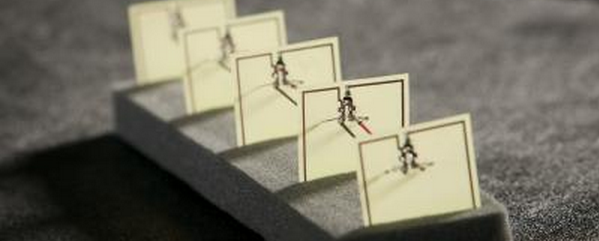
    Using inexpensive materials configured and tuned to capture microwave signals, researchers at Duke University's Pratt School of Engineering have designed a power-harvesting device with efficiency similar to that of modern solar panels.

    The device wirelessly

  • Laser communications: from vision to reality

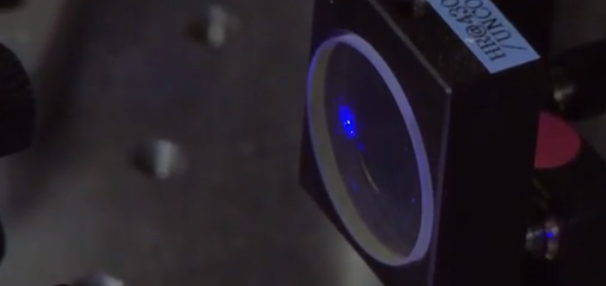
    Since its inception in 1958, NASA has relied exclusively on radio frequency (RF)-based communications as the only viable medium for exchanging data between a mission and a spacecraft. Today, with missions demanding communication with higher data rates than ever

  • Complete quantum teleportation achieved for the first time

    Furusawa group at the University of Tokyo has succeeded in demonstrating complete quantum teleportation of photonic quantum bits by a hybrid technique for the first time worldwide. In 1997, quantum teleportation of photonic quantum bits was achieved by a research team

  • Quantum computer outperforms regular PC

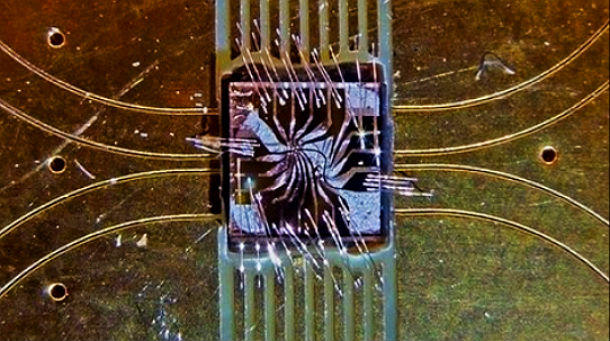
    A series of tests between a regular PC and a commercially available quantum computer showed great potential of the quantum machine, leaving the PC trailing behind. The difference between classical bits and quantum bits, or qubits is that the latter can take the

  • Medical application of ‘graphene foam’ in neural stem cell therapy

    Neural stem cell (NSC) based therapy holds promise for treating numerous neurological disorders. In this treatment, NSCs require scaffolds to provide micro-environments for their growth and differentiation. In 2011, Korean researchers had reported that graphene…

  • Nanowire networks have the potential to mimic aspects of the human brain

    Irish nanoscientist, Prof John Boland, director of the Centre for Research on Adaptive Nanostructures and Nanodevices (CRANN), believes that his research can lead to producing nanowire networks that can mimic aspects of the human brain and eventually lead to a new