• Breakthrough in light sources for new quantum technology

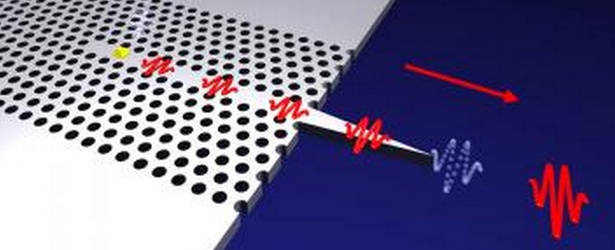
    Electronic circuits are based on electrons, but one of the most promising technologies for future quantum circuits are photonic circuits, i.e. circuits based on light (photons) instead of electrons. First, it is necessary to be able to create a stream of single photons


  • Water tractor beam created

    Physicists at The Australian National University (ANU) have created a tractor beam on water, providing a radical new technique that could confine oil spills, manipulate floating objects or explain rips at the beach.The group, led by Professor Michael Shats discovered th

  • New computer program aims to teach itself everything about anything

    In today’s digitally driven world, access to information appears limitless. But when you have something specific in mind that you don’t know, like the name of that niche kitchen tool you saw at a friend’s house, it can be surprisingly hard to sift

  • Shields Up! Students devise concept for Star Wars-style deflector shields

    Technology for protecting spaceships from laser fire is feasible today, University of Leicester students discovered. The only drawback, so far, is that you won’t be able to see a thing outside.In anticipation of Star Wars Day on 4 May, three fourth-year Physics st

  • Google buys surveillance drone company Titan Aerospace

    It's official: Google is no longer "just another media company." Or search engine, for sure.No, Google has transformed itself into a bona fide technology company, one that boasts robotics and now drones.The tech giant recently purchased a manufacturer of s

  • Inducing rain and lightning with high-energy laser beams

    Researchers at the University of Central Florida’s College of Optics & Photonics and the University of Arizona are developing a new technique to aim a high-energy laser beam into clouds to make it rain or trigger lightning.They are surrounding one bea

  • Stanford developed game controller that can sense players’ emotions

    Stanford engineers have developed what could be the next big thing in interactive gaming: handheld game controllers that measure the player's physiology and alter the gameplay to make it more engaging.The prototype controller was born from research conducted in