• New Horizons accomplished the historic first-ever flyby of Pluto

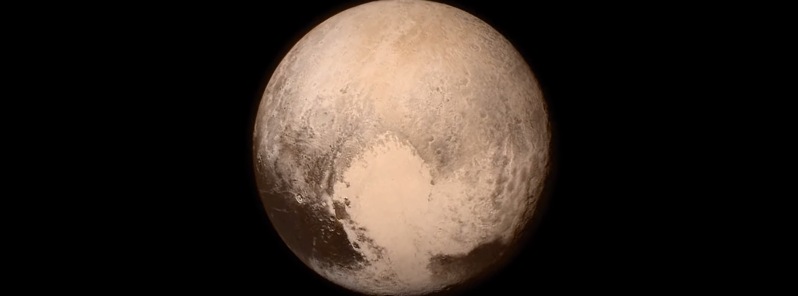
    New Horizons spacecraft phoned home around 01:00 UTC on July 15, 2015 telling the mission control and the world it had accomplished the historic first-ever flyby of Pluto.The flyby began at 11:49 UTC on July 14 and the spacecraft has been instructed to spend the day gat

  • Tracking space weather for New Horizons

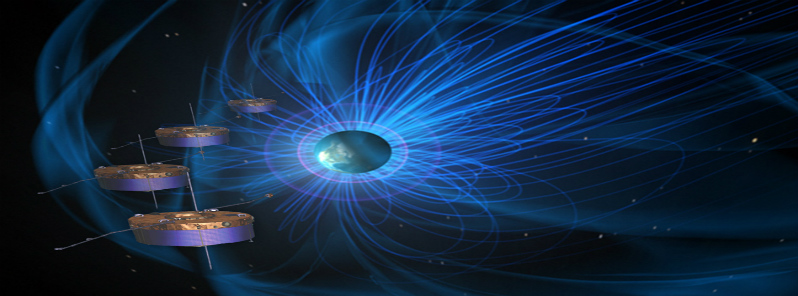
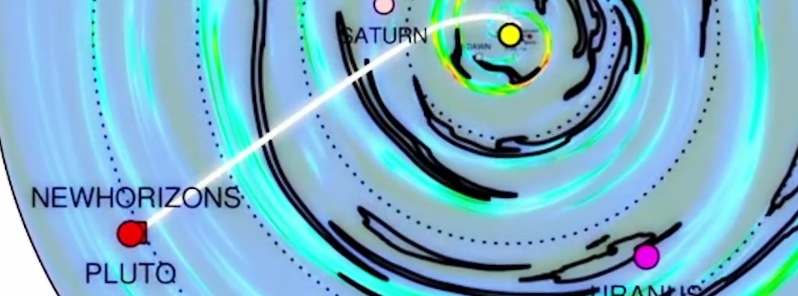
    A few months before New Horizons was due to reach Pluto, a community of scientists came together to determine just what kind of a environment the mission would experience during its historic flyby.While the simulations aren't 100% conclusive, this first ever attempt

  • Istok crater on Mars hints at Earth-like climate

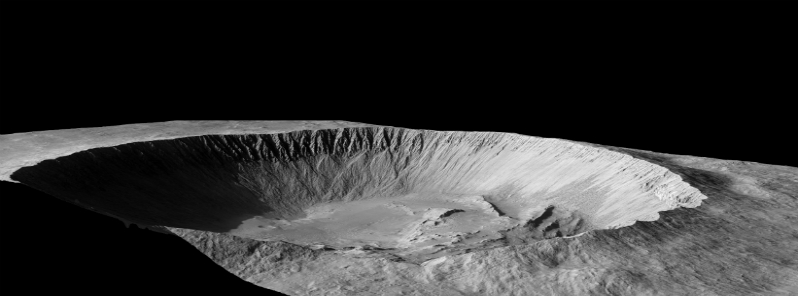
    A new study of young Istok crater led by Tjalling de Haas of Utrecht University in the Netherlands reveals that Mars, a planet of paradoxes, may have had a climate that resembles that of our own in the recent past.Istok crater, located in the Aonia Terra region of Mars,

  • Our electrically scarred Moon

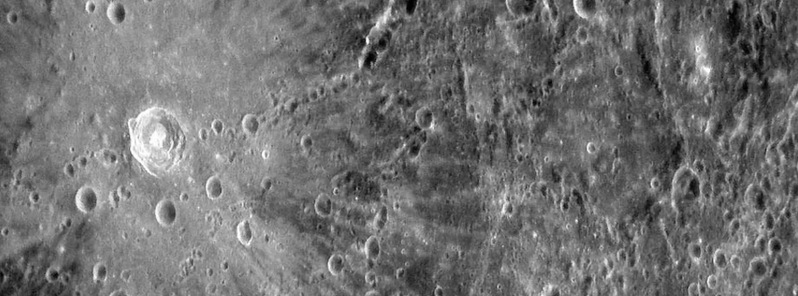
    Half-a-century ago, at the height of the Cold War, the Space Race between two competing superpowers set mankind on an accelerated path toward placing a man on the Moon. In addition to its geopolitical significance, the Moon was central in the evolution of planetary scie

  • Does the solar magnetic field show a North-South divide?

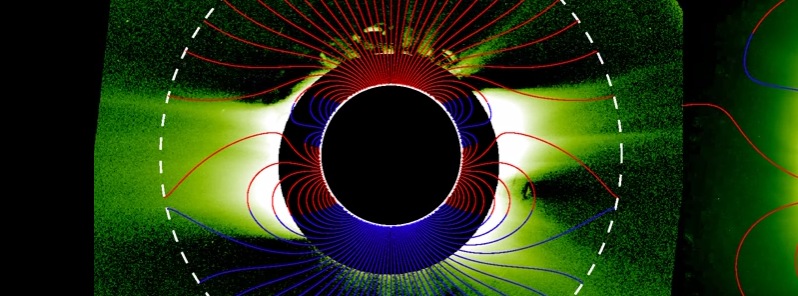
    A study of jets travelling through the Sun’s corona at speeds between 200-500 km/s has shown that the fast-moving columns of plasma are deflected much more strongly by the Sun’s magnetic field in the northern hemisphere than in the southern hemisphere. A nor

  • A five star, doubly-eclipsing star system discovered

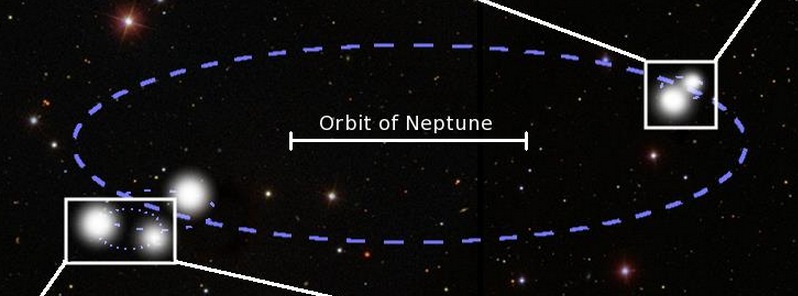
    Astronomers at the Open University have discovered the first quintuple star system containing two eclipsing binary stars. While scientists think that about a third of stars are found in pairs or multiple systems, to find five stars connected to each other is very rare.T

  • Neptune’s badly behaved magnetic field modelled in detail

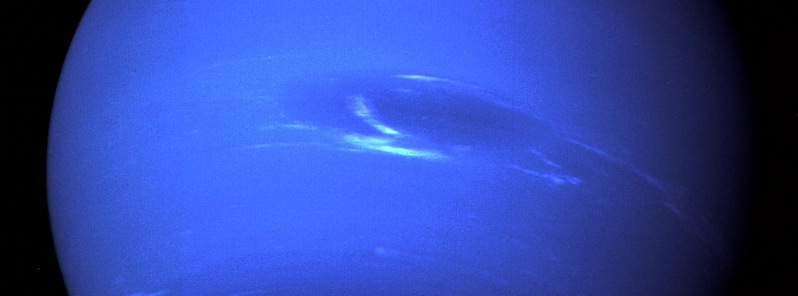
    A team of scientists at the Imperial College London have combined 26-year old data with supercomputer simulations and for the first time modelled Neptune's magnetic field in detail. The researchers find that the furthest planet from the Sun has a badly behaved

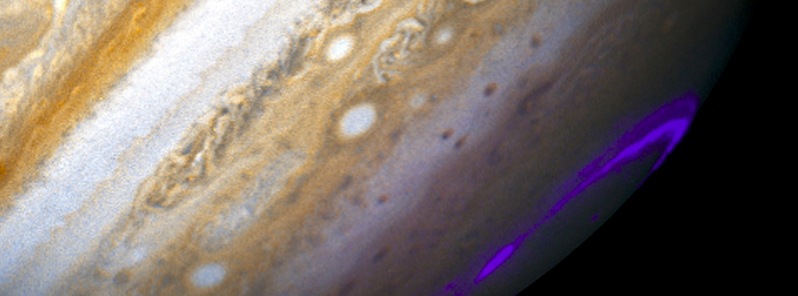
  • Auroral substorms on Jupiter are not caused by the solar wind, alone

    A previous Picture of the Day published in late 2012 quoted Jonathan Nichols from the University of Leicester:“The main aurora oval on Jupiter we think should dim when the solar wind blows harder, but what we see is that actually gets brighter, which is totally

  • Final ‘all clear’ for historic July 14 Pluto flyby

    Having found no potential threats on the way, NASA's New Horizons spacecraft stays course to Pluto, as it speeds closer to it's historic July 14, 2015 flyby of Pluto and it's five moons. Launched from Cape Canaveral on January 19, 2006, New Horizons woke up