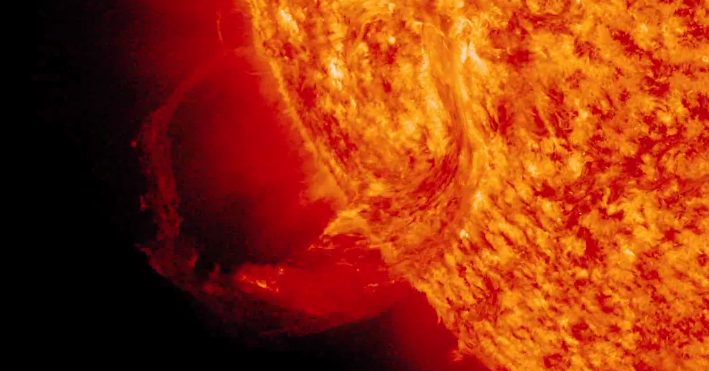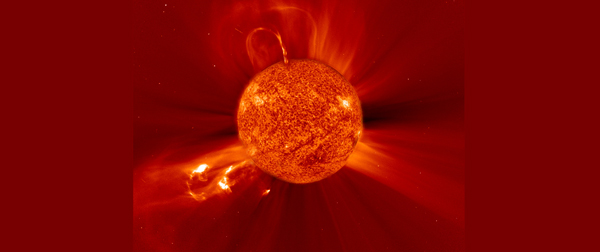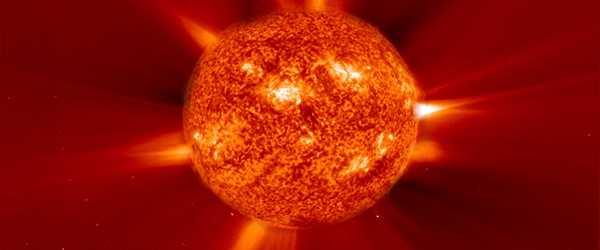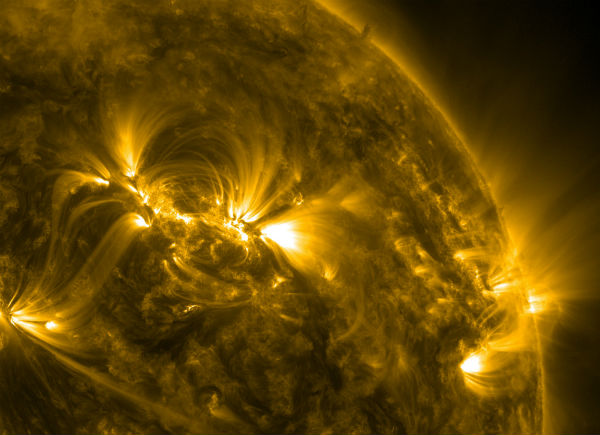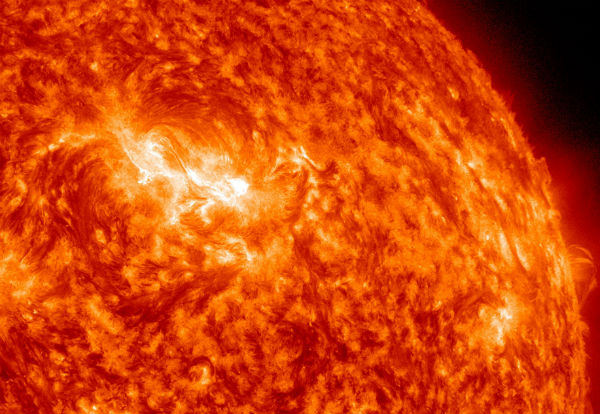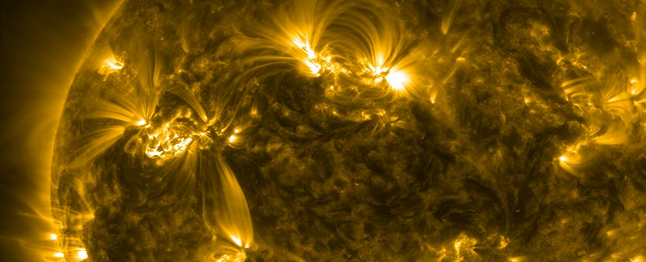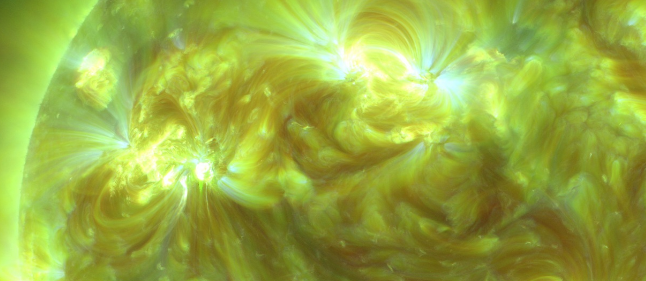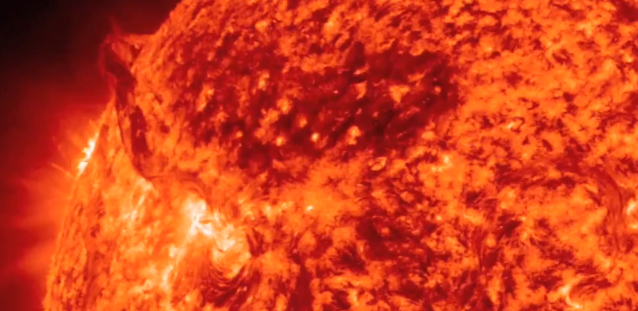
• Solar prominences on January 23, 2013

    Solar activity remained at low levels for the past 24 hours. However, there were two large prominence eruptions on January 23, 2013. First large prominence erupted from the southern limb in early hours, producing south-directed  CME cloud, away from Earth. It was

  • Earth Gamma-Ray Blasters

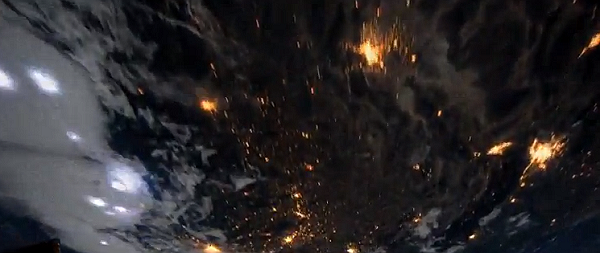
    From NASA Goddard Space Flight Center. NASA’s The Fermi Gamma-ray Space Telescope has been catching brief outbursts of high-energy light that are mysteriously produced above thunderstorms. The outbursts, known as terrestrial gamma-ray flashes (TGFs), last only a few

  • Sunspot 1654 still dominates the visible solar disk

    Active Region 1654 has traveled half across the Earth facing side of the Sun and now is squarely facing Earth. On January 13, this huge sunspot reached its maximum size measured as more than 193 000 km (120, 000 miles) wide long or 15 Earth diameters) from end to

  • Moderate solar flare reaching M1.7 erupted from AR 1652

    A second moderate solar flare erupted on January 13, 2013 from AR 1652. M1.7 solar flare peaked at 08:38 UTC. The event started at 08:35, peaked at 08:38 and ended at 08:40 UTC. Type II and IV radio emissions were associated with the event. Type II emissions occur

  • Active Region 1652 produced M1.0 solar flare

    Beta-gamma-delta Active Region 1652 generated M1.0 solar flare at 00:50 UTC on January 13, 2013. Considering the position of Sunspot 1652, which is facing Earth, geoeffective CME is possible. Active Region 1652 (Credit: SDO/The Watchers)  There are

  • Impulsive solar flare measuring M1.2 erupted from AR 1654

    A moderate but impulsive M-class solar flare measuring M1.2 erupted from big Active Region 1654 on January 11, 2013 at 09:11 UTC. A Coronal Mass Ejection (CME) is expected as ejecta has been observed exiting the blast area.  A Type II and Type IV Radio Emissions were