• Nanotech self-filling water bottle inspired by a beetle

    A water bottle which will fill itself by drawing water from atmosphere is what NBD Nano co-founder and biochemist Deckard Sorensen conceived in his mind. He got inspired by Namib desert beetle(genus Stenocara), which does something similar. Living in a desert where

  • Zooming in on charged particles emitted by the Sun

    Using ESA’s Cluster satellites as a space plasma microscope, scientists have zoomed in on the solar wind to reveal the finest detail yet, finding tiny turbulent swirls that could play a big role in heating it.Turbulence is highly complex and all around us, evident

  • Our world is changing: Looking beyond ‘the 2012’

    If you haven’t seen this video take a look, it’s worth watching. As with everything else, it’s up to you to make your own opinion. All the links are below. Information courtesy of NASA, NOAA – National Oceanic and Atmospheric Administration, the US Library,

  • SAMPEX – Earth’s radiation belts

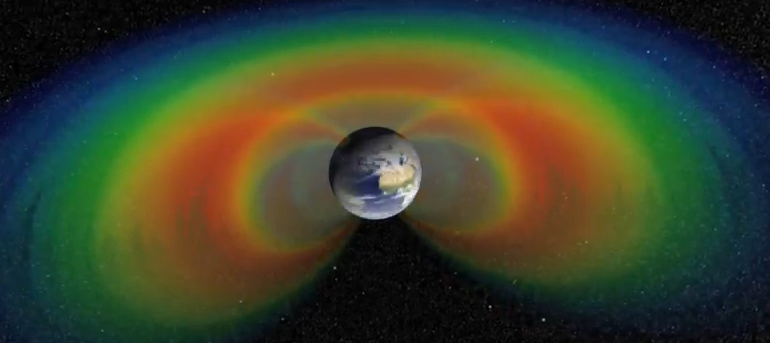
    This is a simulation of the Earth’s radiation belts constructed from SAMPEX data around the time of the 2003 Halloween solar storms. In this visualization, we present the belts in cross-section to provide a better view of their interior structure.The Earth’s

  • The explosion that shattered solar theory

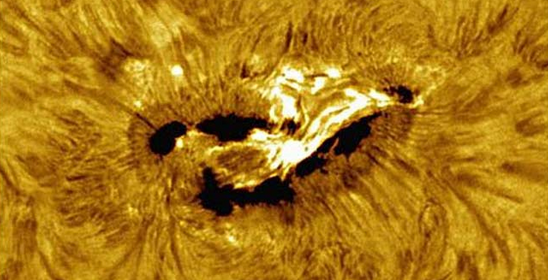
    In January 2005, some remarkable things happened on the Sun, and the implications are still reverberating through the scientific community. Between January 15th and 19th four powerful solar flares erupted from “sunspot 720”, shown in the picture above. Then on January

  • USGS storm-surge sensors deployed ahead of TS Sandy

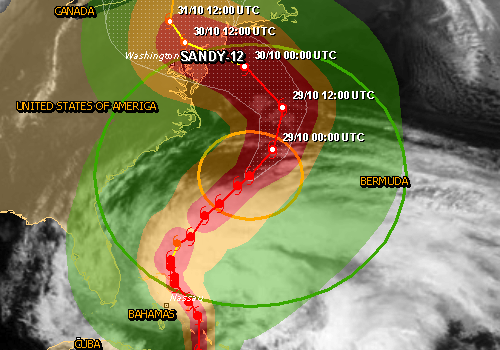
    Storm response crews from the U.S. Geological Survey are installing more than 150 storm-tide sensors at key locations along the Atlantic Coast — from the Chesapeake Bay to Massachusetts — in advance of the arrival of Tropical Storm Sandy.Working with various

  • Earth’s magnetosphere behaves like a sieve

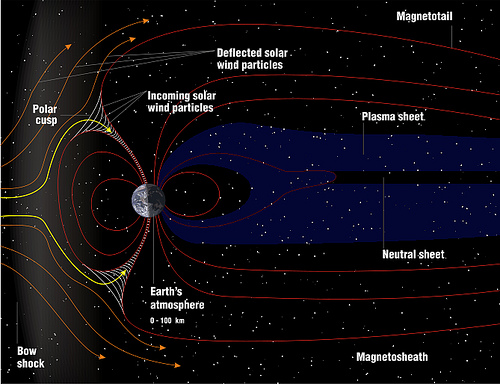
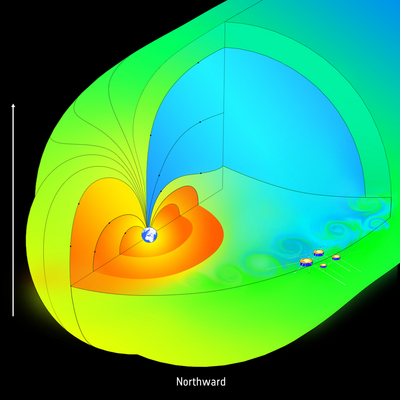
    ESA’s quartet of satellites studying Earth’s magnetosphere, Cluster, has discovered that our protective magnetic bubble lets the solar wind in under a wider range of conditions than previously believed.Earth’s magnetic field is our planet’s first line of