• Two subtropical systems active simultaneously in South Atlantic, first such overlap documented in modern monitoring era

    Subtropical Storm Caiobá formed off southern Brazil on March 2, 2026, after two subtropical depressions developed simultaneously in the South Atlantic. According to Metsul Meteorologia and available South Atlantic cyclone records, no previous instance of simultaneous subtropical depressions has been documented since formal monitoring and classification began. Caiobá moved away from the coast of Brazil without any major impacts.

  • Heavy snowfall across northern China triggers emergency responses

    Northern China experienced widespread snowfall on March 1, 2026, with snow cover exceeding 250 000 km² (96 525 mi²) and a maximum snow depth of 23 cm (9 inches). The event prompted emergency responses across several provinces, including Hebei, Shanxi, and Gansu, according to official reports.

  • Increased seismic activity recorded at Bulusan volcano, Philippines

    A total of 49 volcanic earthquakes were recorded at Bulusan Volcano in Sorsogon Province, Philippines, between 03:00 LT on February 26 and 11:00 LT on March 2, 2026, prompting authorities to issue an advisory on increased seismic activity. Sixteen of the events were classified as volcano-tectonic earthquakes occurring at depths of 3–6 km (1.9–3.7 miles) beneath the northern and southeastern flanks of the volcano. Alert Level 0 remains in effect, but officials warn of a possible sudden phreatic eruption.

  • Canada records lowest temperature in decades and record snowfall in winter 2025–26

    Canada recorded its lowest temperature in decades during winter 2025–26, with −55.7°C (−68°F) measured at Braeburn, Yukon, on December 23. Seasonal snowfall reached 446 cm (176 inches) in Gander West, Newfoundland and Labrador, among the highest totals reported nationwide this winter, while Toronto registered its snowiest single day on record on January 25, when 46 cm (18 inches) fell at Toronto Pearson International Airport. The season, spanning December 1, 2025, through February 28, 2026, saw a 76.7°C (138°F) national temperature range, repeated Arctic air outbreaks, and major winter storms that disrupted transportation across central and eastern Canada.

  • Strong M6.1 earthquake hits near Simeulue, Indonesia

    A strong and shallow earthquake registered by the USGS as M6.1 hit near Simeulue, Indonesia, at 04:56 UTC (11:56 local time) on March 3, 2026. The agency is reporting a depth of 26.2 km (16 miles). EMSC is reporting the same magnitude and depth.

  • Winter weather impacts Appalachians and Mid-Atlantic while severe storm risk expands across parts of Oklahoma and Kansas

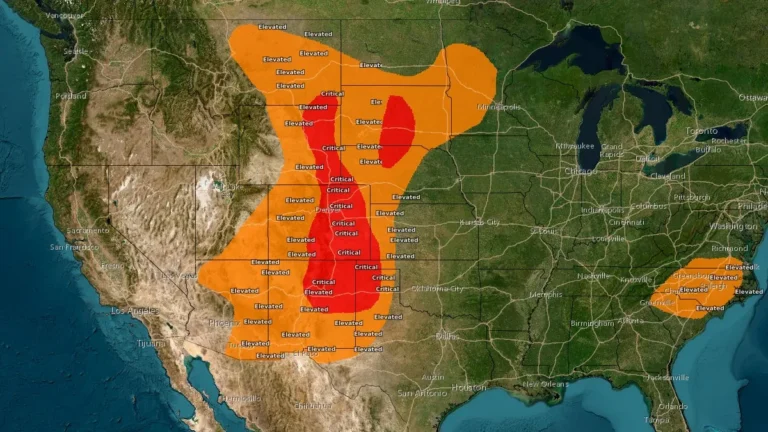
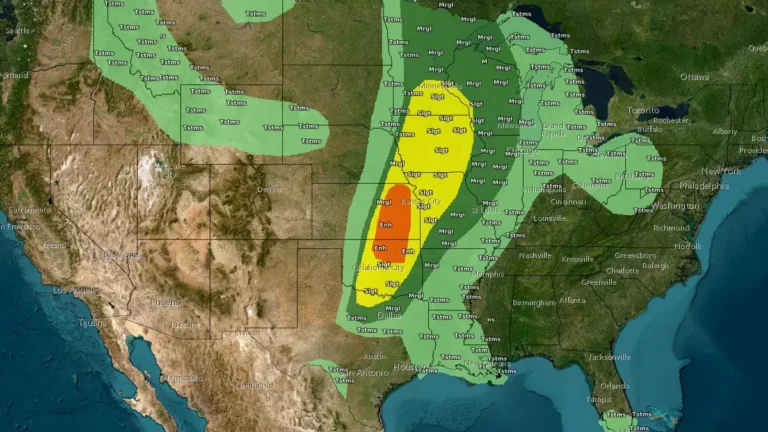
    A lifting frontal boundary draped from the southern Plains to the Mid-Atlantic is producing a swath of mixed winter precipitation across the Ohio and Tennessee Valleys on March 2, 2026, while setting the stage for isolated severe thunderstorms in Oklahoma and Kansas on March 3. Winter weather advisories are in effect from Indiana to Pennsylvania, with ice accretion possible across the higher terrain of the Appalachians, according to the Weather Prediction Center.

  • Deep M6.3 earthquake hits Fiji region

    A deep earthquake registered by the USGS as M6.3 hit the Fiji region at 05:44 UTC on March 1, 2026. The agency is reporting a depth of 596 km (370 miles). EMSC is reporting the same magnitude and depth.