I'm a dedicated researcher, journalist, and editor at The Watchers. With over 20 years of experience in the media industry, I specialize in hard science news, focusing on extreme weather, seismic and volcanic activity, space weather, and astronomy, including near-Earth objects and planetary defense strategies. You can reach me at teo /at/ watchers.news.

  • Impulsive X4.2 solar flare erupts from geoeffective Active Region 4366

    An impulsive X4.2 solar flare erupted from geoeffective Active Region 4366 at 12:13 UTC on February 4, 2026. The flare originated from a magnetically complex beta-gamma-delta region that produced dozens of M- and 5 other X-class flares since February 1. Its location near the central solar disk raises the possibility of Earth-directed coronal mass ejections (CMEs) this week.

  • Cascades snowpack remains below 50 percent following late January storms

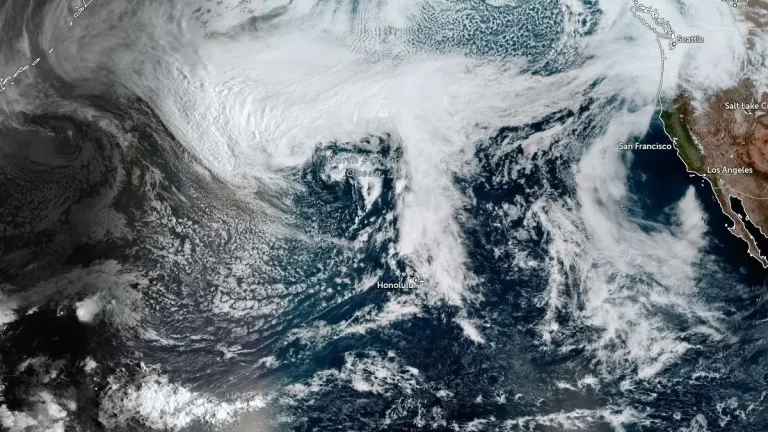
    Four atmospheric rivers affected the Pacific Northwest between January 27 and February 1, 2026, producing 150–300 mm (6–12 inches) of rain in the Olympic Mountains and 100–200 mm (4–8 inches) in the North Cascades. Snowfall reached up to 900 mm (36 inches) in high elevations near Mount Rainier, while snowpack remains below 50% of normal.

  • Strong M6.1 earthquake hits Kermadec Islands, New Zealand

    A strong earthquake registered by the USGS as M6.1 struck the Kermadec Islands region, New Zealand at 10:39 UTC on February 4, 2026. The agency is reporting a depth of 184.2 km (114 miles). EMSC is reporting M6.1 at a depth of 197 km (122 miles).

  • M5.9 earthquake hits Rakhine-Magway border region, Myanmar

    A strong earthquake registered by the USGS as M5.9 struck Myanmar at 15:34 UTC (22:04 LT) on February 3, 2026. The agency is reporting a depth of 62.7 km (39 miles). EMSC is reporting M5.9 at a depth of 55 km (34 miles). The USGS issued a Green alert for shaking-related fatalities and economic losses.

  • CME produced by X8.1 flare forecast to reach Earth on February 5, causing G1 geomagnetic storm

    A coronal mass ejection (CME) associated with an X8.1 solar flare from Region 4366 at 23:57 UTC on February 1 is forecast to glance Earth late on February 5, 2026. The impact is expected to produce G1 – Minor geomagnetic storm conditions and possible auroral activity poleward of 60 degrees Geomagnetic Latitude. This was the third-strongest solar flare of Solar Cycle 25.

  • Severe dust storm engulfs Broken Hill, Australia

    A fast-moving dust storm affected outback communities in New South Wales on January 31, 2026, resulting in hazardous driving conditions and widespread dust deposition. Meteorologists from the Bureau of Meteorology reported the system formed as dry topsoil was lifted by intense westerly gusts exceeding 70 km/h (45 mph).

  • Rapidly intensifying coastal storm brings heavy snow and Arctic cold to the Carolinas and mid-Atlantic

    A powerful winter storm underwent rapid intensification along the East Coast from January 30 to February 1, 2026, bringing historic snow to the Carolinas and deep winter cold across much of the eastern United States. The nor’easter disrupted travel, caused power outages, and extended freezing conditions into Georgia and Alabama.