I'm a dedicated researcher, journalist, and editor at The Watchers. With over 20 years of experience in the media industry, I specialize in hard science news, focusing on extreme weather, seismic and volcanic activity, space weather, and astronomy, including near-Earth objects and planetary defense strategies. You can reach me at teo /at/ watchers.news.

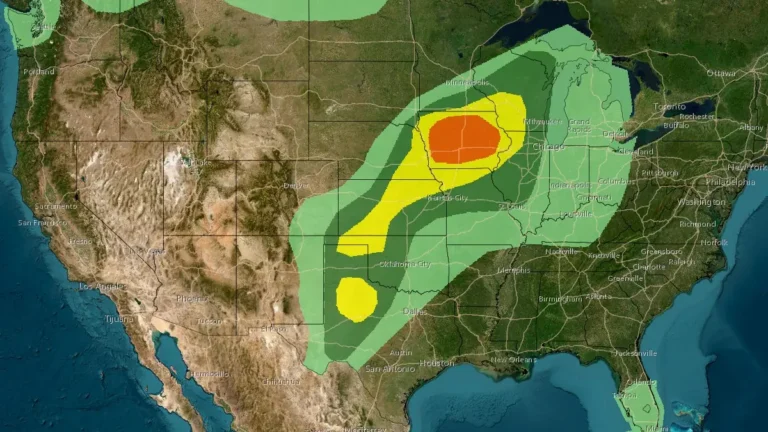
  • Multi-state Red Flag Warnings issued as strong winds and very low humidity raise wildfire danger across the central U.S.

    Red Flag Warnings are in effect across a broad swath of the Plains, Rockies, and parts of the Upper Midwest on Wednesday, April 22, 2026, as strong winds, very low relative humidity, and dry fuels create critical fire weather conditions. The National Weather Service warns that any fires that start could spread quickly and be hard to control. In some areas, isolated dry thunderstorms may produce lightning with little or no rain, increasing the risk of new fires.

  • Pineland Road Fire explodes to over 6 000 ha (16 000 acres) as over 100 fires burn across Georgia

    Wildfires driven by drought conditions spread across Georgia, United States, with at least 112 active fires burning approximately 9 164 ha (22 643 acres) as of April 22. The largest blaze, the Pineland Road Fire in Clinch County, reached 6 686 ha (16 516 acres) with 10% containment, while multiple fires continued to expand under dry and windy conditions.

  • Damaging ice shoves push into homes in Cheboygan County, Michigan

    Wind-driven ice shoves struck multiple lakes in Cheboygan County, Michigan, during an ongoing flooding event in April 2026, pushing onshore and into residential structures. The event is unfolding as elevated water levels from snowmelt and recent rainfall continue to drive flooding and evacuations across northern Michigan.

  • Lyrid meteor shower peaks April 22 under favorable skies

    Earth will intersect the Lyrid meteor stream on April 22, 2026, marking the peak of this annual celestial event, with meteor rates averaging 10–20 per hour under optimal conditions. The event is best observed during the pre-dawn hours when the radiant in the constellation Lyra reaches a higher elevation.

  • Record rainfall triggers flooding and evacuations in Wellington, New Zealand, one person missing

    Severe flooding and landslides struck Wellington, New Zealand, between April 20 and 21, 2026, after 77 mm (3 inches) of rain fell in less than 1 hour, prompting evacuations across multiple suburbs and leaving one person missing. A state of emergency remains in place as saturated ground and additional rainfall maintain the risk of further flooding and landslides.

  • Subsequent earthquake advisory issued after M7.4 event, elevated large-earthquake risk, Japan

    Japan Meteorological Agency (JMA) issued an official advisory warning of an elevated risk of a larger earthquake along its Pacific coast on April 20, 2026, after a M7.4 quake near the Japan Trench at 07:53 UTC (16:53 local time). The agency estimates about a 1% chance of a Mw7.8 or greater earthquake occurring within seven days, based on historical statistics.

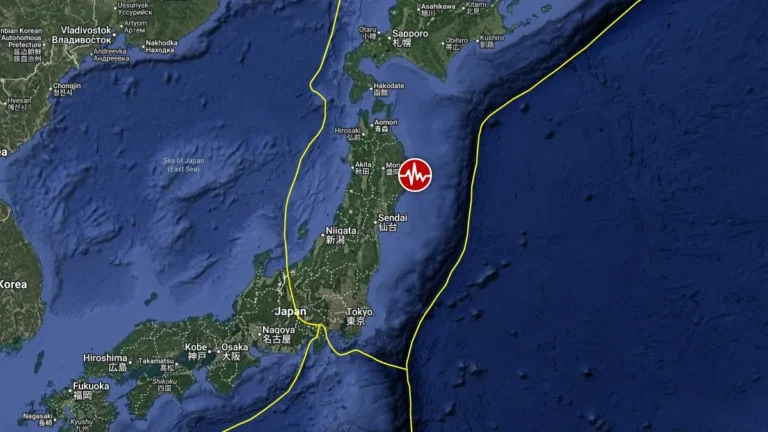
  • Major M7.4 earthquake hits near east coast of Honshu, Japan, tsunami waves observed along Tohoku coast

    A major earthquake registered by the USGS as M7.4 struck near the east coast of Honshu, Japan, at 07:53 UTC (16:53 local time) on April 20, 2026. The agency is reporting a depth of 35 km (21.7 miles). JMA and EMSC are reporting M7.4 at a depth of 10 km (6 miles). According to the Pacific Tsunami Warning Center (PTWC), hazardous tsunami waves are possible within 300 km (186 miles) of the epicenter.

  • State of emergency declared as Red Heavy Rain Warnings take effect in Wellington and Wairarapa, New Zealand

    Red Heavy Rain Warnings were issued for Wellington and Wairarapa on Monday, April 20, 2026, as flooding, swollen rivers, and landslides cut through infrastructure across the region, prompting the declaration of a state of emergency. Further heavy rain is forecast through Tuesday, April 21, with accumulations of up to 150 mm (5.9 inches) expected in the hardest-hit areas.

  • Grand Canyon origin tied to ancient lake spillover, new geological evidence shows

    An ancient lake that filled, pooled, and ultimately spilled over may hold the answer to one of geology’s most debated questions: how did the Colorado River carve the Grand Canyon? New evidence published April 16, 2026, in Science supports spillover flooding from Lake Bidahochi as a key mechanism in the river’s integration and the canyon’s formation, with mineral grain analysis placing Colorado River sediment in the Bidahochi Basin of northern Arizona by approximately 6.6 million years ago.