I’m a science journalist and researcher at The Watchers, contributing to the Epicenter edition, where I cover peer-reviewed scientific research and emerging discoveries across Earth and space sciences. With a background in astronomy and a passion for environmental science, I’ve worked in shark and coral conservation in Fiji, conducting reef and shark-behavior research, contributing to mangrove restoration, and earning PADI Open Water and Coral Reef Certifications. I bring a blend of scientific rigor and storytelling to illuminate the discoveries shaping our planet and beyond.

  • New data refine the number of eruptions within the Yellowstone caldera

    Scientists at the Yellowstone Volcano Observatory have identified at least 28 eruptions within the Yellowstone Caldera since it formed 631 000 years ago, a minimum estimate based on preserved geologic evidence. Ongoing work is focused on refining this count by identifying older eruptions whose deposits were buried or obscured by younger lava flows.

  • Series of multi-vehicle collisions shut down parts of Highway 401 in Ontario

    A series of multi-vehicle collisions involving about 50 vehicles shut down sections of Highway 401 in eastern Ontario, Canada, on the morning of January 27, 2026, according to the Ontario Provincial Police. The crashes occurred near Trenton in Quinte West, forcing a full closure of the highway in both directions as emergency crews responded.

  • EF-2 tornado hits downtown Geneva, Alabama, strongest since December 2000

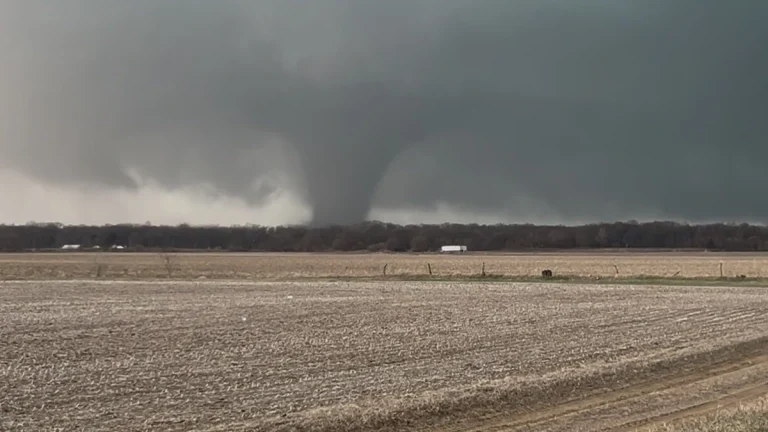
    An EF-2 tornado struck the city of Geneva in southeastern Alabama during the evening of January 25, 2026, causing structural damage across parts of the city and nearby areas. The tornado was confirmed by the National Weather Service following a damage survey completed on January 26 and was rated EF-2 – strong enough to cause roof damage, snapped trees, and power disruptions.

  • Unseasonable heat sets January record in West Palm Beach, Florida at 32.2°C (90°F)

    West Palm Beach, Florida, recorded a maximum temperature of 32.2°C (90°F) at 13:27 LT (18:27 UTC) on January 26, 2026, breaking the previous daily record of 30°C (86°F) set in 1965, according to the National Weather Service (NWS). The value was 15°F (8°C) above the 1991–2020 normal maximum of 24°C (75°F), ranking among the highest January readings on record in the city’s 1888–2026 climate archive.

  • Extreme drought and rainfall years in the western Mediterranean now occur about ten times more often

    A five-century precipitation record reconstructed from tree rings in eastern Spain shows that extreme drought and rainfall years have become roughly ten times more frequent since 2000 than at any point since the early 1500s.

  • Deep-ocean sediments chronicle thousands of years of Cascadia megathrust earthquakes

    A study of deep-sea sediments offshore the Pacific Northwest,  published in Science Advances on January 14, 2026, shows that repeated megathrust earthquakes along the Cascadia subduction zone triggered widespread submarine landslides over the past ~7 500 years, leaving a detailed geological record preserved on the abyssal plain.

  • Seismic ‘snapshot’ reveals new insight into how the Rocky Mountains formed

    A new seismic imaging study reveals that the Rocky Mountains formed through the stacking of two massive layers of continental lithosphere beneath western Canada, overturning the long-held view that the range sits above a sharp vertical boundary in the deep Earth.

  • Interstellar object 3I/ATLAS becomes a fully active comet after perihelion

    NASA’s SPHEREx space telescope re-observed the interstellar object 3I/ATLAS in December 2025 and detected a dramatic increase in activity after perihelion, including strong water outgassing, multiple new gas species, and a transition from icy grains to refractory dust in its coma.