
Heat indices of over 43°C (110°F) forecast in South Texas as prolonged heat wave shifts south
A long-duration heat wave affecting the central and eastern United States is forecast to shift its most intense conditions into the south-central states this weekend and early next week, according to the Weather Prediction Center (WPC). High humidity and very warm nights are expected to contribute to widespread Major to Extreme HeatRisk, with heat indices potentially exceeding 43°C (110°F) in South Texas.

NWS heat risk forecast map for September 2, 2026. Credit: NOAA/NWS
WPC’s Extended Forecast Discussion, valid from September 5 through September 9, forecasts a large mid- and upper-level ridge to remain centered over the central United States. The pattern is expected to maintain extremely hot conditions across the region.
Dangerous heat would continue across the central and eastern states through September 4, according to the WPC. Daytime temperatures of approximately 35–41°C (95–105°F) and nighttime temperatures near 24–26°C (mid- to upper 70s°F) were expected to produce widespread Major to Extreme HeatRisk.
Active National Weather Service warnings showed warning-level heat across several states on September 2. NWS Quad Cities issued an Extreme Heat Warning at 02:02 CDT (07:02 UTC) for portions of north-central, northwestern and west-central Illinois, east-central and southeastern Iowa, and northeastern Missouri.
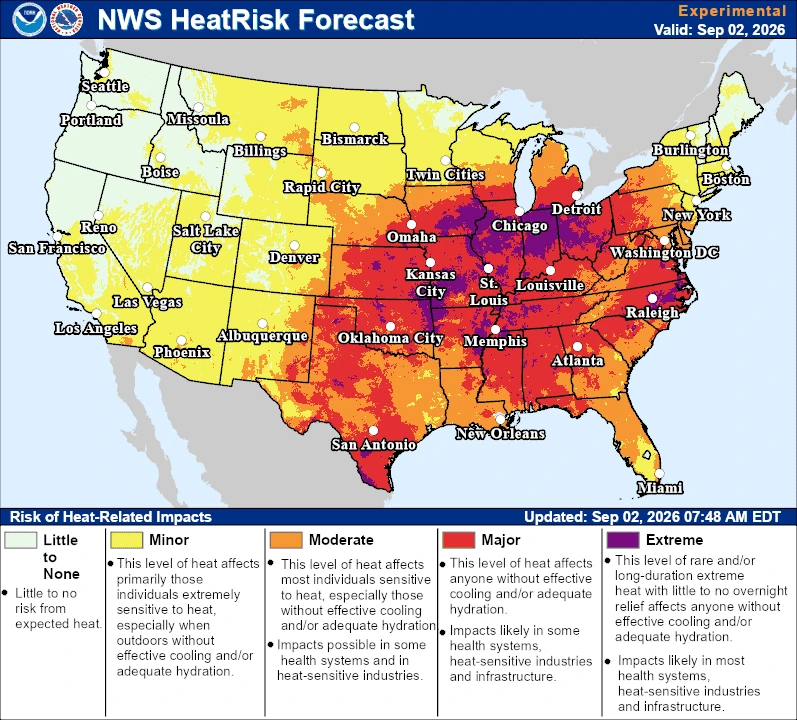
The Quad Cities warning remained in effect through 19:00 CDT on September 4, with heat-index values potentially reaching 40.6°C (105°F).
NWS Paducah placed southern Illinois, southwestern Indiana, western Kentucky, and southeastern Missouri under an Extreme Heat Warning through 20:00 CDT on September 5. Daily peak heat-index values of 39.4–42.8°C (103–109°F) were forecast, with maximum air temperatures of 35–38°C (95–101°F).
Daytime temperatures in the Paducah warning area were forecast to remain approximately 6–8°C (10–15°F) above seasonal averages. Air temperatures could reach or exceed 38°C (100°F) on several days, while overnight temperatures near 24°C (mid-70s°F) would provide limited relief.
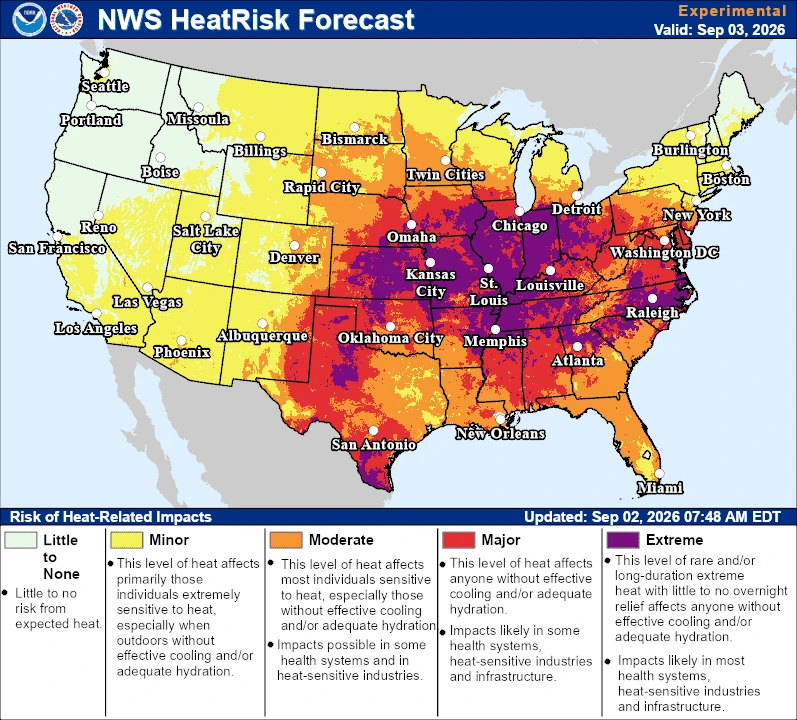
The focus of the most intense heat is forecast to shift south during the weekend. WPC said heat-index values could exceed 41°C (105°F) across the Southern Plains and Lower Mississippi Valley and reach 43.3°C (110°F) in South Texas through the middle of next week.
Daytime temperatures of approximately 36–39°C (upper 90s to low 100s°F) are forecast across parts of the south-central United States. High humidity and overnight temperatures near 24°C (mid-70s°F) are expected to increase the risk of heat-related illness.
HeatRisk assesses the potential for heat-related impacts over a 24-hour period. The system considers how unusual forecast temperatures are for a location and time of year, the duration of the heat—including the availability of overnight relief—forecast humidity, and heat-health thresholds developed with the Centers for Disease Control and Prevention.
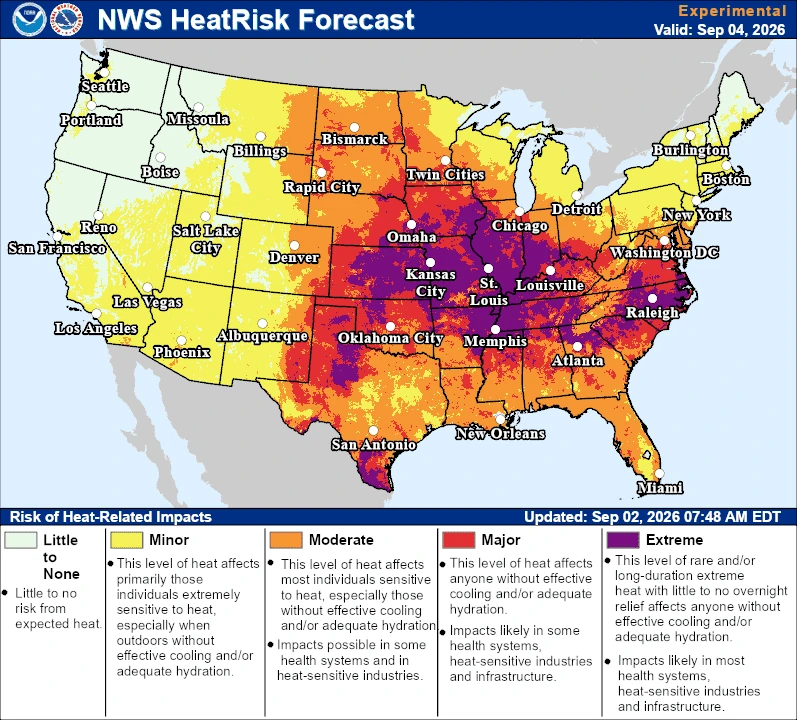
Conditions farther east are expected to moderate as the heat shifts toward the south-central states. WPC forecasts another hot day across the southern Mid-Atlantic and Southeast on September 5 before a cold front brings lower temperatures beginning September 6.
NWS Paducah said record-high minimum temperatures could be approached or exceeded on several nights. The reviewed official products did not confirm that any overnight temperature records had been broken at the time of publication.
NWS guidance advises people in affected areas to drink fluids, use air-conditioned spaces where available, avoid unnecessary sun exposure, and limit strenuous outdoor activity to the morning or evening. Residents should also check on relatives and neighbors and seek immediate assistance if symptoms of heat stroke develop.
References:
1 Extended Forecast Discussion – NOAA/NWS – September 2, 2026
2 Extreme Heat Warning – NOAA/NWS – September 2, 2026
3 Heat Advisory – NOAA/NWS – September 2, 2026

Rishav Kothari is Editor-in-Chief of The Watchers, where he runs the newsroom and covers earthquakes, volcanoes, severe weather and space weather.
