
Old Farmer’s Almanac forecasts snowier winter for parts of Northeast, Appalachians, western U.S. and Alaska
The Old Farmer’s Almanac expects winter 2026–2027 to be warmer than normal across large parts of the United States while forecasting regional pockets of colder, wetter and snowier conditions. Its August 27 forecast places the main cold corridor from central New England through the Appalachians and Ohio Valley and calls for above-normal snowfall in several eastern and western regions and Alaska.
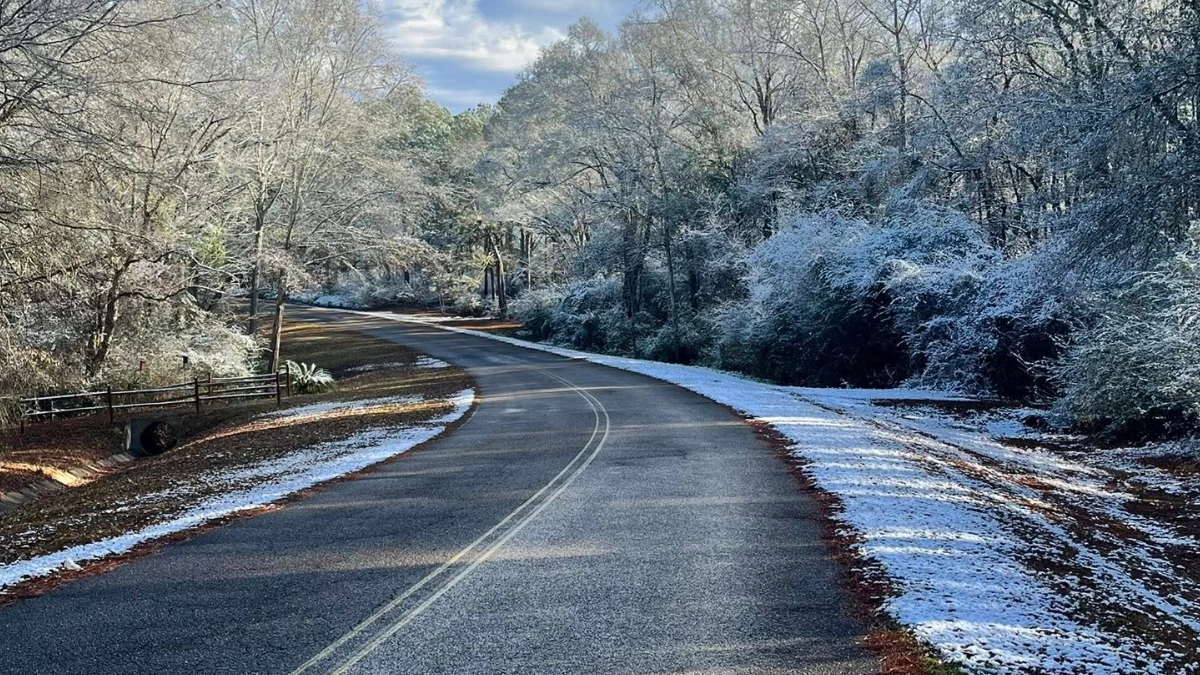
Image credit: Jackson State Park
The Old Farmer’s Almanac calls for mostly mild conditions across much of the country but colder weather from central New England through the Appalachians and Ohio Valley In its August 27 U.S. winter forecast.
It forecasts above-normal snowfall in parts of the Northeast and Appalachians, the Intermountain region, Pacific Northwest and Alaska.
The outlook divides the United States into 18 forecast regions and assigns seasonal temperature, precipitation and snowfall departures from normal, along with periods when the coldest or snowiest conditions are expected.
Most regions are forecast to finish the winter near or above their normal temperatures, while the Almanac places the main colder zone across portions of the eastern United States and forecasts cooler-than-normal conditions in Hawaii.
The southern part of the Almanac’s Northeast region is forecast to have below-normal temperatures and above-normal snowfall, with the coldest periods in early and mid-January.
In the Appalachians, temperatures are forecast below normal, with above-normal snowfall concentrated especially in the north and the coldest periods around mid-January and mid- to late February. The Ohio Valley is also forecast colder than normal, with its coldest periods centered on mid- and late January.
The Almanac forecasts above-normal snow in the Intermountain region and Pacific Northwest despite above-normal seasonal temperatures in both regions.
Alaska is also forecast snowier than normal while remaining warmer than normal on a seasonal basis, and mountain areas of the Pacific Southwest are forecast to receive near- to above-normal snowfall.
For the Northeast region, the Almanac lists some of the snowiest periods in mid- and late December, mid-January, and early and late March; the Appalachians have listed periods in mid-January and early and late February.
In the Intermountain region, the periods are late November, late December and early February, while the Pacific Northwest has late December, mid-January and mid-February. Alaska’s listed snowiest periods include mid-November, early and late January, mid-February and late March.
The Almanac calls for wetter-than-normal conditions across much of the West and in parts of the South, Midwest and Florida, while drier-than-normal conditions are forecast in parts of the East, Plains and Southwest. The Intermountain region, Pacific Northwest and Pacific Southwest are forecast wetter than normal, while the High Plains and Desert Southwest are forecast drier.
The Atlantic Corridor is forecast warmer with below-normal precipitation and slightly below-normal snowfall. The Lower Lakes are forecast warmer with above-normal precipitation and near- to below-normal snowfall, while the Heartland is forecast warmer and wetter with near- to below-normal snowfall. Texas–Oklahoma is forecast warmer and drier with near-normal snowfall.
The Old Farmer’s Almanac attributes its long-range outlook to a forecasting formula combining solar science, climatology and meteorology with historical weather patterns, current solar activity, climate data and large-scale climate signals.
For winter 2026–2027, it identifies El Niño, waning activity in Solar Cycle 25, Atlantic and Pacific ocean patterns, the Quasi-Biennial Oscillation and possible Indian Ocean influences among the factors being considered. It also discusses possible changes in the polar vortex while stating that no single climate signal determines the winter pattern.
The Almanac’s El Niño premise is independently supported by NOAA observations and forecasts. The National Oceanic and Atmospheric Administration’s Climate Prediction Center (CPC) said on August 13 that El Niño was strengthening and had a greater than 90% chance of becoming a very strong event during Northern Hemisphere fall and winter 2026–2027.
CPC assigned a 69% chance that the October–December 2026 Relative Oceanic Niño Index reaches at least +2.5°C, while cautioning that a stronger El Niño raises the probability of characteristic impacts without guaranteeing them.
CPC’s August 20 seasonal outlook favors above-normal temperatures across the northern United States during the core winter but differs from some Almanac regional temperature forecasts.
NOAA favors probabilities above 50% for above-normal December–February temperatures from the Pacific Northwest through the Northeast, while the Almanac forecasts colder conditions across the southern Northeast, Appalachians and Ohio Valley.
CPC also favors above-normal winter precipitation across parts of California, the Southeast and much of the East Coast while maintaining drier probabilities in the Northern Rockies and Northern High Plains.
The CPC seasonal products provide probabilistic temperature and precipitation outlooks rather than the same region-by-region seasonal snowfall forecast used by the Almanac.
The Almanac’s specific snowfall departures and snowiest-period forecasts are issued by The Old Farmer’s Almanac; they are not NOAA-confirmed seasonal snowfall predictions.
References:
1 Winter Weather Forecast 2026–2027: Where Will It Be Cold and Snowy? – The Old Farmer’s Almanac – August 27, 2026
2 ENSO Diagnostic Discussion – NOAA/CPC – August 13, 2026

I am an Assistant Editor and Severe Weather & Science Journalist at The Watchers, specializing in real-time severe weather coverage, geophysical event reporting, and research-driven scientific analysis. You can reach me at rishav(at)watchers(.)news.

you do realize that with this El Nino the Farmers forecast is null and void……..