
Arietid meteor shower, the strongest daytime meteor shower of the year, peaks around June 10
The Arietids peak around June 10, bringing the year’s strongest daytime meteor shower to Earth. Most activity occurs in daylight, but observers may catch a few meteors during the final dark hour before sunrise.
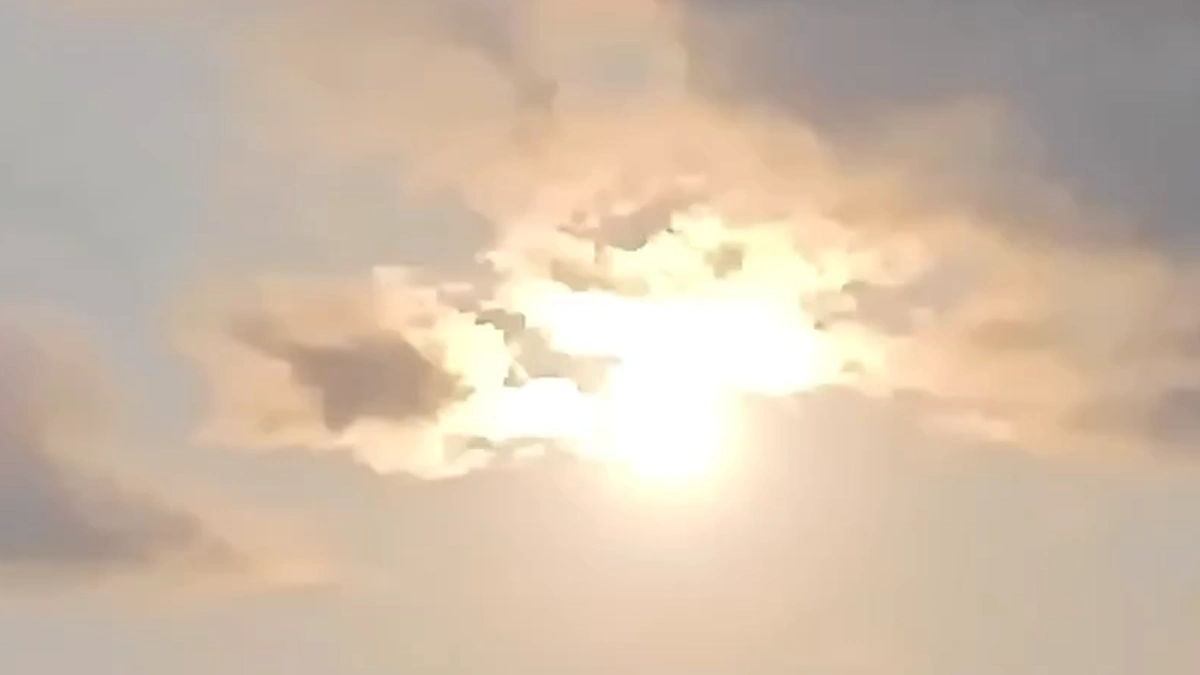
Bright daytime fireball over Puerto Rico on November 23, 2025. Credit: SAC
The Arietid meteor shower is active from May 22 through July 3, and is visible from both hemispheres. Observers are expected to see fewer than one Arietid meteor per hour, yet radar and radio observations reveal the stream’s true strength, detecting activity rates of roughly 60 meteors per hour and possibly as high as 200.
Robert Lunsford’s International Meteor Organization forecast places the Arietid radiant at right ascension 02h52m and declination +24° in eastern Aries. The radiant lies approximately 45 degrees west of the Sun, restricting visual observations to a short predawn window. It’s about 30 degrees from the Sun, emphasizing why most Arietid meteors remain hidden in daylight.
Observers should face the eastern half of the sky before sunrise and watch for meteors rising away from the horizon. The Arietids enter Earth’s atmosphere at approximately 42 km/s, producing meteors of medium velocity. Because the radiant remains close to the eastern horizon before dawn, only a small fraction of the shower’s activity becomes visible to the naked eye.
The Moon reaches its last-quarter phase on June 8 and transitions into a waning crescent in the days that follow. Although moonlight may interfere with predawn observing early in the week, the Moon rises later each morning as its illuminated portion decreases, gradually improving viewing conditions around the June 10 peak.
The Arietids were first detected using radar observations at the Jodrell Bank Radio Telescope in England in 1947. Researchers now associate the stream with Comet 96P/Machholz and the broader Machholz Complex, a collection of meteor showers, comet groups, and related objects believed to share a common origin.
Skywatchers venturing out before dawn around June 10 are unlikely to witness large numbers of meteors. They may, however, catch a member of the strongest daytime meteor shower known to occur each year, a meteor stream that remains largely invisible to human observers while producing significant activity above Earth’s atmosphere.
References:
1 Meteor Activity Outlook for June 6-12, 2026 – AMS – June 5, 2026

I’m a science journalist and researcher at The Watchers, contributing to the Epicenter edition, where I cover peer-reviewed scientific research and emerging discoveries across Earth and space sciences. With a background in astronomy and a passion for environmental science, I’ve worked in shark and coral conservation in Fiji, conducting reef and shark-behavior research, contributing to mangrove restoration, and earning PADI Open Water and Coral Reef Certifications. I bring a blend of scientific rigor and storytelling to illuminate the discoveries shaping our planet and beyond.

Commenting rules and guidelines
We value the thoughts and opinions of our readers and welcome healthy discussions on our website. In order to maintain a respectful and positive community, we ask that all commenters follow these rules.