
Heavy rainfall from Storm Marta leads to flash floods, four fatalities in northern Morocco
A second powerful storm system in less than a week impacted northern Morocco on February 8, 2026, bringing intense rainfall that caused flash floods, landslides, and fatalities. Emergency services responded to damage reports from multiple cities and rural areas.
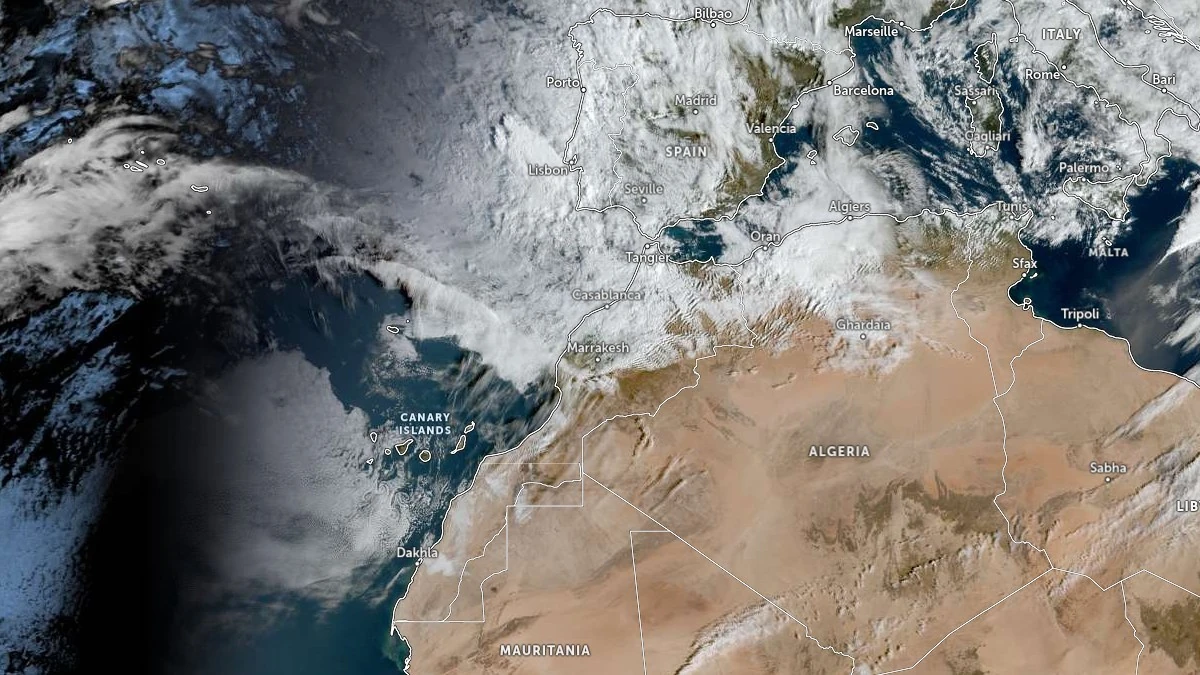
Satellite image of Storm Marta at 08:50 UTC on February 9, 2026. Credit: EUMETSAT/Meteosat, Zoom Earth, The Watchers
Storm Marta affected large parts of northern Morocco on February 8, producing heavy rainfall that led to flash flooding, landslides, and fatalities across several provinces. The storm arrived only days after Storm Leonardo, which had already saturated soils and stressed river and dam systems across the region.
Urban flooding was reported in Tangier, Salé, and Casablanca, where intense rainfall overwhelmed drainage systems, inundated streets, and disrupted road traffic. Local authorities temporarily closed several roads as water levels rose in low-lying districts.
At least four people died, and one remained missing after a vehicle was swept away by flash floods near Lmouawja village in Tétouan Province between February 7 and 8. Local authorities reported that the car, carrying five occupants, was caught in rising water during heavy rainfall. Rescue teams recovered four bodies by February 9, while search operations continued for the fifth person under difficult conditions.
In Chefchaouen Province, landslides destroyed approximately 60 homes, forcing residents to evacuate and leaving several communities temporarily cut off due to blocked roads. Damage assessments were still ongoing, and access to some areas remained limited.
According to local media reports, fuel shortages and disruptions to livestock transport and feed distribution occurred in parts of northern Morocco.
Marta followed closely after Storm Leonardo, which struck the same region days earlier and caused widespread flooding after dams and rivers exceeded capacity. Leonardo damaged homes and agricultural land, triggered minor landslides, and forced more than 150 000 people to evacuate, according to earlier reports.
The back-to-back storms significantly increased runoff and landslide susceptibility by maintaining high soil moisture levels.
Forecasts from the national meteorological service indicate that unsettled weather conditions are expected to persist across northern Morocco over the next 48 hours. Additional moderate rainfall with isolated heavy downpours is forecast, sustaining the risk of further flash flooding and landslides, particularly in mountainous and flood-prone areas.

I'm a dedicated researcher, journalist, and editor at The Watchers. With over 20 years of experience in the media industry, I specialize in hard science news, focusing on extreme weather, seismic and volcanic activity, space weather, and astronomy, including near-Earth objects and planetary defense strategies. You can reach me at teo /at/ watchers.news.

Commenting rules and guidelines
We value the thoughts and opinions of our readers and welcome healthy discussions on our website. In order to maintain a respectful and positive community, we ask that all commenters follow these rules.