
Powerful X1.9 solar flare erupts, producing strong CME
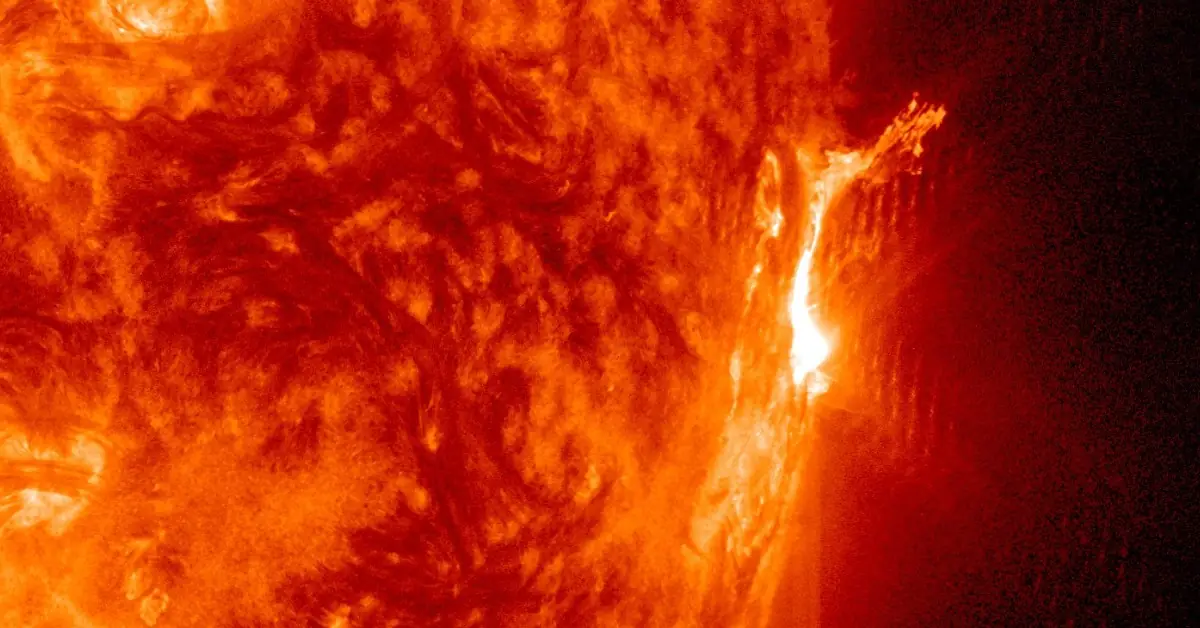
Featured image: X1.9 solar flare on July 16, 2024. Credit: NASA/SDO AIA 301, The Watchers
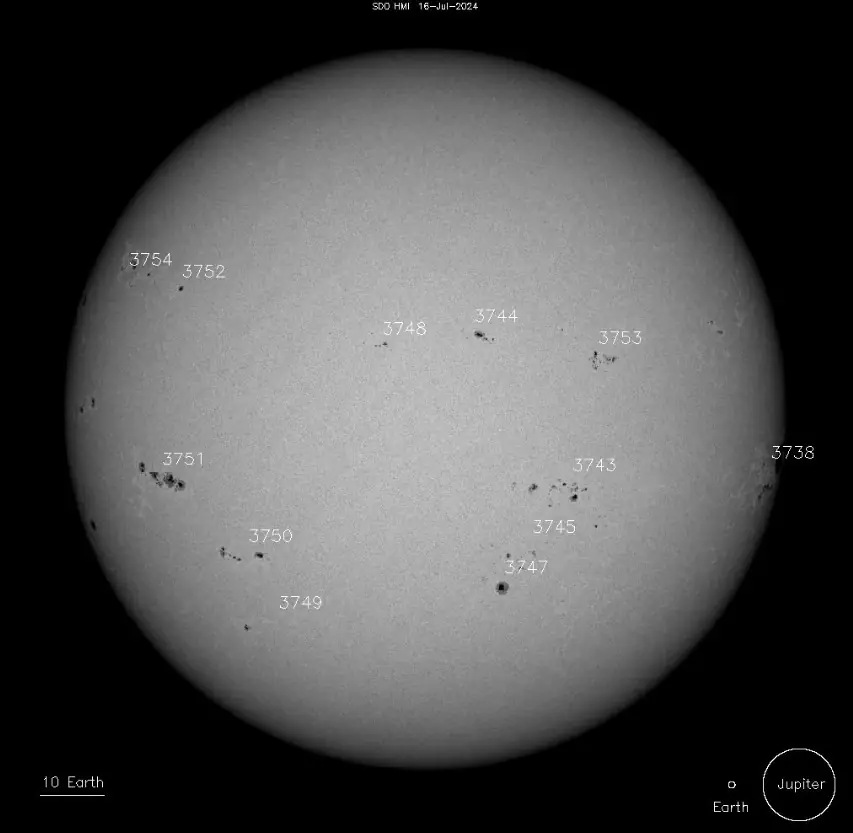
A powerful solar flare measuring X1.9 erupted from departing Active Region 3738 at 13:26 UTC on July 16, 2024. The event started at 13:11 and ended at 13:36 UTC.
This event was associated with a Type II Radio Emission, with an estimated velocity of 516 km/s, suggesting a coronal mass ejection (CME) was produced.
A Type IV Radio Emission was registered beginning at 13:38 UTC. Type IV emissions occur in association with major eruptions on the Sun and are typically associated with strong CMEs and solar radiation storms.
Additionally, a 10cm Radio Burst, lasting 8 minutes and with a peak flux of 550 sfu, was registered between 13:18 and 13:26 UTC. This indicates that the electromagnetic burst associated with a solar flare at the 10cm wavelength was double or greater than the initial 10cm radio background. It can be indicative of significant radio noise in association with a solar flare. This noise is generally short-lived but can cause interference for sensitive receivers including radar, GPS, and satellite communications.
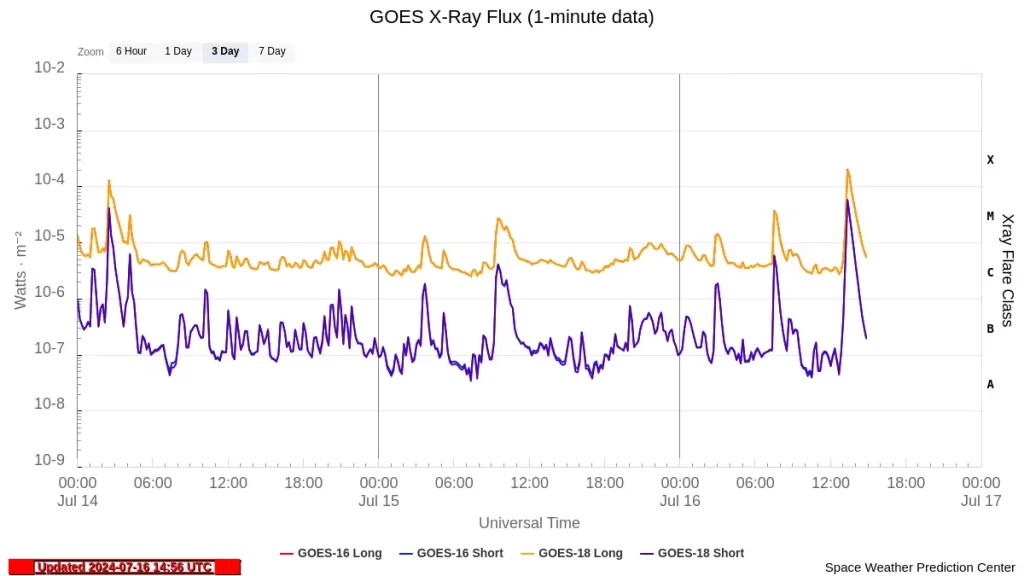
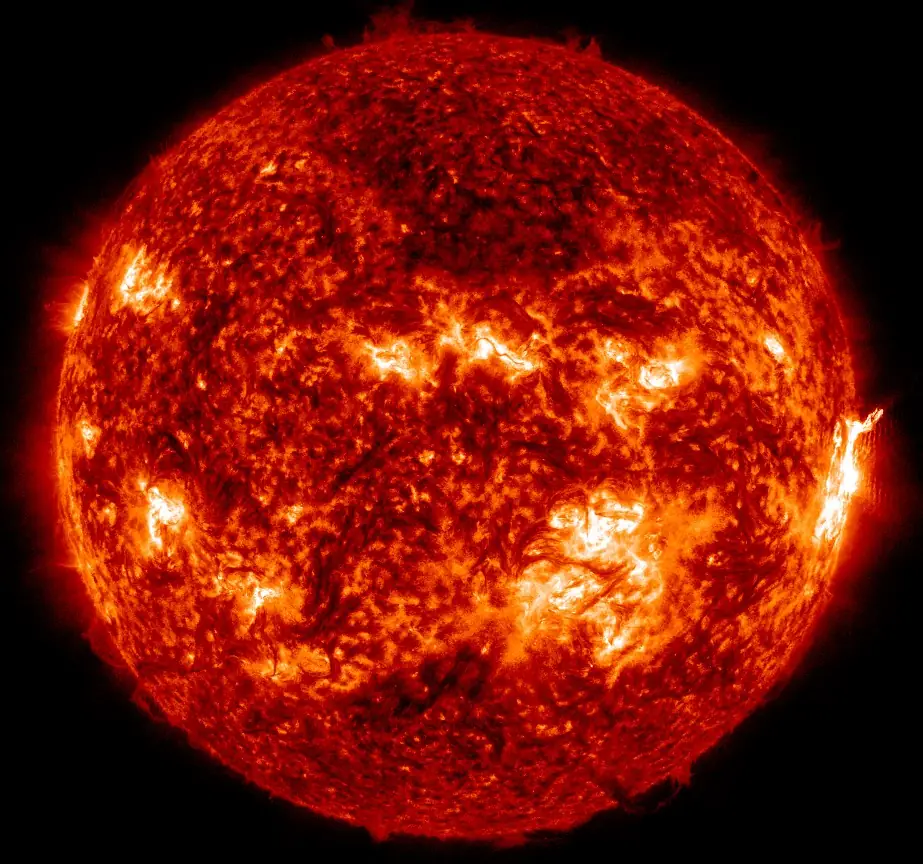
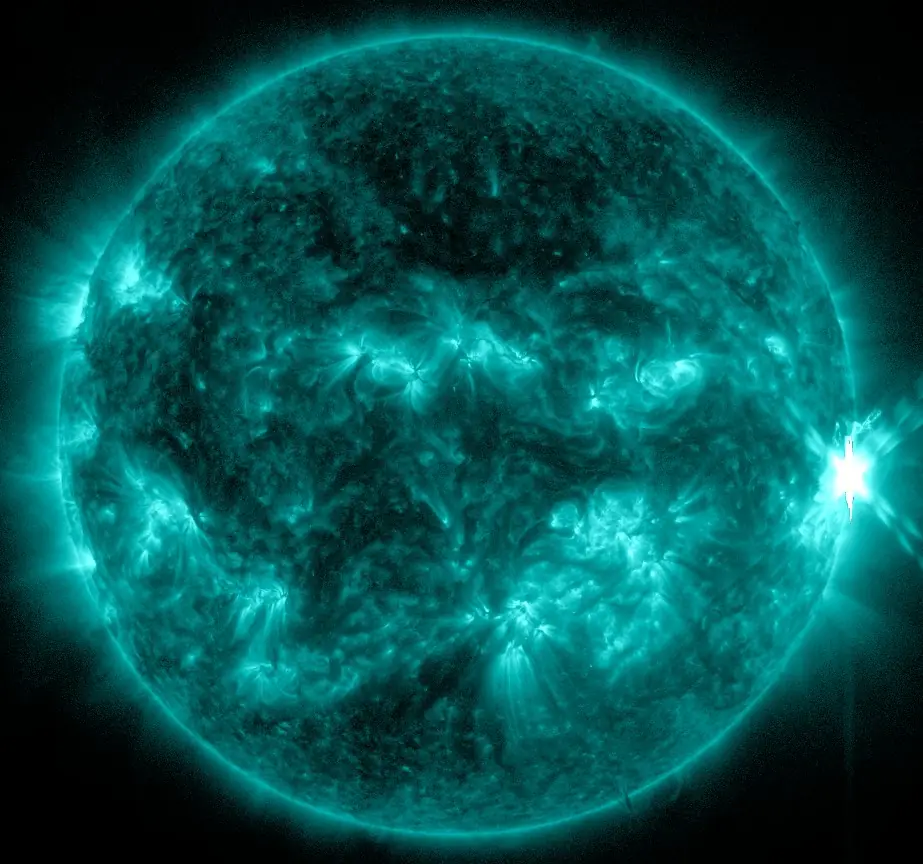
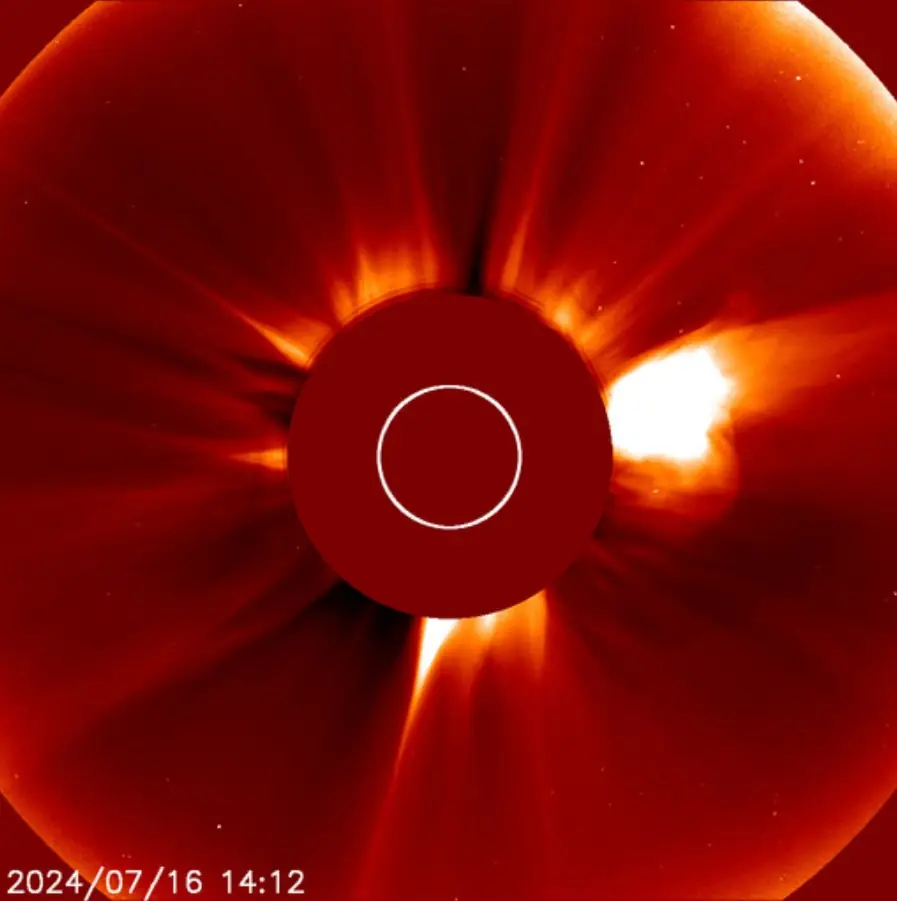
Earth-directed CME is not expected due to the location of this region in the far southwestern region of the Sun. Available coronagraph imagery confirms it.
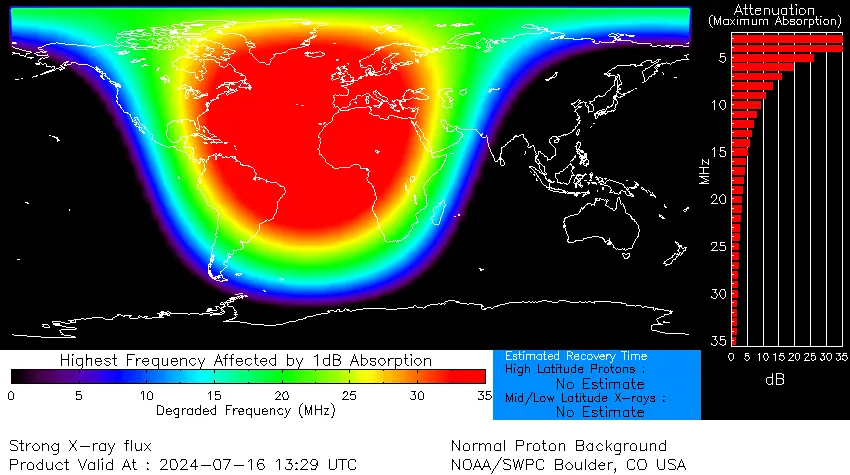
Radio frequencies were forecast to be most degraded over Africa, Europe, the Atlantic Ocean, and parts of North and South America at the time of the flare.
Solar activity is likely to be moderate, with a slight chance for X-class flare activity through July 18.

Teo Blašković founded The Watchers in 2011 and edited it until 2026, covering seismic and volcanic activity, extreme weather, space weather and near-Earth objects. Articles on this page are his archive.
Published in the last 24 hours
- High Risk of excessive rainfall covers Florida’s Space Coast as St. Johns River near Cocoa reaches 5.67 m
- Four small asteroids will pass close to Earth from November 21 to 23
- Cyclone Akvan weakens after landfall near Gopalpur; more than 300 000 evacuated in Odisha, India
- A broad low over southeastern Florida and the northwestern Bahamas has a 30 percent chance of subtropical or tropical development within 48 hours and a 50 percent chance within 7 days, the National Hurricane Center says
