
Alabama tornado rated EF-4, the first EF-4 to hit United States since April 29, 2017

Featured image: Lee County, Alabama tornado damage - March 3, 2019. Credit: Reed Timmer
The National Weather Service in Birmingham confirmed 4 tornadoes touched down in Central Alabama on March 3, 2019, including deadly EF-4 which struck Lee County leaving at least 23 people dead and several missing.
The office performed preliminary surveys on March 4, reporting the Beauregard-Smiths Station tornado in Lee County as EF-4 with winds of 273 km/h (170 mph).
The second tornado, which touched down south of Tuskegee in Macon County and continued into Lee County, has a preliminary rating of EF-2 with winds of 185 km/h (115 mph). The third tornado hit County Road 79 in Barbour County and was rated an EF-2. The fourth tornado hit Eufaula in Barber County and was rated at least EF-2.
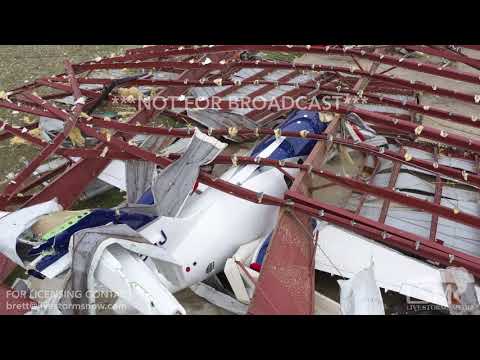
These were just 4 of dozens of tornadoes that hit Alabama, Georgia and Florida on March 3 amid severe weather outbreak.
The strongest tornado was EF-4 in Lee County, AL with winds of 273 km/h (170 mph), a width of at least 1 400 m (0.87 miles) and a track of 38 km (24 miles).
This 'violent' EF-4 tornado left at least 23 people dead and marked the first EF-4 tornado touch down in the United States since April 29, 2017.
March 3, 2019 is now the deadliest Alabama tornado day since 2011 when more than 200 people were killed in Tuscaloosa-Birmingham tornado and the deadliest US tornado day since May 20, 2013 Newcastle-OKC-Moore tornado.
During the entire 2018, tornadoes in the United States killed 10 people.

Teo Blašković founded The Watchers in 2011 and edited it until 2026, covering seismic and volcanic activity, extreme weather, space weather and near-Earth objects. Articles on this page are his archive.
Published in the last 24 hours
- Male toads abandoned a pond in Italy five days before a deadly 2009 earthquake, while a scientist was counting them Epicenter
- An asteroid was spotted 19 hours before it exploded over Sudan in 2008, and students picked its pieces off the desert Epicenter
- A wave up to 3 m (10 feet) high rose out of Lake Michigan on a sunny June morning in 1954 and swept fishermen off Chicago’s piers, and when a second came 10 days later, warnings had cleared the shore Epicenter
- Just 12 inches of rushing water can carry away most cars, and more than half of US flood drownings happen to people who drive into flood water Epicenter
