
Impulsive M1.4 solar flare erupted from Region 2080
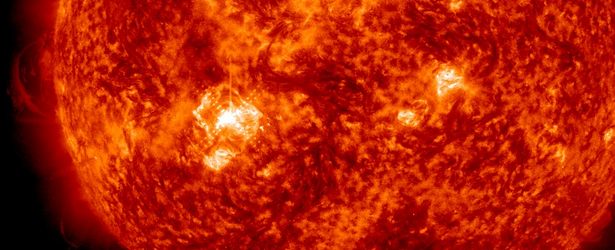
Image credit: NASA SDO / AIA 304 at 19:30 UTC on June 6, 2014.
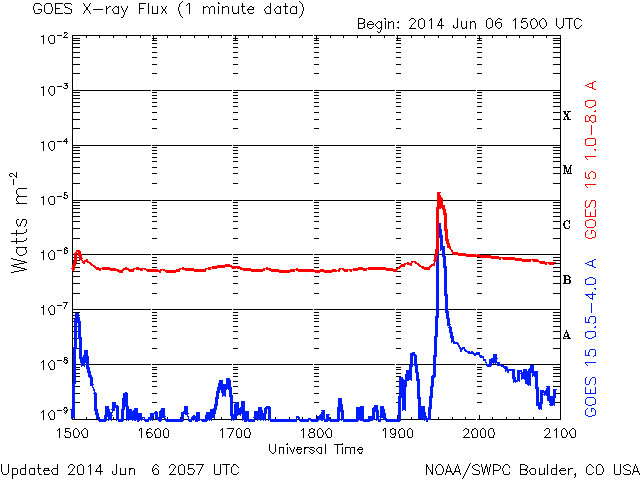
Impulsive solar flare measuring M1.4 at its peak time erupted on June 6, 2014 from Active Region 2080. The event started at 19:26, peaked at 19:31 and ended at 19:33 UTC.
Active regions 2080 and 2082 both exhibited rapid growth in last 36 hours and are now rotating into the geoeffective position.
NOAA SWPC forecasters estimate 25% chance of M-class, and 5% chance of X-class solar flare in next two days. This will probably increase in the coming days.
There are currently 7 numbered sunspot regions on the Earth side of the Sun.
All regions except 2082 and 2080 are either stable or decaying.
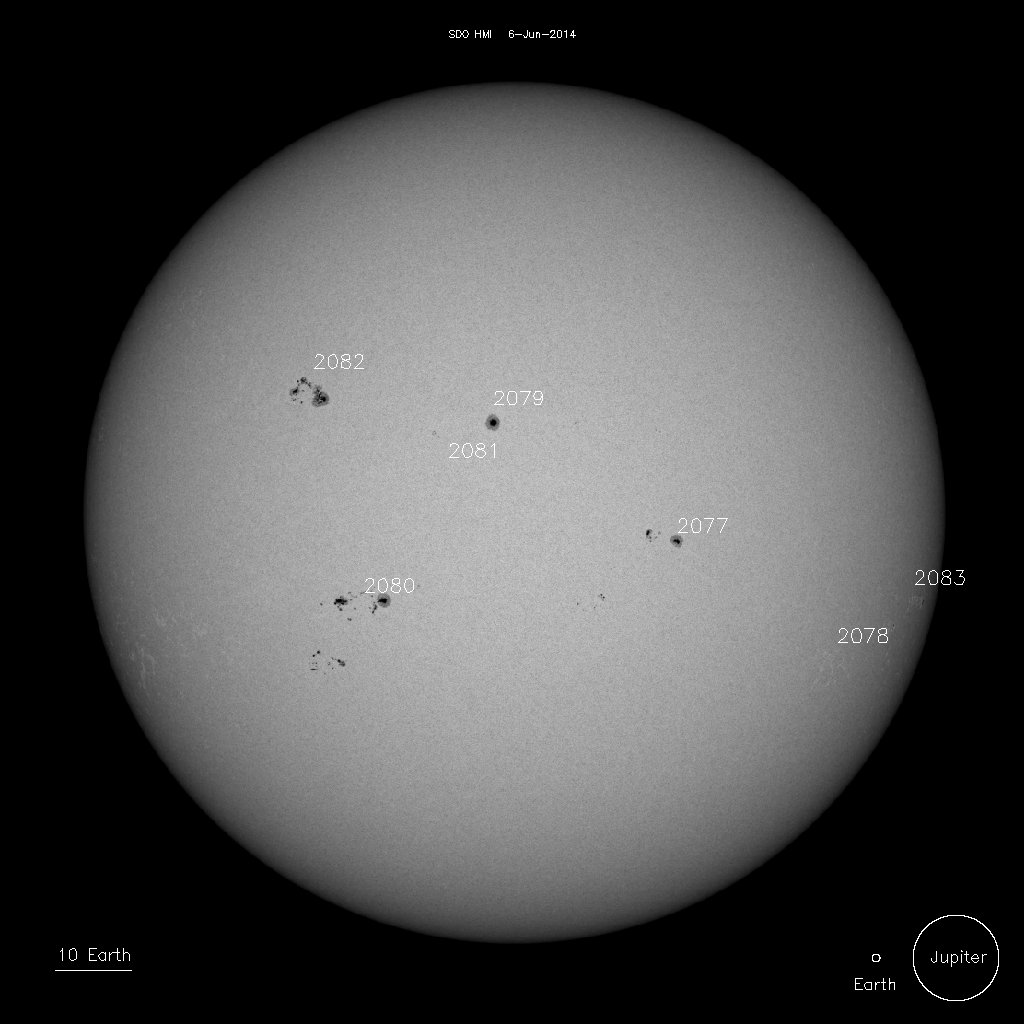
Sunspots on June 6, 2014. Image credit: NASA SDO / HMI
2077 – Beta
2078 – Alpha
2079 – Alpha
2080 – Beta-Gamma
2081 – Alpha
2082 – Beta
2083 – Beta
A coronal hole high-speed stream (CH HSS) is expected to become geoeffective today. CH HSS influence is expected to continue through June 7 before beginning a gradual decline back to nominal levels on June 8.
The geomagnetic field is expected to be at quiet to unsettled levels in next 2 days with a chance for isolated active periods on June 7 in response to the anticipated arrival of a negative-polarity CH HSS.

I'm a dedicated researcher, journalist, and editor at The Watchers. With over 20 years of experience in the media industry, I specialize in hard science news, focusing on extreme weather, seismic and volcanic activity, space weather, and astronomy, including near-Earth objects and planetary defense strategies. You can reach me at teo /at/ watchers.news.

Commenting rules and guidelines
We value the thoughts and opinions of our readers and welcome healthy discussions on our website. In order to maintain a respectful and positive community, we ask that all commenters follow these rules.